

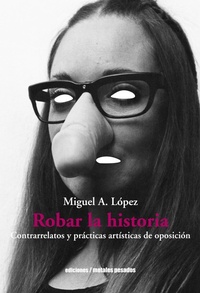
Robar la historia
Contrarrelatos y prácticas artísticas de la oposición
1st Edition
Published on 9. October 2017
224 pages
978-956-9843-31-0 (ISBN)
Description

Este libro conjuga un recorrido ejemplar por la producción artística latinoamericana. Nos vemos aquí envueltos en la contingencia vital de un pensamiento que se siente atraído por las interrupciones y no por las continuidades, por los estallidos y no por las restauraciones, por las mezcolanzas de cuerpos y género(s) desensamblados y no por las identidades plenas, por las roturas de parentescos y no por los linajes directos, por los saberes entrecortados y no por la síntesis unitaria de un conocimiento íntegro.
"Robar la historia. Contrarrelatos y prácticas artísticas de oposición" tiene como horizonte las mutaciones sociales y culturales que llevaron las tecnologías de la creación a experimentar con nuevos modos de hacer y de pensar el arte que mezclan la potencia expresiva de las formas y los conceptos con las demandas ciudadanas y los reclamos comunitarios, los movimientos civiles, las luchas de deseos que se contagian a multitudes en acción.
Al transgredir los ritos de institucionalización del saber académico, este libro sobre arte (un libro de traspasos disciplinarios que también habla de colonialidad,
de sexualidad y patriarcado, de capitalismo, de violencia y memorias postdictatoriales, de globalización transnacional, de movimientos sociales y de esfera pública) contribuye no sólo a minar los discursos opresores sino a reconfigurar subjetividades críticas que logran zafarse del acoso neoliberal recurriendo a los artificios y desbordes de la imaginación radical.
"Robar la historia. Contrarrelatos y prácticas artísticas de oposición" tiene como horizonte las mutaciones sociales y culturales que llevaron las tecnologías de la creación a experimentar con nuevos modos de hacer y de pensar el arte que mezclan la potencia expresiva de las formas y los conceptos con las demandas ciudadanas y los reclamos comunitarios, los movimientos civiles, las luchas de deseos que se contagian a multitudes en acción.
Al transgredir los ritos de institucionalización del saber académico, este libro sobre arte (un libro de traspasos disciplinarios que también habla de colonialidad,
de sexualidad y patriarcado, de capitalismo, de violencia y memorias postdictatoriales, de globalización transnacional, de movimientos sociales y de esfera pública) contribuye no sólo a minar los discursos opresores sino a reconfigurar subjetividades críticas que logran zafarse del acoso neoliberal recurriendo a los artificios y desbordes de la imaginación radical.
All prices
More details
Person
Miguel A. López es escritor, investigador y Curador en jefe de TEOR/éTica, Costa Rica. Su trabajo investiga dinámicas colaborativas y rearticulaciones feministas del arte y la cultura en décadas recientes. Sus textos han sido publicados en revistas como Afterall, E-flux Journal, ramona, Art in America y Manifesta Journal, y en la serie Documents for Contemporary Art de Whitechappel Gallery y MIT Press.
Ha curado recientemente "Teresa Burga. Estructuras de aire" (con Agustín Pérez Rubio), MALBA, Buenos Aires (2015), la sección "Dios es marica" de la 31 Bienal de Sao Paulo (2014), y "Perder la forma humana. Una imagen sísmica de los años 80 en América Latina" (con Red Conceptualismos del Sur), Museo Reina Sofía, Madrid (2012-2013). Ha publicado The Words of Others: León Ferrari and Rhetoric in Times of War (junto a Ruth Estévez y Agustín Diez Fischer, REDCAT y JRP-Ringier, 2017) y Agítese antes de usar. Desplazamientos educativos, sociales y artísticos en América Latina (junto a Renata Cervetto, TEOR/éTica y MALBA, 2016). Co-fundador de la Red Conceptualismos del Sur, activa desde 2007. Junto a Taiyana Pimente creó en 2014 la "Escuela de Crítica de Arte" en la Sala de Arte Público Siqueiros / La Tallera, México. Es co-fundador de Bisagra, un espacio independiente activo en Lima desde 2014. En 2016 le fue otorgado el ICI - Independent Vision Curatorial Award.
Ha curado recientemente "Teresa Burga. Estructuras de aire" (con Agustín Pérez Rubio), MALBA, Buenos Aires (2015), la sección "Dios es marica" de la 31 Bienal de Sao Paulo (2014), y "Perder la forma humana. Una imagen sísmica de los años 80 en América Latina" (con Red Conceptualismos del Sur), Museo Reina Sofía, Madrid (2012-2013). Ha publicado The Words of Others: León Ferrari and Rhetoric in Times of War (junto a Ruth Estévez y Agustín Diez Fischer, REDCAT y JRP-Ringier, 2017) y Agítese antes de usar. Desplazamientos educativos, sociales y artísticos en América Latina (junto a Renata Cervetto, TEOR/éTica y MALBA, 2016). Co-fundador de la Red Conceptualismos del Sur, activa desde 2007. Junto a Taiyana Pimente creó en 2014 la "Escuela de Crítica de Arte" en la Sala de Arte Público Siqueiros / La Tallera, México. Es co-fundador de Bisagra, un espacio independiente activo en Lima desde 2014. En 2016 le fue otorgado el ICI - Independent Vision Curatorial Award.
