


Awareness Bound and Unbound
Description

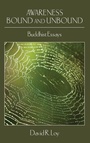
What do we need to do to become truly comfortable-at one-with our lives here and now? In these essays, Buddhist social critic and philosopher David R. Loy discusses liberation not from the world, but into it. Loy's lens is a wide one, encompassing the classic and the contemporary, the Asian, the Western, and the comparative. Loy seeks to distinguish what is vital from what is culturally conditioned and perhaps outdated in Buddhism and also to bring fresh worldviews to a Western world in crisis. Some basic Buddhist teachings are reconsidered and thinkers such as Nagarjuna, Dogen, Eckhart, Swedenborg, and Zhuangzi are discussed. Particularly contemporary concerns include the effects of a computerized society, the notion of karma and the position of women, terrorism and the failure of secular modernity, and a Buddhist response to the notion of a clash of civilizations. With his unique mix of Buddhist philosophical insight and passion for social justice, Loy asks us to consider when our awareness, or attention, is bound in delusion and when it is unbound and awakened.
David R. Loy is Besl Family Chair Professor of Ethics/Religion and Society at Xavier University. He is the author of several books, including A Buddhist History of the West: Studies in Lack, also published by SUNY Press, and Money, Sex, War, Karma: Notes for a Buddhist Revolution.
More details
Other editions
Additional editions
Person
David R. Loy is Besl Family Chair Professor of Ethics/Religion and Society at Xavier University. He is the author of several books, including A Buddhist History of the West: Studies in Lack, also published by SUNY Press, and Money, Sex, War, Karma: Notes for a Buddhist Revolution.
Content
Acknowledgments
Introduction: Myth Broken and Unbroken
1. Awareness Bound and Unbound: On the Nature of Attention
2. Language Against Its Own Mystifications: Deconstruction in Nagarjuna and Dogen
3. Dead Words, Living Words, Healing Words: The Disseminations of Dogen and Eckhart
4. Zhuangzi and Nagarjuna on the Truth of No Truth
5. CyberBabel
6. Dying to the Self that Never Was
7. The Dharma of Emanuel Swedenborg
8. The Karma of Women
9. The West Against the Rest? A Buddhist Response to The Clash of Civilizations
10. Terrorism as Religion: On the Identity Crisis of Secularism
Notes
References
Index
