

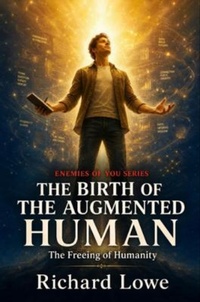
The Birth of the Augmented Human
Description

The companion volume to The Death of Thinking ended with a question: what are you building?
This book is the answer.
The Birth of the Augmented Human follows the same practitioners from The Death of Thinking - the writer, the programmer, the policy analyst, the editor, the student - on the other path. The path where the notebook comes before the AI. Where the argument sketch exists before the structure is requested. Where the diagnostic hypothesis is formed before the error is pasted. Where the position is written down before the framing is provided.
These are not dramatic choices. They are small, daily, against the grain of every commercial incentive in the current AI environment. And they compound.
At year three, the writer has an angle-finding reflex the AI cannot supply. At year four, the programmer has a diagnostic intuition built through years of forming hypotheses before consulting the tool. At year five, the policy analyst produces reports with positions rather than conclusions, because she has been doing the epistemic work rather than inheriting the AI's framing. The compound return is invisible until it isn't - until the assignment arrives that has no template, the system fails in a way no one has seen before, the editor says: I don't want research, I want what you think.
That moment is the test. This book is about how to pass it.
The Birth of the Augmented Human maps the other path in four parts. Part One follows the practitioners in practice - what the notebook habit, the argument sketch, the prior statement, the diagnostic hypothesis actually look like in daily work. Part Two examines the conditions that produce augmentation: the long development arc, design principles for tools that develop rather than replace, what teaching thinking looks like when one teacher makes one decision in one classroom. Part Three describes what the path produces at scale - in individuals, professions, democratic institutions, and the civilizational challenges that require practitioners who can think for themselves. Part Four is the architecture: the sparring partner relationship to AI, the new literacy, the political pathway to making the augmented path available to more than the minority who currently find it.
This is not an optimistic book in the way popular books about AI tend to be optimistic. It does not argue that the market will reward cognitive development over cognitive dependency, or that institutions will reform themselves in time, or that the structural forces described in the companion volume will reverse on a schedule that protects anyone currently developing. The claim is narrower and more defensible: the other path is available to individuals who pursue it, it produces something real, and the production is worth the cost.
The ghost is driving. This book is about how to keep it that way.
Part of The Still Human Series. Publishes simultaneously with The Death of Thinking: The Enslavement of Humanity.
More details
Person
Richard Lowe is a prolific author with 63 published books of his own plus 54+ ghostwritten works, spanning multiple genres from thriller fiction to comprehensive literary analysis. His extensive catalog is available at https://masterofworlds.com, showcasing the breadth of his storytelling expertise across various formats and topics.
As a professional ghostwriter for bestselling authors, he brings decades of practical writing expertise to every project, combining deep storytelling craft with an understanding of what readers truly want. His work extends beyond fiction into literary criticism and film analysis, with contributions that have garnered academic recognition, including collaborations with Purdue University.
Richard's extensive media appearances on literary topics demonstrate his commitment to making complex storytelling concepts accessible to both casual readers and serious students of fiction. Through his platform "The Writing King," Richard provides ethical ghostwriting services while maintaining his own creative output.
His analytical approach to storytelling (evident in his comprehensive examinations of literature's greatest works) informs his fiction writing, creating thrillers that balance pulse-pounding action with thoughtful character development. Unlikely Hero represents Richard's passion for redemption stories that explore the thin line between villain and savior.
When not writing, he continues to analyze what makes great fiction endure, always seeking to understand the craft that transforms entertainment into lasting art.
For more of Richard's works, visit https://masterofworlds.com. For professional background and literary credentials, visit https://thewritingking.com.
