

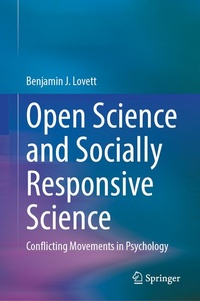
Open Science and Socially Responsive Science
Description

This book is the first to consider the relationships between the Open Science and DEI (social responsiveness) movements in psychology. These two movements sometimes work smoothly together, but are also sometimes in tension. They can differ in their understanding of what science is and how psychology should behave as a science. This volume aims to shed light on the trade-offs inherent in trying to search for truth while promoting social justice. It covers the history and philosophy of these two movements as background for an exploration of the tensions between them. This volume moves beyond the conflict, acknowledging the conflicts but also showing the way toward a unified field of psychology. It will appeal to researchers and students, as well as those who train them. Exploring the relationships between these two movements will be enlightening to scholars as well as practitioners.
More details
Other editions
Additional editions
Person
Benjamin J. Lovett, Ph.D., is Professor of Psychology and Education at Teachers College, Columbia University. He has over 100 publications, including 4 previous books on topics in psychology and education. His primary training is in school psychology, but he also has a longstanding interest in historical and methodological issues in psychology, and he teaches a course on the history of psychology that covers scientific, professional, and activist conceptions of the field.
Content
Chapter 1 The Two Reform Movements.- Chapter 2 Open Science Can Undermine Politically Helpful Findings.- Chapter 3 Universal vs. Targeted Interventions.- Chapter 4 The Place of Pluralism in Research Methodology.- Chapter 5 Moving Forward.- Chapter 6 Appendix: Clarifications and Extensions.
