

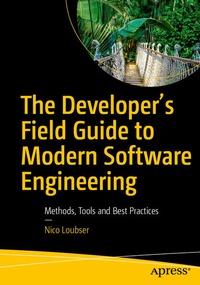
The Developer's Field Guide to Modern Software Engineering
Description

Explore modern software engineering from design to deployment and everything in-between. This field guide is your ultimate reference to designing, building and deploying modern software applications in the tech industry today.
Split into four parts, the book takes you through the stages of the software lifecycle, introducing you to aspects such as the command line interface, containerisation, design and practices before taking you through the major components of software system design, patterns, tools and best practices, before embarking on software deployment and all of the major areas of testing and security. You will also look at how the role of AI influences and impacts our approach to software engineering during different stages of development.
The Developer's Field Guide to Modern Software Engineering is made up of 17, self-contained chapters for easy reference for those just starting their developer careers as well as those more experienced, who are looking for a quick refresher on a particular topic or issue.
What You Will Learn
- Review the major components of modern software engineering
- Explore major topics in a real-life context
- Troubleshoot potentional problems
- See how AI is impacting software at different stages of the lifecycle
Who This Book Is For
Developers, engineers, and product managers who are involved in the design and deployment of software applications. Also, for those just starting out, looking for a starting point, as well as those more experienced looking for a quick and easy refresher on a particular topic.
More details
Other editions
Additional editions
Person
Nico Loubser has been writing software for 22 years. During that time, he has also gained an honours degree in the field of software engineering, undertaken talks at PHP meetups, and designed man-made systems from the ground up, learning many practical tips and workarounds along the way. One of the guidelines he learned was: "Do not fall in love with a solution," which urges people to evaluate their successes and failures before applying them to similar problems. Nico is also the author of the popular book Software Engineering for Absolute Beginners from Apress.
Content
Chapter 1: Containers.- Chapter 2: Command line.- Chapter 3: Programming Primer.- Chapter 4: AI's role in coding.- Part I: Designing Your Software .- Chapter 5: Development Lifecycle.- Chapter 6: Database Design.- Chapter 7: Object Orientation.- Chapter 8: System Diagrams.- Chapter 9: AI's Role in Building Software.- Part II: Building Your Software .- Chapter 10: Software Patterns.- Chapter 11: Coding Principles.- Chapter 12: AI, Codebase engagement and hallucinations.- Part III: Deploying Your Software .- Chapter 13: Source Control and Deployments.- Chapter 14: Security.- Chapter 15: Cloud Services and Hosting.- Part IV: Testing Your Software .- Chapter 16: Types of Testing and Peer Reviews.- Chapter 17: AI's Role In Testing.
