

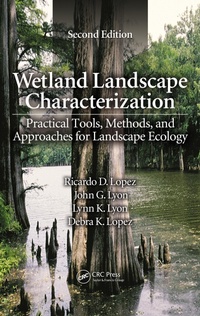
Wetland Landscape Characterization
Practical Tools, Methods, and Approaches for Landscape Ecology, Second Edition
2nd Edition
Published on 27. March 2013
308 pages
978-1-040-19739-4 (ISBN)
Description

Wetlands are, by their very nature, ephemeral and transitional, which makes them challenging to characterize. Yet the need for characterizing wetlands continues to grow, particularly as we develop a better understanding of the wealth of ecosystem services that they provide. This book provides practical tools and methods to help practitioners more effectively locate, identify, and map the extent of wetlands, and therefore better understand the importance of wetlands to society and the larger landscape. The authors address jurisdictional, regulatory, and practical applications from the scientific, engineering, and lay perspectives. Numerous techniques, examples, figures, and lessons learned supply the ideas and solutions needed for solving the complex issues associated with wetlands. This second edition has been updated throughout and includes more techniques, examples, and illustrations.
Reviews / Votes
"The main strengths of the book include its practical geospatial approaches and rich case study examples... . This is an excellent reference book, one of a kind, for a variety of wetland landscape characterization issues."-Professor Wei "Wayne" Ji, University of Missouri-Kansas City, USA
"Wetland Landscape Characterization will clearly be an invaluable resource for scientists and professionals involved in wetlands assessment and monitoring. The authors provide an in-depth understanding of traditional-to-contemporary methods of characterizing wetlands, the methods used to integrate field-based and geospatial data, the keys to analysis at multiple scales, and determining the ecological function of wetlands. These topics are brought to life through a wide range of case studies that provide the reader with an invaluable learning tool and significant new insight. Wetland Landscape Characterization is an essential reference for all those involved in wetland ecology."
-Stuart E. Marsh, University of Arizona, Tucson, USA
"... provides good technical explanations of concepts such as an 'ecological indicator' or 'landscape metrics', which allows the non-specialist reader to understand the methodology used in assessment of wetland health and habitat risk. I also appreciated the discussion linking ecosystem services to the health of the White River aquatic ecosystems, which drives home the importance of proper wetland management. The concept of the Unified Vulnerability Index (UVI) is presented clearly, providing a novel, yet comprehensive indicator to ascertain in a holistic manner. It is a strength of the material that the pros and cons of the UVI are mentioned in some detail."
-Douglas Cripe, Scientific Officer, Group on Earth Observations (GEO) Secretariat, Geneva, Switzerland
"The book explains how to locate, identify, and map the extent of wetlands to learn more about their importance to society and the larger landscape. It examines jurisdictional, regulatory, and practical applications from the scientific, engineering, and lay perspectives. Fully updated, the second edition reflects an emerging infrastructural, ecosystem goods-and-services perspective to better assist readers who may encounter these concepts and challenges as they assess and characterizewetlands."
--Northeastern Naturalist, Volume 20, 2013 "The main strengths of the book include its practical geospatial approaches and rich case study examples... . This is an excellent reference book, one of a kind, for a variety of wetland landscape characterization issues."
-Professor Wei "Wayne" Ji, University of Missouri-Kansas City, USA
"Wetland Landscape Characterization will clearly be an invaluable resource for scientists and professionals involved in wetlands assessment and monitoring. The authors provide an in-depth understanding of traditional-to-contemporary methods of characterizing wetlands, the methods used to integrate field-based and geospatial data, the keys to analysis at multiple scales, and determining the ecological function of wetlands. These topics are brought to life through a wide range of case studies that provide the reader with an invaluable learning tool and significant new insight. Wetland Landscape Characterization is an essential reference for all those involved in wetland ecology."
-Stuart E. Marsh, University of Arizona, Tucson, USA
"... provides good technical explanations of concepts such as an 'ecological indicator' or 'landscape metrics', which allows the non-specialist reader to understand the methodology used in assessment of wetland health and habitat risk. I also appreciated the discussion linking ecosystem services to the health of the White River aquatic ecosystems, which drives home the importance of proper wetland management. The concept of the Unified Vulnerability Index (UVI) is presented clearly, providing a novel, yet comprehensive indicator to ascertain in a holistic manner. It is a strength of the material that the pros and cons of the UVI are mentioned in some detail."
-Douglas Cripe, Scientific Officer, Group on Earth Observations (GEO) Secretariat, Geneva, Switzerland
"The book explains how to locate, identify, and map the extent of wetlands to learn more about their importance to society and the larger landscape. It examines jurisdictional, regulatory, and practical applications from the scientific, engineering, and lay perspectives. Fully updated, the second edition reflects an emerging infrastructural, ecosystem goods-and-services perspective to better assist readers who may encounter these concepts and challenges as they assess and characterizewetlands."
--Northeastern Naturalist, Volume 20, 2013
More details
Edition
2nd edition
Language
English
Place of publication
London
United Kingdom
Publishing group
Taylor & Francis Ltd
Target group
College/higher education
Professional and scholarly
File size
14,31 MB
ISBN-13
978-1-040-19739-4 (9781040197394)
Copyright in bibliographic data and cover images is held by Nielsen Book Services Limited or by the publishers or by their respective licensors: all rights reserved.
Schweitzer Classification
Other editions
Additional editions
Ricardo D. Lopez | John G. Lyon | Lynn K. Lyon
Wetland Landscape Characterization
Practical Tools, Methods, and Approaches for Landscape Ecology, Second Edition
Book
11/2017
2nd Edition
CRC Press
€112.99
Shipment within 10-20 days
Ricardo D. Lopez | John G. Lyon | Lynn K. Lyon
Wetland Landscape Characterization
Practical Tools, Methods, and Approaches for Landscape Ecology, Second Edition
Book
03/2013
2nd Edition
CRC Press
€305.05
Shipment within 15-20 days
Persons
Ricardo "Ric" Daniel Lopez, Ph.D. is a leader in the field of wetlands ecology and landscape ecology. He has led the way in novel applications of field-based and geospatial data analyses to solve current and future global environmental challenges. This body of work includes monitoring and assessing upland, aquatic, and wetland ecosystems, with particular focus on a wide variety of wetlands, rivers, and streams. Ric's career has focused on the development and application of both broad-scale and community-based indicators of restoration, sustainability, and environmental risk. A native of Santa Barbara, California, Ric spent his youth knee-deep (or deeper) in the many wetlands and tide pools of the region.
John Grimson Lyon, Ph.D. was interested early on in wetlands as places of native vegetation. This interest was honed during youthful wanderings in the mountains and river valleys of the Pacific Northwest, California, Nevada, and Alaska. Systematic study at the undergraduate, graduate, and professional levels has yielded a body of work on remote sensing, mapping, identification, and characterization of processes in wetlands, and related ecosystems in the Great Lake states and Western United States.
Lynn Krise Lyon is a lifelong educator, writer, and artist. She spent a good portion of her youth playing in creeks and streams. As an adult, she has visited wetlands all over the United States with her husband, John. She abhors black flies and snakes, loves cranberry bogs, and fervently believes Michigan has the best wetlands in the world.
Debra Kim Lopez has dedicated her existence to the appreciation of literature and writing, global sustainability issues, and the social sciences. She values the importance of global initiatives for improving communities around the world; she has traveled extensively. Lopez has partnered with her husband, Ric, on a plethora of wetland and othe
John Grimson Lyon, Ph.D. was interested early on in wetlands as places of native vegetation. This interest was honed during youthful wanderings in the mountains and river valleys of the Pacific Northwest, California, Nevada, and Alaska. Systematic study at the undergraduate, graduate, and professional levels has yielded a body of work on remote sensing, mapping, identification, and characterization of processes in wetlands, and related ecosystems in the Great Lake states and Western United States.
Lynn Krise Lyon is a lifelong educator, writer, and artist. She spent a good portion of her youth playing in creeks and streams. As an adult, she has visited wetlands all over the United States with her husband, John. She abhors black flies and snakes, loves cranberry bogs, and fervently believes Michigan has the best wetlands in the world.
Debra Kim Lopez has dedicated her existence to the appreciation of literature and writing, global sustainability issues, and the social sciences. She values the importance of global initiatives for improving communities around the world; she has traveled extensively. Lopez has partnered with her husband, Ric, on a plethora of wetland and othe
Content
Introduction: The Challenge. Key Themes Driving Landscape Characterization. Traditional to Contemporary Characterization Methods. Integrating Field-Based Data and Geospatial Data. Utilizing Broad-Scale Characterization Approaches. Determining Ecological Functions of Wetlands with Landscape Characterization. References. Appendix: Mississippi River and Surrounding Landscape. Index.
