

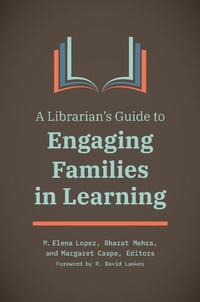
A Librarian's Guide to Engaging Families in Learning
1st Edition
Published on 1. September 2021
240 pages
978-1-4408-7584-7 (ISBN)
Description

Public libraries can increase their impact on knowledge development, innovation, and social change by promoting parent and family engagement in children's learning.
Libraries are increasingly focusing on families. Educational research confirms that family engagement in children's learning and development predicts school readiness, positive social behaviors, high school graduation, interest in STEM careers, and post-secondary education.
A Librarian's Guide to Engaging Families in Learning will inspire libraries and librarians to innovate and promote family learning from a child's earliest years through adolescence. By bringing together research and practice, it will deepen librarians' understanding of families' role in education and help them to learn new ways to build positive and trusting family partnerships that honor diverse cultures and languages, as well as to develop leadership for community impact.
Written by thought leaders in the fields of family engagement and library science, each of the three main sections of the book begins with a framework followed by case studies illustrating key concepts of the framework. Cases are followed by reflections from practicing librarians. All chapters focus on practical family engagement in the social infrastructure, lifelong learning, and diversity and social justice.
Libraries are increasingly focusing on families. Educational research confirms that family engagement in children's learning and development predicts school readiness, positive social behaviors, high school graduation, interest in STEM careers, and post-secondary education.
A Librarian's Guide to Engaging Families in Learning will inspire libraries and librarians to innovate and promote family learning from a child's earliest years through adolescence. By bringing together research and practice, it will deepen librarians' understanding of families' role in education and help them to learn new ways to build positive and trusting family partnerships that honor diverse cultures and languages, as well as to develop leadership for community impact.
Written by thought leaders in the fields of family engagement and library science, each of the three main sections of the book begins with a framework followed by case studies illustrating key concepts of the framework. Cases are followed by reflections from practicing librarians. All chapters focus on practical family engagement in the social infrastructure, lifelong learning, and diversity and social justice.
More details
Edition
1. Auflage
Language
English
Place of publication
United States
Publishing group
Bloomsbury Publishing Plc
Illustrations
10 bw illus
ISBN-13
978-1-4408-7584-7 (9781440875847)
Copyright in bibliographic data and cover images is held by Nielsen Book Services Limited or by the publishers or by their respective licensors: all rights reserved.
Schweitzer Classification
Other editions
Additional editions
M. Elena Lopez | Bharat Mehra | Margaret Caspe
A Librarian's Guide to Engaging Families in Learning
Book
09/2021
Libraries Unlimited Inc
€64.40
Shipment within 10-20 days
Persons
M. Elena Lopez, PhD, is an independent researcher on the ecology of learning that includes the home, school, and community.
Bharat Mehra, PhD, is professor and EBSCO Endowed Chair in Social Justice in the School of Library and Information Studies at the University of Alabama.
Margaret Caspe, PhD, is an educator, researcher, and writer who focuses on how families, early childhood programs, schools, and communities support children's learning.
Bharat Mehra, PhD, is professor and EBSCO Endowed Chair in Social Justice in the School of Library and Information Studies at the University of Alabama.
Margaret Caspe, PhD, is an educator, researcher, and writer who focuses on how families, early childhood programs, schools, and communities support children's learning.
Content
Foreword
R. David Lankes
Introduction
M. Elena Lopez, Bharat Mehra, and Margaret Caspe
Part One Perspectives on Libraries, Families, and Communities
Introduction to Part 1
M. Elena Lopez, Bharat Mehra, and Margaret Caspe
Chapter 1 Know, Partner, Lead: Family Engagement in Public Libraries
M. Elena Lopez and Margaret Caspe
Chapter 2 Research Paradigms for Engaging Families in Public Libraries
Bharat Mehra and Scott Sikes
Part Two Knowing Families and Communities
Introduction to Part 2
M. Elena Lopez, Bharat Mehra, and Margaret Caspe
Case Studies
Chapter 3 "The Library Has to Be More Than Books": "Voices" of Latinx Mothers
M. Elena Lopez and Margaret Caspe
Chapter 4 The Partnership for Family-Library Engagement: A Unique Library-University Partnership
Michelle Taylor, Megan E. Pratt, and Mariko Whelan
Chapter 5 Finding Home: One Book, One Community
Kaurri C. Williams-Cockfield
Reflections
Chapter 6 Who Do We Need to Serve?
Carine Risley
Chapter 7 Closing the Distance: Reaching Incarcerated Loved Ones
Nick Higgins
Chapter 8 Reading Is Grand! A Family Literacy Program of the Black Caucus of the American Library Association
Karen Lemmons and Tamela Chambers
Part Three Building Partnerships
Introduction to Part 3
M. Elena Lopez, Bharat Mehra, and Margaret Caspe
Case Studies
Chapter 9 Designing Learning Experiences with and for Families
Mega Subramaniam and Tamara Lynette Clegg
Chapter 10 Engaging Families in Computational Literacy Opportunities
Ricarose Roque and Sari A. Widman
Chapter 11 Age Is But a Number: How to Create Multigenerational Family Programs in Your Public Library
Jessica Hilburn and Becky Stahl
Reflections
Chapter 12 We're Happy You're Here: Honoring Family Strengths to Build Relationships and Enhance Programming at the Denver Public Library
Sarah McNeil
Chapter 13 Media Mentors Start by Listening to Parents
Lisa Guernsey
Chapter 14 Lending an Umbrella to the Community
Felton Thomas Jr. and Laura Walter
Part Four Leading for Impact
Introduction to Part 4
M. Elena Lopez, Bharat Mehra, and Margaret Caspe
Case Studies
Chapter 15 "Un-level" the Playing Field to Give Every Child a Chance
Donna C. Celano and Susan B. Neuman
Chapter 16 Homelessness as a Barrier to Family Engagement in Learning
Olivia Forehand
Chapter 17 Family Place Libraries: A Place for Families to Learn and Grow
Kristen Todd-Wurm
Chapter 18 Removing Barriers for Youth and Families through Elimination of Fines
Misty Jones
Reflections
Chapter 19 Talking, Thinking, Making: How IMLS Grants Help Libraries Facilitate Family Literacy and Learning
Sandra Toro
Chapter 20 Information Needs of Rural Families: A Social Justice Imperative
Bharat Mehra and Scott Sikes
Chapter 21 Six Ways to Build a State Library Platform for Family Engagement
Mark Smith
Chapter 22 Public Libraries Adapt to Connect with Families in Times of Crisis
Ashley J. Brown
Index
About the Editors and Contributors
R. David Lankes
Introduction
M. Elena Lopez, Bharat Mehra, and Margaret Caspe
Part One Perspectives on Libraries, Families, and Communities
Introduction to Part 1
M. Elena Lopez, Bharat Mehra, and Margaret Caspe
Chapter 1 Know, Partner, Lead: Family Engagement in Public Libraries
M. Elena Lopez and Margaret Caspe
Chapter 2 Research Paradigms for Engaging Families in Public Libraries
Bharat Mehra and Scott Sikes
Part Two Knowing Families and Communities
Introduction to Part 2
M. Elena Lopez, Bharat Mehra, and Margaret Caspe
Case Studies
Chapter 3 "The Library Has to Be More Than Books": "Voices" of Latinx Mothers
M. Elena Lopez and Margaret Caspe
Chapter 4 The Partnership for Family-Library Engagement: A Unique Library-University Partnership
Michelle Taylor, Megan E. Pratt, and Mariko Whelan
Chapter 5 Finding Home: One Book, One Community
Kaurri C. Williams-Cockfield
Reflections
Chapter 6 Who Do We Need to Serve?
Carine Risley
Chapter 7 Closing the Distance: Reaching Incarcerated Loved Ones
Nick Higgins
Chapter 8 Reading Is Grand! A Family Literacy Program of the Black Caucus of the American Library Association
Karen Lemmons and Tamela Chambers
Part Three Building Partnerships
Introduction to Part 3
M. Elena Lopez, Bharat Mehra, and Margaret Caspe
Case Studies
Chapter 9 Designing Learning Experiences with and for Families
Mega Subramaniam and Tamara Lynette Clegg
Chapter 10 Engaging Families in Computational Literacy Opportunities
Ricarose Roque and Sari A. Widman
Chapter 11 Age Is But a Number: How to Create Multigenerational Family Programs in Your Public Library
Jessica Hilburn and Becky Stahl
Reflections
Chapter 12 We're Happy You're Here: Honoring Family Strengths to Build Relationships and Enhance Programming at the Denver Public Library
Sarah McNeil
Chapter 13 Media Mentors Start by Listening to Parents
Lisa Guernsey
Chapter 14 Lending an Umbrella to the Community
Felton Thomas Jr. and Laura Walter
Part Four Leading for Impact
Introduction to Part 4
M. Elena Lopez, Bharat Mehra, and Margaret Caspe
Case Studies
Chapter 15 "Un-level" the Playing Field to Give Every Child a Chance
Donna C. Celano and Susan B. Neuman
Chapter 16 Homelessness as a Barrier to Family Engagement in Learning
Olivia Forehand
Chapter 17 Family Place Libraries: A Place for Families to Learn and Grow
Kristen Todd-Wurm
Chapter 18 Removing Barriers for Youth and Families through Elimination of Fines
Misty Jones
Reflections
Chapter 19 Talking, Thinking, Making: How IMLS Grants Help Libraries Facilitate Family Literacy and Learning
Sandra Toro
Chapter 20 Information Needs of Rural Families: A Social Justice Imperative
Bharat Mehra and Scott Sikes
Chapter 21 Six Ways to Build a State Library Platform for Family Engagement
Mark Smith
Chapter 22 Public Libraries Adapt to Connect with Families in Times of Crisis
Ashley J. Brown
Index
About the Editors and Contributors
