

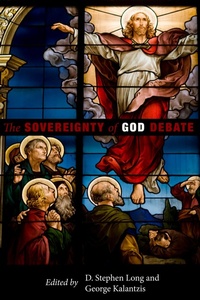
The Sovereignty of God Debate
Published on 1. January 2009
204 pages
978-1-7252-4451-1 (ISBN)
Description

How is God sovereign with respect to creation? Does creation affect God? Does God suffer or change because of creation? If so, how is this related to Christology? Why have these questions been so controversial in evangelical theology, even costing some people their jobs?
This book is a collection of lectures given to the Forum for Evangelical Theology at Garrett-Evangelical Theological Seminary. Six theologians answer the questions above from a variety of perspectives. They draw on resources including the church fathers, Thomas Aquinas, John Calvin, Jurgen Moltmann, process theology, and open theism.
In the process of answering the question, does God suffer? each theologian also illustrates how responding to this subject requires an examination of other crucial evangelical issues, such as how we read Scripture and what it means to proclaim that God is love. Although the writers answer these questions in a variety of ways, the hope is that engaging in this conversation together can help evangelicals and all Christians to speak more faithfully of our sovereign God.
More details
Other editions
Additional editions
D. Stephen Long | George Kalantzis
The Sovereignty of God Debate
Book
01/2009
Wipf & Stock Publishers
€24.00
Shipment within 3-4 weeks
D. Stephen Long | George Kalantzis
The Sovereignty of God Debate
Book
01/2009
Wipf & Stock Publishers
€40.70
Shipment within 15-20 days
Persons
D. Stephen Long is Professor of Systematic Theology at Marquette University. His most recent publications include Theology and Culture (Cascade, 2007), Calculated Futures, John Wesley's Moral Theology: The Quest for God and Goodness, and Speaking of God: Theology, Language and Truth (forthcoming).
George Kalantzis is Associate Professor of Theology at Wheaton College. His work has appeared in a number of theological and ecclesial journals, including Ephemerides Theologicae Lovanienses, Augustinianum, Studia Patristica, and St. Vladimir's Theological Quarterly. His recent books include Theodore of Mopsuestia: Commentary on the Gospel of John (Early Christian Studies 7) and the forthcoming coedited volume, If These Stones Could Speak: Texts and Contexts.
George Kalantzis is Associate Professor of Theology at Wheaton College. His work has appeared in a number of theological and ecclesial journals, including Ephemerides Theologicae Lovanienses, Augustinianum, Studia Patristica, and St. Vladimir's Theological Quarterly. His recent books include Theodore of Mopsuestia: Commentary on the Gospel of John (Early Christian Studies 7) and the forthcoming coedited volume, If These Stones Could Speak: Texts and Contexts.
