

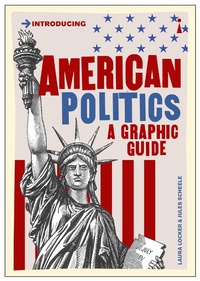
American Politics
Description

Following in the footsteps of the highly successful Queer: A Graphic History, illustrator Jules Scheele teams up with Dr Laura Locker in this comic-book introduction to the political history of the Land of Opportunity.
How did a political outsider like Trump win the 2016 presidential election? Why do some Americans feel so strongly about gun rights? Is there a role for more than two political parties in the system?
Politics isn't something that just occurs in the West Wing or the gleaming Capitol building - it comes from the interaction between state and society, the American people living their daily lives. In this unique graphic guide, we follow modern citizens as they explore everything from the United States' political culture, the Constitution and the balance of power, to social movements, the role of the media, and tensions over race, immigration, and LGBT rights.
Step right up, and see what lies beneath the pageantry and headlines of this great nation.
More details
Other editions
Additional editions
Persons
Content
- Intro
- Title Page
- Copyright
- Contents
- Part I: The Foundations
- American Political Culture
- The Evolution of Core Values
- Political Ideology
- Social Liberalism
- Economic Liberalism
- Social Conservatism
- Economic Conservatism
- Overlapping Memberships
- A Divided Nation?
- Political Parties
- Evolution of Political Parties
- Political Parties and Machine Politics
- The Republican Party
- The Republican Party Platform
- Republican African-American Voters
- The Republican Party and The National Rifle Association
- The Democratic Party
- The Democratic Party Platform
- Third Parties: A Wasted Vote or A Necessity?
- Third Parties: Barriers to Election
- The Libertarian Party
- Green Party
- The Pew Center Typology
- Political Socialization
- The Constitution
- Establishing Federalism
- Express And Implied Powers
- Powers of the State Government: Reserved Powers
- Amending The Constitution: Procedures
- The Supreme Court and Constitutional Interpretation
- The Bill of Rights
- The Bill of Rights: History
- Due Process
- The Bill of Rights: Incorporation
- First Amendment: Freedom of Religion
- Freedom of Religion: The Lemon Test
- First Amendment: Freedom of Speech
- First Amendment: Freedom of Assembly
- Second Amendment: Right to Keep and Bear Arms
- Fourth Amendment: Search and Seizure
- Fifth Amendment: Self-Incrimination and Double Jeopardy
- Sixth Amendment: Right to Counsel
- Sixth Amendment: Speedy Trial
- Eighth Amendment: Cruel and Unusual Punishment
- A Right To Privacy
- Part II: The Balance of Power
- The Presidency
- Electing The President: The Electoral College
- Arguments in Favor of The Electoral College
- Powers of The President
- Presidential Powers: Military
- Presidential Powers: Legislative
- Presidential Powers: Executive Orders
- Executive Orders: Limits
- Presidential Directives
- Presidential Powers: Diplomatic
- Presidential Powers: Appointment
- The Presidency: Impeachment and Removal from Office
- The Presidency: Succession
- The Vice President
- The Cabinet
- The Executive Office of The President
- Congress's Role in The Balance of Power
- Constitutional Powers
- Congressional Oversight
- Party and Power in Congress
- Congressional Elections
- Campaign Finance
- Redistricting, Reapportionment, and Gerrymandering
- How Congress Works: The Committee System
- How A Bill Becomes A Law
- Lobbying Congress
- The Judiciary's Role In The Balance of Power
- The History of The Judiciary
- The Structure of The Courts
- The Supreme Court
- The Supreme Court: Originalism
- The Supreme Court: Non-Originalism
- District and Appeals Court
- The Federal Bureaucracy
- Tribal Government
- Tribes As Sovereign Nations
- Tribal, State, and Federal Law
- Federal Indian Trust Responsibility
- Bureau of Indian Affairs
- Tribal Termination
- Making Public Policy
- Foreign Policymaking
- Power in the International Arena
- Collective Defense Agreements
- Trade Agreements
- Foreign Aid
- Social Policymaking
- New Deal Programs
- Social Security
- The War On Poverty
- Medicare and Medicaid
- Personal Responsibility and Work Opportunity Act
- The Affordable Care Act
- Environmental Policy
- Global Warming
- The War On Drugs
- Legalizing Marijuana
- The Opioid Epidemic
- Prisons And The Criminal Justice System
- Military Prisons
- Immigration
- Mexican Immigration
- Deferred Action for Childhood Arrivals
- Gun Control
- Federal Gun Restrictions
- State Gun Restrictions
- Economic Policymaking
- Monetary Policy: The Central Bank
- Fiscal Policy
- Taxation
- Government Spending
- National Debt
- Regulatory Policymaking
- Regulatory Policymaking in Business
- Regulatory Policymaking: Labor
- Part III: The Fourth Branch of Government - The People
- The Media: Early History
- The Media: Relationship to The White House
- The Media: Satire
- The Media: Social Media
- The Media: The 24-Hour News Cycle
- The Media: Fake News?
- Interest Groups: The Dangers of Faction
- The Professionalization of Groups
- Campaign Finance
- Campaign Finance: Reform Efforts
- Campaign Finance: The BCRA and Citizens United
- A Nation of Joiners
- Social Movements
- The Abolitionist Movement
- Women's Rights: Voting
- Women's Rights: The Feminist Movements
- Women's Rights: 3rd and 4th Waves
- Labor Movement
- LGBT Rights: Marriage Equality
- Trans Rights
- Civil Rights
- Black Lives Matter
- Opposition to and Evolution of Black Lives Matter
- The Tea Party
- The Tea Party: Legacy
- The Alt-Right "Movement"?
- The KKK
- Neo-Nazi Groups
- Antifa
- Towards A More Perfect Union
- Conclusion
