

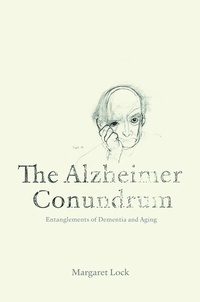
The Alzheimer Conundrum
Entanglements of Dementia and Aging
1st Edition
Published on 27. October 2013
328 pages
978-1-4008-4846-1 (ISBN)
Description

Why our approaches to Alzheimer's and dementia are problematic and contradictory
Due to rapidly aging populations, the number of people worldwide experiencing dementia is increasing, and the projections are grim. Despite billions of dollars invested in medical research, no effective treatment has been discovered for Alzheimer's disease, the most common form of dementia. The Alzheimer Conundrum exposes the predicaments embedded in current efforts to slow down or halt Alzheimer's disease through early detection of pre-symptomatic biological changes in healthy individuals.
Based on a meticulous account of the history of Alzheimer's disease and extensive in-depth interviews, Margaret Lock highlights the limitations and the dissent associated with biomarker detection. Lock argues that basic research must continue, but should be complemented by a public health approach to prevention that is economically feasible, more humane, and much more effective globally than one exclusively focused on an increasingly harried search for a cure.
Due to rapidly aging populations, the number of people worldwide experiencing dementia is increasing, and the projections are grim. Despite billions of dollars invested in medical research, no effective treatment has been discovered for Alzheimer's disease, the most common form of dementia. The Alzheimer Conundrum exposes the predicaments embedded in current efforts to slow down or halt Alzheimer's disease through early detection of pre-symptomatic biological changes in healthy individuals.
Based on a meticulous account of the history of Alzheimer's disease and extensive in-depth interviews, Margaret Lock highlights the limitations and the dissent associated with biomarker detection. Lock argues that basic research must continue, but should be complemented by a public health approach to prevention that is economically feasible, more humane, and much more effective globally than one exclusively focused on an increasingly harried search for a cure.
All prices
More details
Edition
Course Book
Language
English
Place of publication
Princeton, NJ
United States
Publishing group
De Gruyter
Target group
Professional and scholarly
Edition type
Digital original
Product notice
Reflowable
Illustrations
12 line illus.
File size
2,43 MB
ISBN-13
978-1-4008-4846-1 (9781400848461)
Schweitzer Classification
Other editions
Additional editions
Book
10/2015
Princeton University Press
€30.50
Shipment within 10-20 days
Book
10/2013
Princeton University Press
€49.52
Shipment within 10-20 days
Person
Margaret Lock is the Marjorie Bronfman Professor Emerita in the Department of Social Studies of Medicine and the Department of Anthropology at McGill University.
Content
Acknowledgments ix
Orientations 1
Chapter 1 Making and Remaking Alzheimer Disease 26
Chapter 2 Striving to Standardize Alzheimer Disease 51
Chapter 3 Paths to Alzheimer Prevention 76
Chapter 4 Embodied Risk Made Visible 100
Chapter 5 Alzheimer Genes: Biomarkers of Prediction and Prevention 132
Chapter 6 Genome-Wide Association Studies: Back to the Future 156
Chapter 7 Living with Embodied Omens 174
Chapter 8 Chance Untamed and the Return of Fate 207
Chapter 9 Transcending Entrenched Tensions 229
Afterword: Portraits from the Mind 243
Notes 247
Bibliography 277
Index 301
Orientations 1
Chapter 1 Making and Remaking Alzheimer Disease 26
Chapter 2 Striving to Standardize Alzheimer Disease 51
Chapter 3 Paths to Alzheimer Prevention 76
Chapter 4 Embodied Risk Made Visible 100
Chapter 5 Alzheimer Genes: Biomarkers of Prediction and Prevention 132
Chapter 6 Genome-Wide Association Studies: Back to the Future 156
Chapter 7 Living with Embodied Omens 174
Chapter 8 Chance Untamed and the Return of Fate 207
Chapter 9 Transcending Entrenched Tensions 229
Afterword: Portraits from the Mind 243
Notes 247
Bibliography 277
Index 301

