

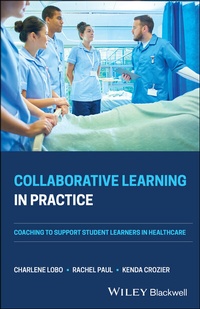
Collaborative Learning in Practice
Description

Collaborative Learning in Practice provides a detailed description of the CLiP model and explains how coaching can be integrated into a range of learning conversations. Written by an experienced team of practitioners, this unique text describes the theoretical basis of the CLiPmodel, highlights potential pitfalls and successes, and offers practical guidance on implementation. A wealth of real-world case studies demonstrates how the CLiPmodel works in a range of professional and practice settings, considering healthcare education, research and leadership. This authoritative book:
* Provides an overview of the innovative CLiP model of practice-based learning, linked to the NMC standards for student supervision and assessment
* Offers numerous real-life examples of how to implement and evaluate CLIP in practice
* Explores the use of reverse mentoring to update and share knowledge collaboratively
* Discusses how coaching approaches such as GROW and OSCAR can enhance learning experiences
* Includes access to online learning tools including self-assessment tests, additional practical scenarios and case studies, and links to further reading
Developing practitioner knowledge and skill through an accessible, reader-friendly approach, Collaborative Learning in Practice is an essential resource for nursing and allied healthcare educators, nursing and healthcare students, and practice mentors, supervisors, and assessors in clinical environments.
More details
Other editions
Additional editions
Persons
Charlene Lobo, BSc, MA RN, RHV, is a Consultant in Practice Education; formerly a Senior Lecturer at the University of East Anglia, where she served as the Academic Lead for Practice Learning and the Collaborative Learning in Practice (CLiP) project.
Rachel Paul, BA, MA, is the Director of ConsultEast, a management and leadership consultancy that integrates coaching with learning, embedding both into practice and performance. She was previously Lecturer in Education Studies at the City College of Norwich, UK.
Kenda Crozier, PhD, MSc, BSc, RM, RN, SFHEA, is Professor of Midwifery at the University of East Anglia, UK, where she has held several senior leadership roles including Faculty Associate Dean for PGR and Lead Midwife for Education.
Content
Collaborator Biographies xiii
Foreword xix
Acknowledgements xxiii
Abbreviations xxv
About the Companion Website xxvii
Introduction 1 Kenda Crozier, Charlene Lobo and Rachel Paul
References 4
Glossary 5
Part I Evolution of CLiPTM 7
1 Changes in Practice Learning 9 Kenda Crozier and Charlene Lobo
Regulation of Nurse and Midwifery Education 9
The Return of the Apprentice 13
Clinical Practice Education 13
Establishing a Quality Learning Environment 15
References 17
2 Models of Practice Learning 20 Kenda Crozier
Practice Education 20
Practice Educator Roles 22
Faculty and Clinical Educators in Practice Settings 23
UK Mentorship Model 25
Hub and Spoke Models 28
The Student Perspective 29
Dedicated Education Units and Clinical Clusters 31
Real-Life Learning Wards 33
References 34
3 The CLiPTM Model 39 Charlene Lobo and Jonty Kenward
Domains of CLiP 43
Organisation of Learning 43
Coaching Philosophy 46
Principles of CLiP 47
Collaboration 47
Real-Life Learning 50
Time to Teach and Time to Learn 53
Stepping up and Stepping Back 55
Feedback and Assessment 57
References 61
4 System-Wide Approaches to CLiPTM 64
4.1 The South West CLiPTM Community Cluster Project 65 Jane Bunce
Background and Drivers 65
Why CLiP? 65
Project Overview 66
How Was CLiP Implemented in the Pilot Sites? 66
What Worked Well in the Pilot? 67
What Were the Main Challenges? 68
What Did We Decide we Would Do Differently Following the Pilot? 68
References 69
4.2 Lancashire Teaching Hospitals NHS Foundation Trust Implementation of the CLiPTM Model of Supervision 70 Jonty Kenward
Background and Drivers 70
Key Aims 71
Implementation 71
What Worked Well on Implementation 73
What Were the Main Challenges? 73
Top Tips 74
References 74
4.3 James Paget University NHS Foundation Trust Implementing the CLiPTM Model in Maternity Care 75 Kenda Crozier, Jodie Yerrell and Kirsty Tweedie
Introduction 75
How Was CLiP Implemented? 75
Timeline 79
Top Tips 79
References 80
5 Coaching Theory and Models 81 Rachel Paul
Coaching Theory 82
The Psychodynamic Coaching Approach 84
Cognitive Behavioural Coaching 86
Thinking errors to be aware of as a coach, educator, or student 89
Solutions Focused Coaching 90
Person-Centred Coaching 92
Gestalt and Coaching 93
Narrative Coaching 94
Psychological Development in Adulthood and Coaching 94
Positive Psychology 95
Being resilient...bouncebackability 96
Transactional Analysis 96
Some Conclusions 98
Key coaching skills and templates to experiment with 99
References 101
6 Evaluation 103 6.1 Plymouth University 104 Graham Williamson, Adele Kane and Jane Bunce
Background 104
Study 1: Collaborative Learning in Practice: A Systematic Review and Narrative Synthesis of the Research Evidence in Nurse Education 105
Study 2: 'Thinking like a Nurse'. Changing the Culture of Nursing Students' Clinical Learning: Implementing Collaborative Learning in Practice 107
Study 3: Investigating the Implementation of a Collaborative Learning in a Practice Model of Nurse Education in a Community Placement Cluster: A Qualitative Study 109
Study 4: Student Nurses, Increasing Placement Capacity and Patient Safety. A Retrospective Cohort Study 111
Summary and Key Messages 112
References 113
6.2 University of East Anglia 115 Antony Arthur, Rebekah Hill and Michael Woodward
Is it Better Than What We Did Before? The Challenge of Evaluating New Models of Practice Learning 115
References 116
Part II Coaching Application 117
7 Introduction to Coaching in Practice 119 Rachel Paul and Charlene Lobo
Language of Coaching 120
Thinking Errors 124
'Clean' Language 124
Re-Phrasing 128
The Learning Journey 129
Having Difficult Conversations 131
References 134
8 'A Coaching Day' 135 Rachel Paul, Charlene Lobo and Jonty Kenward
Scenario 1: Beginning the Shift, Managing and Negotiating Student-Led Learning 137
Scenario 2: One-to-One Supervision - Using a Coaching Approach to Assess/Make Judgements About Student Competence/the Level of Supervision Needed 143
Scenario 3: Checking in Midway Conversation 146
Scenario 4: End of a Shift - Using Coaching Approaches to Giving Feedback 150
9 Acute Adult Care - Orthopaedic and Trauma Ward 154 Rachel Paul, Charlene Lobo and Helen Bell
Scenario 1: A Positive Perspective of the 'Failing Student': Helping Students Understand Their Development Needs and Action Planning to Meet Them 156
Scenario 2: 'There is no such thing as a failing student' 161
Scenario 3: Solution-Focused Conversations and Supporting the Student's Emotional Intelligence to Help Turn a Negative Situation into Positive Learning 164
10 Community Nursing Case Study 169 Rachel Paul, Charlene Lobo and Theresa Walker
Community Nursing - City Team A 170
Scenario 1: Unconfident Student, Overcoming Obstacles to Learning 171
How the Situation Was Resolved 176
Scenario 2: Team Discord, Facilitating Teamworking 177
Scenario 3: Using Coaching Approaches in a Crisis 181
What Made This Incident Important to Learn From? 185
Clear Acknowledgement of Their Own Life Experiences as a Basis for Learning 185
11 Maternity Case Study 187 Kenda Crozier, Rachel Paul and Charlene Lobo
Scenario 1: Balancing Student-Led Learning and Client Care Needs 188
Timeline for the Student Journey 193
Scenario 2: Increasing Confidence 194
Scenario 3: Supporting Development and Action Planning 198
References 201
12 Mental Health 202 Rachel Paul, Charlene Lobo, Ronald Simpson and Helen Bell
Scenario 1: Managing a Disgruntled Student 204
Scenario 2: Managing Resistance to Learning 207
Scenario 3: Developing Team Support in an Unfair World 210
Scenario 4: Who Cares for the Supervisors? 214
References 218
Conclusion 220 Kenda Crozier, David Huggins, Charlene Lobo and Rachel Paul
The Importance of Sustainable Systems of Student Support 220
Increasing Student Numbers 221
Preparation for Coaching 223
Clinical Educator and Link Lecturer Support 224
New NMC Standards 224
Partly Applying the Model 225
Lessons Learned 226
Recommendations 227
References 228
Index 230
Collaborator Biographies
Tony Arthur
Tony Arthur is Professor of Nursing Science at the University of East Anglia. He is also a nurse at the Norfolk and Norwich University Hospitals Foundation NHS Trust where he works on an acute older people's medical ward. He has led and collaborated on a range of research studies, where his interests lie in the evaluation of nursing interventions for older people and the epidemiology of ageing. He has degrees in Sociology, Medical Statistics, and Epidemiology.
Dr Helen Bell, PhD, MSc, PGCEA, RNT, BSc (Hons), RN, PMRAFNS
Dr Helen Bell is an Associate Professor in Adult Nursing, Practice Education Lead for Adult Nursing, and Academic Lead for Equality, Diversity, and Inclusion at University of East Anglia. She has been involved in nurse education for 27 years, specialisng in aeromedical nursing in the RAF and critical care nursing. She supports a diverse range of learners in clinical practice including direct entry nursing students, accelerated pre-registration master's students, and nursing degree/nursing associate apprentices, their practice supervisors/assessors, and clinical educators, across a broad spectrum of regional healthcare placements, many of whom have adopted the CLiPT model or adaptations thereof. Her research interests focus on the factors that contribute to success in pre-registration nurse education.
Jane Bunce
Jane Bunce has worked in medical education since 2005 and currently works for Health Education England (HEE) as Quality Lead in the South West. Jane's own educational achievements include a First Class Degree in Business Studies and an MSc in Healthcare Leadership. Following her Masters, Jane undertook a HEE Fellowship to extend her interest in research and this led to her collaboration with the University of Plymouth on several research projects related to the development of Collaborative Learning in Practice in the South West. Jane successfully project managed the HEE SW CLiP Community Cluster Project in 2018/2019, which piloted the approach in GP, care home, and hospice settings. Most recently, she is leading the HEE CLiP PCN project in the South West which aims to explore how the benefits of the model across primary care networks.
Professor Kenda Crozier, PhD, MSc, PGDip, BSc, RM, RN
Kenda Crozier is Professor of Midwifery at the University of East Anglia. She has been involved in nursing and midwifery education for 20 years, with experience in developing curricula in nursing and midwifery that include interprofessional practice, enquiry based learning at undergraduate level, advanced practice programmes for health professions at Masters level, and postgraduate research training programmes for doctoral students. Her interest in CLiP began with a University of East Anglia visit to VU Amsterdam where she experienced it in action. Recently, she has run workshops with Health Education England to promote collaborative learning in practice for midwifery education. Her current educational research is exploring the current development of advanced practice in midwifery.
Rebekah Hill
Rebekah Hill works as an Associate Professor within the School of Health Sciences, University of East Anglia. Her role involves teaching and assessing both undergraduate and postgraduate healthcare practitioners across a range of professions. Rebekah now works as the Director of Education in the school and has a special interest in assessment of learning. Rebekah works clinically as an advanced life support instructor and within gastroenterology nursing, maintaining her special interest in hepatitis C.
Mr David Huggins
Senior Lecturer/Course Director Operating Department Practice
After training in the National Health Service (NHS) in 1984 as an operating department assistant (ODA) at the James Paget University Hospital in Gorleston on Sea, Norfolk, I worked in many other areas including London, Manchester, and Norwich as well as a period overseas as a cardiac technician in St Vincent's Hospital Sydney, New South Wales.
I became training lead for ODAs in Harrogate in the early 1990s and gained various teaching and assessing qualification during this time. In 1995, I moved to the Norfolk and Norwich University Hospital where I was employed as a Senior Operating Department Practitioner (SODP) and was responsible for not only training of ODPs but staff development too. In 2003, ODP training entered Higher Education (HE) and I was the first lecturer in operating department practice at the University of East Anglia.
As course director, I am actively involved with promoting the operating department practitioner (ODP) role and influencing practice. I have over 30 years' experience of working in a variety of operating theatre settings locally, nationally, and internationally and have a keen interest in all educational matters, especially the vital role that educators and coaches play in supporting and developing learners. I also enjoy delivering post-reg modules and am leadership pathway lead in the School of Health Sciences.
Adele Kane, MSc Health and Social Care Education, RN, RNT, HEA Fellow
Adele Kane is an Associate Head of School Practice Learning with Plymouth University, Programme Lead and Subject Specialist for Return to Practice & Health Education England Peninsular SW Fellow Practice Learning.
She has been programme Lead and Subject Specialist in Mentorship and lead projects in E-Learning development. Through her role with the University and Health Education England she has actively supported the implementation of Collaborative Learning in Practice (CliP) Projects within the majority of Acute and Community Hospital care settings for Adult, Mental Health and Midwifery students in the southwest. More recently, leading a project within the private sector with GP Practices, Hospices and Care Homes. Currently a consultant advisor for Health Education England in a joint project with Southwest HEI's to introduce CLIP within Primary care networks as a next step forward.
Jonty Kenward
Jonty has been a qualified nurse for 25 years, her clinical background was in community practice, and as an anaesthetic nurse. For the past seven years, she has worked in a number of roles in practice education including, clinical tutor, practice education facilitator (PEF), and CLiP lead where she introduced and developed CLiP within the hospital Trust. Currently, she holds the position of Head of Student Trainee Placement Support, Lancashire Teaching Hospitals NHS Foundation Trust (LTHTR) which involves leading all undergraduate and postgraduate education teams within the organisation. Jonty is passionate about the Collaborative Learning in Practice model for student support and learning; she implemented the CLiP model at LTHTR in 2015, working with her teams to develop this within nursing and midwifery across all acute clinical areas. She has spent the last five years promoting the model nationally and sharing best practice with other higher education institutions and NHS Trusts.
Charlene Lobo, MA Healthcare Education, BSc (Hons.), RN, RHV
Charlene Lobo works as an educational consultant, having spent most of her employed life as a nurse, health visitor, and Senior Lecturer in Public Health and Primary Care at the University of East Anglia. As senior lecturer, she also held the practice education lead in the School of Health Sciences, very much focusing on the quality of the learning environment and how to improve the experiences for both students and mentors. The notion of 'the burden of mentorship' arose from an extensive study over one year collating the feedback from mentors of their experiences of supporting students in practice, and it is from this position that she sought to make a difference and developed the Collaborative Learning in Practice (CLiPT) model of practice learning. This book has brought together her long-time desire to share her insights of the CLiP model from both theoretical and practical perspectives.
Rachel Paul, MA in Professional Development and Education BA (Hons) Business Studies
Rachel worked in the City of London for a pioneering (pre internet) online Information Retrieval company before making a bold decision to leave a secure career and volunteer for VSO in a refugee settlement in Zambia. On her return to the UK Rachel worked helping people to set up co-operative businesses before moving to Lowestoft College delivering business and management training. At Lowestoft College Rachel undertook her Certificate in Education and then completed a Masters at UEA. In 1999, Rachel moved to the School of Education at Norwich City College, delivering vocational and postgraduate education qualifications. Since 2004, Rachel has run ConsultEast specialising in helping people and teams work better and has built a strong reputation for coaching others in challenging, long-standing and intractable issues. ConsultEast also developed and delivered Institute of Leadership and Management Coaching qualifications at level five and seven. Rachel is qualified as a Cognitive Behaviour Coach and Coaching Supervisor with the Association of Coaching.
Ronald Simpson
Ronnie Simpson was a practice educator for a mental health trust. As part of his role as a Registered Mental Health Nurse he had responsibility for students in the clinical area where CLiP was implemented into Mental Health Practice. He recognised the need and implemented a position...
