

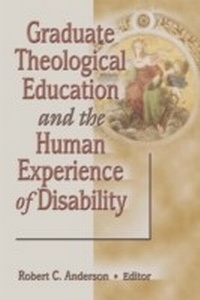
Graduate Theological Education and the Human Experience of Disability
1st Edition
Published on 12. October 2012
134 pages
978-1-136-45967-2 (ISBN)
Description

Create pathways in theological education and congregational practice for people with disabilities!
Graduate Theological Education and the Human Experience of Disability examines graduate schools of theology and their limited familiarity with the study of disabilityand the presence of people with disabilities in particularon their campuses. Dubbed a missing note by one theologian, this text offers critical research and illuminates new pathways for theologia and practice in the community of faith. Reviews of previous literature, theology, and practices illuminate how people with disabilities have historically been marginalized by the religious community. Theologians, people with disabilities, and researchers offer suggestions for incorporating disability studies into theological education and religious life.
This text contains firsthand testimony from people with disabilities who are the necessary sources of wisdom for overcoming barriers. By infusing education into existing theological curriculum, seminaries may better prepare their students for leadership and ministry in their congregations. People with disabilities number 18% of the population, yet represent only 5-7% of congregational membership.
This book explores aspects of theology and disability such as:
the challenges faced by theological schools that desire to improve both theological curriculum and facilities
a review of literature that connects theology and disabilityfrom sources such as scripture, history, faith traditions, and social theory
the various ideologies that shape the way the human body is understoodredefining normal in theological education
an overview of critical boundaries that mark the limits and possibilities for theological inquiry about the human experience of disability
creative concepts that religious communities may use to better include people with disabilities and their families
how the religious community may benefit from the gifts, talents, and leadership of people with disabilities
Graduate Theological Education and the Human Experience of Disability contains a reprint of Dr. Harold Wilke's landmark 1978 article from Theological Education (published by the Association of Theological Schools). Dr. Wilke, born without arms, was the theologian, minister and scholar who first articulated the need to address the human experience of disability in both theological education and congregational life. With extensive biographies and inclusive liturgies, this innovative text is a valuable resource for seminary professors and leaders, clergy, and disability advocates.
Graduate Theological Education and the Human Experience of Disability examines graduate schools of theology and their limited familiarity with the study of disabilityand the presence of people with disabilities in particularon their campuses. Dubbed a missing note by one theologian, this text offers critical research and illuminates new pathways for theologia and practice in the community of faith. Reviews of previous literature, theology, and practices illuminate how people with disabilities have historically been marginalized by the religious community. Theologians, people with disabilities, and researchers offer suggestions for incorporating disability studies into theological education and religious life.
This text contains firsthand testimony from people with disabilities who are the necessary sources of wisdom for overcoming barriers. By infusing education into existing theological curriculum, seminaries may better prepare their students for leadership and ministry in their congregations. People with disabilities number 18% of the population, yet represent only 5-7% of congregational membership.
This book explores aspects of theology and disability such as:
the challenges faced by theological schools that desire to improve both theological curriculum and facilities
a review of literature that connects theology and disabilityfrom sources such as scripture, history, faith traditions, and social theory
the various ideologies that shape the way the human body is understoodredefining normal in theological education
an overview of critical boundaries that mark the limits and possibilities for theological inquiry about the human experience of disability
creative concepts that religious communities may use to better include people with disabilities and their families
how the religious community may benefit from the gifts, talents, and leadership of people with disabilities
Graduate Theological Education and the Human Experience of Disability contains a reprint of Dr. Harold Wilke's landmark 1978 article from Theological Education (published by the Association of Theological Schools). Dr. Wilke, born without arms, was the theologian, minister and scholar who first articulated the need to address the human experience of disability in both theological education and congregational life. With extensive biographies and inclusive liturgies, this innovative text is a valuable resource for seminary professors and leaders, clergy, and disability advocates.
More details
Language
English
Place of publication
London
United Kingdom
Publishing group
Taylor & Francis Ltd
Target group
College/higher education
Product notice
Reflowable
File size
1,87 MB
ISBN-13
978-1-136-45967-2 (9781136459672)
Copyright in bibliographic data and cover images is held by Nielsen Book Services Limited or by the publishers or by their respective licensors: all rights reserved.
Schweitzer Classification
Other editions
Additional editions
Robert C. Anderson
Graduate Theological Education and the Human Experience of Disability
Book
12/2003
1st Edition
Routledge
€205.40
Shipment within 10-20 days
Robert C. Anderson
Graduate Theological Education and the Human Experience of Disability
Book
11/2003
1st Edition
Routledge
€85.60
Article not available at the moment
Persons
Content
Introduction: A Look Down the Road (Robert C. Anderson)
Access to Professional Education (Harold H. Wilke)
Integrating Welcome into the Seminary Curriculum (Bruce C. Birch)
In Search of the Disabled Human Body in Theological Education: Critical Perspectives on the Construction of NormalcyAn Overview (Robert C. Anderson)
Toward a Theology That Includes the Human Experience of Disability (Deborah Creamer)
Christian Theology and Human Disability: A Literature Review (W. Daniel Blair)
Healing and Hospitality in Jesus' Ministry (Bruce G. Epperly)
Inclusiveness as Hospitality in Worship Settings (Laurence Hull Stookey)
Each Made in God's Image, Each a Unit of God's Grace (Lu Leone with Ginny Thornburgh)
Index
Reference Notes Included
Access to Professional Education (Harold H. Wilke)
Integrating Welcome into the Seminary Curriculum (Bruce C. Birch)
In Search of the Disabled Human Body in Theological Education: Critical Perspectives on the Construction of NormalcyAn Overview (Robert C. Anderson)
Toward a Theology That Includes the Human Experience of Disability (Deborah Creamer)
Christian Theology and Human Disability: A Literature Review (W. Daniel Blair)
Healing and Hospitality in Jesus' Ministry (Bruce G. Epperly)
Inclusiveness as Hospitality in Worship Settings (Laurence Hull Stookey)
Each Made in God's Image, Each a Unit of God's Grace (Lu Leone with Ginny Thornburgh)
Index
Reference Notes Included
