

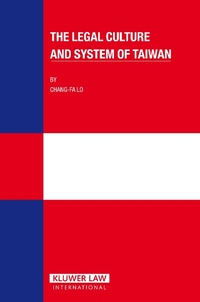
The Legal Culture and System of Taiwan
Published on 15. September 2006
264 pages
978-90-411-5595-5 (ISBN)
Description

With a special place among the world's important trading countries, Taiwan
presents the international practitioner with its own particular legal issues
and problems. Among the world's most many-sourced legal systems, the law of
Taiwan sustains major elements from Chinese and Japanese sources as well as
its own indigenous and traditional rules and strong influences from both civil
and common law traditions.
This convenient guide, written by a scholar-practitioner who is both Dean of
Law at the National Taiwan University and a panelist in the World Trade
Organization's Dispute Settlement Body, is an ideal introduction and practical
handbook for anyone involved in a transaction that raises issues in Taiwanese
law. After detailed summaries of Taiwan's system of government, its court
system, sources of law, and administrative law and procedure, the author
covers practice and procedure in such fields of legal activity as the
following:
contracts;
torts;
consumer protection;
property rights;
family law;
law of succession;
alternative dispute resolution;
intellectual property law;
trade;
government procurement;
labor law; and
criminal law and procedure.
International lawyers will find all the legal situations most likely to arise
in the course of transactions connected to Taiwan covered expertly and
knowledgeably in this very useful book. It is also valuable to students and
scholars for its special insights into issues of comparative law.
presents the international practitioner with its own particular legal issues
and problems. Among the world's most many-sourced legal systems, the law of
Taiwan sustains major elements from Chinese and Japanese sources as well as
its own indigenous and traditional rules and strong influences from both civil
and common law traditions.
This convenient guide, written by a scholar-practitioner who is both Dean of
Law at the National Taiwan University and a panelist in the World Trade
Organization's Dispute Settlement Body, is an ideal introduction and practical
handbook for anyone involved in a transaction that raises issues in Taiwanese
law. After detailed summaries of Taiwan's system of government, its court
system, sources of law, and administrative law and procedure, the author
covers practice and procedure in such fields of legal activity as the
following:
contracts;
torts;
consumer protection;
property rights;
family law;
law of succession;
alternative dispute resolution;
intellectual property law;
trade;
government procurement;
labor law; and
criminal law and procedure.
International lawyers will find all the legal situations most likely to arise
in the course of transactions connected to Taiwan covered expertly and
knowledgeably in this very useful book. It is also valuable to students and
scholars for its special insights into issues of comparative law.
More details
Other editions
Additional editions
Chang-fa Lo
The Legal Culture and System of Taiwan
Book
09/2006
Kluwer Law International
€241.07
Shipment within 10-20 days
Content
- Cover
- Half Title Page
- Title Page
- Copyright Page
- Table of Contents
- Preface
- About the Author
- Bibliography & Further Reference
- Chapter I A Brief Legal History and Branches of Powers of Government: Transplantation and Creation
- I. A Brief History of the Legal Framework of Taiwan
- II. Separation of Five Powers
- Chapter II Basic Elements of Justice System in Taiwan: The Courts, Bench, Bar and Legal Education
- I. Court System
- A. Levels of Courts
- B. Administrative Courts Compared with Ordinary Courts
- C. Some Improved Features of the Court System in Taiwan
- D. Independence of Judges
- E. Declaration of Unconstitutionality of Law by Judges
- II. Prosecutors' Offices
- III. Appointment of Judges and Prosecutors
- IV. Bar
- V. Legal Education
- Chapter III The Council of Grand Justices: An Important Design to Guard the Constitution
- I. The Power of Council of Grand Justices to Interpret: An Important Role in the Legal System of Taiwan
- II. The Intervention of Legislative Practice to Ensure Constitutionalism: Two Interpretations with Particular Importance
- III. The Grand Justices as the Arbitrator of Political Problems
- IV. The Grand Justices as Advisor for Certain Social Problems
- V. The Council of Grand Justices as the Constitutional Court
- VI. Issues for Further Reflection and Future Reform
- Chapter IV Sources of Law: The Precedents Being Merely a Psychological and Subjective Element
- I. The Constitution as a Source of Law
- II. Legislation and Administrative Regulations
- III. International Treaties and Customary International Law as Sources of Law
- IV. Previous Judicial Decisions and Precedents
- V. Customary Practices
- VI. Underlying Legal Principle (General Principles of Law)
- Chapter V The Constitution of the Republic and Human Rights Protection in Progress
- I. General Introduction
- II. The Preamble of the Constitution
- III. Some Basic Constitutional Principles
- A. Republican System
- B. Rule of Law
- C. Emphasis on Social Welfare
- IV. The Legal Relations between Taiwan and Mainland China under the Constitution
- V. Basic Rights Guaranteed by the Constitution
- Chapter VI Administrative Law Being an Important Scheme to Govern Administrative Activities
- I. The Principle of Administration Based on Law
- II. Principle of Proportionality
- III. Procedural Due Process and Right to Be Heard
- IV. Transparency
- V. Prevention of Misuse of Administrative Guidance
- Chapter VII Some Essential Elements Governing Civil Relations, Including Principles of Morality and Good Faith
- I. A General Description of the Civil Code
- II. The Role of Public Order and Good Morals in Civil Matters
- III. Non-misuse of Right and the Principle of Good Faith
- IV. Legal Capacity of Assuming Rights and Obligation
- V. Statute of Limitation
- Chapter VIII Some Principles of Contract Law: Basic Rules Governing Economic Activities
- I. General Framework of Contract Law in the Civil Code
- II. Capacity of Parties to Conclude a Contract
- III. Agency
- IV. Expression of Intent to Contract
- V. Interpretation of Expression and Pre-drafted Contractual Terms
- VI. Offer and Revocation of an Offer
- VII. Acceptance and Revocation of an Acceptance
- VIII. Requirement of Meeting of Minds
- IX. Preliminary Contract and Primary Contract
- X. Rewards
- XI. Earnest Money (Deposit) and Penalty
- XII. Obligations of Performance and the Situations of Non-performance
- XIII. Change of Circumstances
- XIV. Rescission of a Contract
- XV. Compensation for Damage
- Chapter IX Various Typical Contracts with Some Reflecting the Social and Economic Activities in Taiwan
- I. Purchase/Sale Contracts
- II. Gift
- III. Lease
- IV. Loan
- V. Employment Contract
- VI. Contract of Hire for Work
- VII. Tourist Contract
- VIII. Entrustment Contract (Contract of Mandate)
- IX. Carriage
- X. Partnership
- XI. Private Association of Mutual Aid
- XII. Suretyship
- Chapter X Unjust Enrichment and Management of the Affairs of Another without Mandate: Creating Rights and Obligations without Contract or Wrongdoing
- I. Unjust Enrichment: Quasi Contract?
- II. Managing the Affairs of Another Without Mandate
- Chapter XI Torts: Certain New Types of Tortious Acts to Reflect the Development of the Society
- I. A Right Being Infringed or Injured
- II. The Existence of an Act Being Intentionally Committed or Negligently Performed
- III. Legal Impermissibility
- IV. Damage or Loss Suffered by the Plaintiff
- V. Causal Link between the Act and the Damage Suffered
- VI. Breach of Legislative Provisions Protecting Others
- VII. Special Types of Torts
- A. Joint Tortious Act
- B. Public Employee's Liability
- C. Statutory Representative's Liability
- D. Employer's Liability
- E. Hirer's Liability
- F. Possessor's Liability for Animals
- G. Owner's Liability for Construction
- H. Manufacturer's Liability for the Product
- I. Driver's Liability
- J. Liability for the Risk Created
- VIII. Damages
- A. Compensation of the Actual Damage
- B. Compensation of Specific Spending or Other Losses
- C. Compensation of Non-property Loss
- Chapter XII Consumer Protection Framework in Taiwan: High Level of Protections for Weaker Parties
- I. Consumer Protection Act
- II. Some Provisions in the Civil Code
- III. Some Provisions in the Fair Trade Act
- Chapter XIII Property Law: A Number of Traditional Property Rights Established to Meet the Needs of the Society
- I. The Principle of Property Rights Being Fixed Only by Statutes
- II. The Principle of Publicity
- III. The Principle of Public Trust
- IV. The Types of Property Rights
- A. Ownership
- B. Superficies, Yung-tien, Servitudes, and Dien
- C. Mortgage, Pledge and Retention
- Chapter XIV Family Law and the Law of Inheritance: with Chinese Tradition Playing Certain Roles
- I. Family Law
- A. Definition of Relative
- B. Marriages and Engagements
- C. Property Arrangement of the Couple
- D. Divorce
- E. Parent-Child Relations
- F. Custodian
- G. Maintenance of Relatives
- H. Family
- II. Law of Inheritance
- A. Inheritors
- B. Effect of Inheritance
- C. Limited Inheritance and Giving-up of Inheritance
- D. Last Will and Testament
- Chapter XV The Prevention of Domestic Violence Law: An Important Change of Traditional Domestic Relations
- I. Some Traditional Concepts about Domestic Relations
- II. Rules Governing Domestic Relations Prior to the Prevention of Domestic Violence Law and the Background of Enacting the Law
- III. The Scope of Protection under the Prevention of Domestic Violence Law
- IV. The Application and the Issuance of Protective Order
- V. Civil Protective Order
- VI. Criminal Procedures
- VII. Preventive and Therapeutic Measures
- VIII. Additional Positive Effects Arising from the Law
- Chapter XVI Civil Procedure and ADRs: The Dispute Resolution System Being in Line with International Practice
- I. Civil Procedure
- A. Some Basic Principles Adopted in the Code of Civil Procedure
- B. Determination of Jurisdictions
- C. Judges Withdrawing from Conducting Particular Cases to Avoid Conflict of Interest
- D. The Types of Civil Litigation and the Parties of a Case
- E. Counsels in Litigations
- F. Evidence
- G. Hearings
- H. The Concentration of Hearings
- II. Arbitration as an Important ADR in Taiwan
- A. Arbitration Agreement
- B. Arbitrators and Formation of an Arbitration Tribunal
- 1. The Qualifications of Arbitrators
- 2. Appointment of Arbitrators
- 3. Ethical Requirements of Arbitrators
- 4. Disclosure Requirements
- 5. Withdrawals
- 6. Arbitration Proceedings
- a. Place and Venue of Arbitration and Time Limit of Completing an Arbitration Procedure
- b. Procedures
- c. Amiable Compositeur
- 7. Enforcement of Arbitration Awards
- 8. Intervention by the Court on the Awards
- 9. Foreign Arbitration Awards
- a. Definition of Foreign Awards
- b. Enforcement of Foreign Awards
- III. Mediations Conducted by the Arbitration Institution and those by the Public Construction Commission
- A. Mediations Conducted by the Arbitration Institution
- B. Mediations Conducted by the Public Construction Commission (PCC)
- Chapter XVII Intellectual Property Laws: A Western Concept Fitting Smoothly into Eastern Society
- I. The Lack of Intellectual Property Concept in Traditional Society and the Introduction of Such Concept and Laws into the Society
- II. The Current Legal Framework
- III. Copyright Law
- IV. Trademark Law
- V. Patent
- Chapter XVIII The Law Governing the Domestic Market: The Backbone of the Open Economy in Taiwan
- I. The Enactment of the Fair Trade Act in an Age of Economic Growth
- II. Scope of the Fair Trade Act and Some Important Competition Rules and Typical Cases
- III. Authority in Charge and Its Law-Enforcement Strategies
- Chapter XIX The Rules Governing External Trade: A Relatively Free Market of Taiwan
- I. Foreign Trade Policy and Law
- II. The Anti-dumping Regime of Taiwan
- III. Re-examination of the Anti-dumping Policy from a Competition Perspective
- IV. Suggested Reform of the Anti-dumping Law from a Competition Perspective
- Chapter XX The Government Procurement Law: A Law Governing a Major Part of Economic Activities in Taiwan
- I. Background to Enacting a Modernized Procurement Law
- II. Some General Principles Governing Procuring Activities
- III. Different Types of Procuring Methods
- IV. Specification and Qualification
- V. Prevention of Bid Rigging
- VI. Disqualified Suppliers
- VII. Turn-key, Assignment of the Contract, and Joint Tendering
- VIII. Awarding the Contact
- IX. Bid Challenge
- Chapter XXI Labour Protection Regime in Taiwan: Another Indication of Modernization of the Society
- I. Some Backgrounds
- II. Working Conditions
- III. Working Environment
- IV. Equality of Works for Both Genders
- V. Protection of Workers from Being Massively Laid off
- VI. Labour Union
- VII. Labour Insurance
- VIII. Helping the Employment of Workers and Those Unemployed
- IX. Labour-Employer Dispute Resolution
- Chapter XXII Criminal Law and Criminal Procedure: With Improved Adversarial System in Place
- I. Criminal Law
- A. The Principle of Crime and Criminal Punishment Being Defined Only by Legislation
- B. Prescriptive Jurisdiction of the Criminal Code
- C. The Establishment of a Crime
- 1. Meeting the Required Elements Constituting a Crime
- 2. Being Illegal
- 3. Being Subjectively Responsible
- D. Penalty
- E. Some Combined Punishments
- 1. Imaginative Competing Offences
- 2. Correlative Offences
- 3. Consecutive Offences
- F. Specific Listed Offences
- II. Criminal Procedure
- A. General Introduction of the Criminal Procedure in Taiwan
- B. Arrest and Detention
- C. Evidence Rules and Due Process
- D. Burden of Proof and Self-incrimination
- E. Cross Examination
- F. Plea Bargain System in the Code
- G. Some Observation on the Recent Changes to the Criminal Procedure
- Chapter XXIII Concluding Remarks
- Index
- Back Cover
