

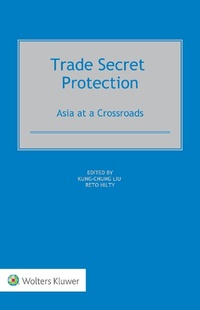
Trade Secret Protection
Asia at a Crossroads
Published on 11. August 2021
496 pages
978-94-035-3104-5 (ISBN)
Description

In recent years, as companies implement strategies to protect their intellectual property in a competitive environment with rapidly developing technology, trade secret protection law has gained increasing importance. This is especially true in Asia, where the staggering commercial value of trade secrets, fierce cross-border competition, and large-scale labour mobility characterize the region's economy. This book the first systematic study of trade secret protection law covering a number of key Asian jurisdictions provides a detailed analysis of the relevant statutory and case law of Japan, Korea, China, Taiwan, Thailand, Singapore, Hong Kong, Malaysia, and India. In addition, a chapter on European Union trade secret protection law is included for further purposes of comparison. Thirty-one local experts provide a clear overview of national laws and practices by examining the following aspects of their respective national regimes: requirements of trade secrets; validity and scope of confidentiality and/or non-competition clauses; burden of proof and its shifting or reversal; order for protecting the secrecy of a trade secret during prosecution and trial; civil remedies (injunctive relief and damages); and criminal punishment for trade secret infringement. With its authoritative insights and comprehensive coverage of the dynamic and multifaceted development of trade secret protection law in Asia, the book will be a primer for practitioners, corporate counsels, judges, and scholars concerned with cross-border protection of intellectual assets.
More details
Other editions
Additional editions
Book
08/2021
Kluwer Law International
€222.84
Shipment within 15-20 days
Content
- Intro
- Half-Title Page
- Title Page
- Copyright Page
- Editors
- Contributors
- Summary of Contents
- Table of Contents
- Introduction
- Part I Asian Civil Law Jurisdictions with No Sui Generis Law
- Chapter 1 Japan
- Overview and Summary
- 1. Related Legal System
- 2. Definitions and Requirements of Trade Secrets
- 2.1. Definition
- 2.2. Requirement (1): Usefulness
- 2.3. Requirement (2): Being Kept Secret
- 2.4. Requirement (3): Being Not Publicly Known
- 3. Types of Acts of Unfair Competition Related to Trade Secrets
- 3.1. Overview
- 3.2. Wrongful Acquisition of Trade Secrets and Subsequent Unauthorized Use or Disclosure
- 3.2.1. Wrongful Acquisition and Subsequent Use or Disclosure (Article 2(1), Item (iv))
- 3.2.2. Acquisition and Use or Disclosure of Wrongfully Acquired Trade Secrets (Article 2(1), Items (v) and (vi))
- 3.3. Unauthorized Use of Legitimately Acquired Trade Secrets
- 3.3.1. Unauthorized Use or Disclosure (Article 2(1), Item (vii))
- 3.3.2. Acquisition and Use or Disclosure of Wrongfully Disclosed Trade Secrets (Article 2(1)(viii) and (ix))
- 3.4. Distribution of Things Created by Unauthorized Use of Technical Secrets (Article 2(1)(x))
- 3.5. Exclusion from Application
- 4. Civil Remedies
- 4.1. Injunction
- 4.2. Damages
- 5. Criminal Penalties
- 6. Special Measures for Judicial Proceedings Involving Trade Secrets
- 7. International Jurisdiction and Choice of Law
- Topic 1 The Requirements for Trade Secrets in Japan
- 1. Legal Issues
- 2. The Statutory Law
- 3. The Case Law
- 4. The Leading Case
- 4.1. Case Information
- 4.2. Summary
- 4.3. Facts
- 4.4. The Reasoning of the Court
- 4.4.1. Secrecy Management
- 4.4.1.1. The Customer Information Was Managed as a Secret
- 4.4.1.2. Secrecy Management Does Not Have to Be Perfect
- 4.4.2. Usefulness and Non-public Domain
- 4.5. Legal Analysis
- 4.5.1. Secrecy Management
- 4.5.1.1. Recognizability Is the Most Important Requirement
- 4.5.1.2. How to Determine the Recognizability
- 4.5.1.3. Evaluation of the Present Decision
- 4.5.2. Usefulness
- 4.5.3. Non-public Domain
- 4.6. Commercial or Industrial Significance
- Topic 2 The Validity and Scope of Confidentiality and Noncompetition Clauses
- 1. Legal Issues
- 2. The Statutory Law
- 2.1. Obligation of Confidentiality under Labor Law and Contract Law
- 2.2. Noncompetition Obligation under Labor Law and Contract Law
- 2.3. Trade Secret Protection under the UCPA
- 3. The Case Law
- 3.1. Contractual Obligation of Confidentiality and Trade Secret Protection
- 3.2. Contractual Noncompetition Obligation and Trade Secret Protection
- 4. The Leading Case
- 4.1. Case Information
- 4.2. Summary
- 4.3. Facts
- 4.4. The Reasoning of the IP High Court
- 4.4.1. General Principle
- 4.4.2. The Invalidity of Employment Regulations and the Pledge
- 4.4.3. The Validity of the Noncompetition Agreement at the Time of Joining the Company
- 4.4.4. The Defendant Did Not Violate the Confidentiality Agreement by Asking the Customer Medical Records to Be Sent?
- 4.5. Legal Analysis
- 4.6. Commercial or Industrial Significance
- Topic 3 International Jurisdictions and the Applicable Law on Trade Secret Infringement Litigation
- 1. Legal Issues
- 2. The Statutory Law
- 2.1. International Jurisdiction
- 2.2. Applicable Law
- 3. The Case Law
- 3.1. International Jurisdiction
- 3.2. Applicable Law
- 4. The Leading Case
- 4.1. Case Information
- 4.2. Summary
- 4.3. Facts
- 4.4. The Reasoning of the Court
- 4.4.1. Regarding the Applicable Law
- 4.4.2. Regarding the Existence of Y's Unfair Competition Act
- 4.5. Legal Analysis
- 4.5.1. International Jurisdiction
- 4.5.2. Applicable Law
- 4.5.2.1. Academic Theories
- 4.5.2.2. Our View
- Topic 4 Protective Order System
- 1. Legal Issues
- 2. The Statutory Law
- 3. The Case Law
- 4. The Leading Case
- 4.1. Case Information
- 4.2. Summary
- 4.3. Facts
- 4.4. The Reasoning of the Court
- 4.5. Legal Analysis
- 4.5.1. Significance of This Judgment
- 4.5.1.1. Provisional Dispositions for Injunction Frequently Used in Practice
- 4.5.1.2. Purpose of the Protective Order System
- 4.5.1.3. Protective Order and Provisional Disposition Procedure
- 4.5.2. Actual Operation of the Protective Order System
- 4.5.2.1. Who Can Make a Motion?
- 4.5.2.2. Kinds of "Litigation" in Which a Motion Can Be Made
- 4.5.2.3. Trade Secrets Subject to Protective Orders
- 4.5.2.4. The Addressee of Protective Orders
- 4.5.2.5. Necessity
- 4.6. Commercial or Industrial Significance
- Topic 5 Damages
- 1. Legal Issues
- 2. The Statutory Law
- 3. The Case Law
- 3.1. Cases That Applied Article 5(1)
- 3.2. Cases That Applied Article 5(2)
- 3.3. Cases That Applied Article 5(3), Item (iii)
- 3.4. Others
- 4. The Leading Cases
- 4.1.1. Case Information
- 4.1.2. Summary
- 4.1.3. Facts
- 4.1.4. The Reasoning of the Court
- 4.1.5. Legal Analysis
- 4.1.6. Commercial or Industrial Significance
- 4.2.1. Case Information
- 4.2.2. Summary
- 4.2.3. Facts
- 4.2.4. The Reasoning of the Court
- 4.2.5. Legal Analysis
- 4.2.6. Commercial or Industrial Significance
- Topic 6 The Criminal Punishment for Trade Secret Infringement and the Element of "Purpose of Wrongful Gain" in Japan
- 1. Legal Issues
- 2. The Statutory Law
- 3. The Case Law
- 4. The Leading Case
- 4.1. Case Information
- 4.2. Summary
- 4.3. Facts
- 4.4. The Reasoning of the Court
- 4.5. Legal Analysis
- 4.5.1. Significance of the Supreme Court's Judgement
- 4.5.2. How to Determine the "Purpose of Wrongful Gain" under Article 21(1)(iii)
- 4.6. Commercial or Industrial Significance
- Chapter 2 Trade Secret Law in Korea (Country Report)
- Overview and Summary
- 1. Historical Development
- 2. Definition of Trade Secrets
- 3. Infringing Acts
- 3.1. General Aspects
- 3.2. Acquisition of Trade Secret by Unfair or Unlawful Means
- 3.3. Breach of Confidentiality
- 4. Protection of Trade Secrets Within a Trial
- 5. Remedies
- 5.1. Injunctive Relief
- 5.2. Damages
- 6. Criminal Sanctions
- 6.1. The 2019 Amended UCPA Expanded the Scope of Punishable Acts
- 6.2. Exceptions for Innocent Acquisition
- Topic 1 The Requirements of Secrecy Management: From "Reasonable Efforts" to "Managed as a Secret"
- 1. Legal Issues
- 2. The Statutory Law
- 3. The Case Law
- 3.1. Positive Examples from the Supreme Court
- 3.2. Negative Examples from the Supreme Court
- 4. The Leading Case
- 4.1. Case Information
- 4.2. Summary
- 4.3. Facts
- 4.4. Reasoning of the Court
- 4.5. Legal Analysis
- 4.5.1. Definition of Trade Secrets
- 4.5.2. Lowered Maintenance Requirement for Trade Secrets
- 4.6. Commercial or Industrial Significance
- Topic 2 The Validity and Scope of Confidentiality and/or Noncompetition Clauses
- 1. Legal Issues
- 2. The Statutory Law
- 3. The Case Law
- 4. The Leading Case
- 4.1. Case Information
- 4.2. Summary
- 4.3. Facts
- 4.4. Reasoning of the Court
- 4.5. Legal Analysis
- 4.5.1. Breach of Confidentiality Obligation
- 4.5.2. The Duty of Noncompetition
- 4.5.3. Article 10(1) of the UCPA as Legal Basis for Noncompete Obligation
- 4.5.4. Employee's General Skills and Knowledge and the Particular Knowledge of Employer's Trade Secrets
- 4.6. Commercial or Industrial Significance
- Topic 5 Length of Permanent Injunctive Relief for Trade Secret Infringement
- 1. Legal Issues
- 2. Statutory Law
- 3. Case Law
- 4. Leading Case
- 4.1. Case Information
- 4.2. Summary
- 4.3. Facts
- 4.4. Reasoning of the Court
- 4.5. Legal Analysis
- 4.5.1. The "Trade Secret Protection Period" Coined by the Korean Supreme Court
- 4.5.2. A Trifurcated Approach Based on Whether the "Trade Secret Protection Period" Is Over, Not Over, or Indeterminable
- 4.5.3. Whether a Bifurcated Approach Based on Whether the "Trade Secret Protection Period" Is Determinable or Not
- 4.5.4. Misplaced Critique on Korean Supreme Court's Holding
- 4.5.5. Unresolved Issues
- 4.6. Commercial or Industrial Significance
- Topic 5 The Damages
- 1. Legal Issues
- 2. The Statutory Law
- 3. The Case Law
- 4. The Leading Case
- 4.1. Case Information
- 4.2. Summary
- 4.3. Facts
- 4.4. Reasoning of the Court
- 4.5. Legal Analysis
- 4.5.1. Civil Remedies
- 4.5.2. Damages Determination
- 4.5.3. Apportionment (Contributory Percentage) of Damages
- 4.6. Commercial or Industrial Significance
- Chapter 3 China
- Overview and Summary
- 1. Legislative Efforts
- 1.1. Summary of Civil Protection of Trade Secrets
- 1.2. Summary of Criminal Protection of Trade Secrets
- 1.3. Summary of Administrative Protection of Trade Secrets
- 2. Judicial Practice on Trade Secrets
- Topic 1 The Requirements of Trade Secret
- 1. Legal Issues
- 2. The Statutory Law
- 3. The Case Law
- 3.1. Not Generally Known
- 3.2. Of Economic Value
- 3.3. Corresponding Measures
- 4. The Leading Case
- 4.1. Case Information
- 4.2. Summary
- 4.3. Facts
- 4. Reasoning of the Courts
- 4.1. The First Instance
- 4.2. The Second Instance
- 4.2.1. The Technology of the Mold Design Was Already Known to the Public
- 4.2.2. The Tray Design Has No Commercial Value
- 4.5. Legal Analysis
- 4.5.1. The Secrecy Requirement
- 4.5.2. Economic Value
- 4.6. Commercial or Industrial Significance
- Topic 2 The Validity and Scope of Confidentiality and/or Noncompetition Clauses
- 1. Legal Issues
- 2. The Statutory Law
- 3. The Case Law
- 4. The Leading Case
- 4.1. Case Information
- 4.2. Summary
- 4.3. Facts
- 4.4. The Reasoning of Courts
- 4.4.1. Whether the Customer List Met the Requirements of Commercial Secrets
- 4.4.2. Whether an Infringement of Commercial Secrets Took Place
- 4.4.3. The Balance Between the Protection of Trade Secrets and the Employee's Freedom to Work and Use His Expertise Obtained During Previous Employment
- 4.5. Legal Analysis
- 4.5.1. Confidentiality and Noncompetition Agreement in General
- 4.5.2. Striking the Right Balance?
- 4.6. Commercial or Industrial Significance
- Topic 3 The Shifting of Burden of Proof for Trade Secret Infringement
- 1. Legal Issues
- 2. The Statutory Law
- 3. The Case Law
- 4. The Leading Case
- 4.1. Case Information
- 4.2. Summary
- 4.3. Facts
- 4.4. Reasoning of the Courts
- 4.4.1. On the Issue of Secrecy (Not Generally Known to the Public)
- 4.4.2. On the Issue of Protective Measures Taken
- 4.5. Legal Analysis
- 4.5.1. Tilting the Scale Too Much in Favor of the Right Holder?
- 4.5.2. How to Apply Article 32 of the AUCL in a Balanced Way
- 4.6. Commercial or Industrial Significance
- Topic 4 Preliminary Injunction
- 1. Legal Issues
- 2. The Statutory Law
- 3. The Case Law
- 4. Leading Case
- 4.1. Case Information
- 4.2. Summary
- 4.3. Facts
- 4.4. The Court's Reasoning
- 4.4.1. The Information at Issue Constitutes Trade Secrets
- 4.4.2. The Defendant's Conduct Constituted Trade Secret Infringement
- 4.4.3. It Is Necessary to Take Behavior Preservation Measures
- 4.5. Legal Analysis
- 4.5.1. "Likelihood of Judgment in Favor of the Applicant" as Factor to Consider When Determining Application for Behavior Preservation
- 4.5.2. The Present Decision Was Heavily Influenced by eBay
- 4.6. Commercial/Industrial Significance
- Topic 5 Damages
- 1. Legal Issues
- 2. The Statutory Law
- 2.1. Three Statutory Methods for Calculating Compensatory Damages
- 2.1.1. The Actual Losses Method
- 2.1.2. The Benefits Method
- 2.1.3. The Statutory Damages Method
- 2.2. Punitive Damages
- 2.3. Reasonable Expenses
- 2.4. Commercial Value and Competitive Advantages
- 3. The Case Law
- 3.1. Cases That Applied the Actual Loss Method
- 3.2. Cases That Applied the Benefits Method
- 3.3. Cases That Applied the Statutory Damages Method
- 3.4. Cases That Awarded Punitive Damages
- 3.5. Cases That Granted Commercial Value of Trade Secrets
- 4. The Leading Case
- 4.1. Case Information
- 4.2. Summary
- 4.3. Facts
- 4.4. Reasoning of Courts
- 4.4.1. Factors Affecting Profits of Real Estate Projects
- 4.4.2. The Plaintiffs' Loss Was Limited to the Value of a Consulting Service
- 4.4.3. Expected Benefits from Obtaining the Right to Develop the Real Estate Project Are Not the Loss the Plaintiffs Suffered
- 4.4.4. The Investigation and Research Costs (I&R Costs) Can Be the Basis for Evaluating the Loss of the Trade Secret Infringement
- 4.5. Legal Analysis
- 4.6. Commercial/Industrial Significance
- Topic 6 Criminal Punishment for Trade Secret Infringement
- 1. Legal Issues
- 2. The Statutory Law
- 3. The Case Law
- 4. The Leading Case
- 4.1. Case Information
- 4.2. Summary
- 4.3. Facts
- 4.4. Reasoning of the Courts
- 4.4.1. The First Instance Court
- 4.4.1.1. Commercial Value of the Trade Secret as Losses Caused to Its Holder
- 4.4.1.2. Synthesis Fees for Structural Formulas Are the R&D Costs
- 4.4.1.3. Factors Affecting the Sentencing of Criminal Punishment
- 4.4.2. The Second Instance Court
- 4.5. Legal Analysis
- 4.5.1. Setting Fixed Monetary Thresholds for Trade Secret Crimes Is Problematic
- 4.5.2. Asking Criminal Court to Determine the Losses the Trade Secret Holder Suffered Is Also Problematic
- 4.6. Commercial/Industrial Significance
- Part II Asian Civil Law Jurisdictions with Sui Generis Law
- Chapter 4 Taiwan
- Overview and Summary
- 1. Development and Practice of Trade Secrets Act
- 2. Confidentiality Preservation Order and Investigation Confidentiality Protective Order
- 3. Definitions and Requirements of Trade Secrets
- 4. The Validity and Scope of Confidentiality and/or Noncompetition Clauses
- 5. Five Types of Trade Secret Infringement
- 6. The Burden of Proof
- 6.1. The Principle of Burden of Proof and the Specific Defense Requirement
- 6.2. Preliminary Showing of Infringement or Possible Infringement by the Plaintiff
- 7. Civil Remedies
- 7.1 Injunction
- 7.2. Damages
- 8. Criminal Penalties
- 9. Special Measures for Judicial Proceedings Involving Trade Secrets
- Topic 1 The Requirements of Trade Secret Protection
- 1. Legal Issues
- 2. The Statutory Law
- 3. The Case Law
- 3.1. Requirement of Secrecy
- 3.2. Requirement of Economic Value
- 3.3. Requirement of Reasonable Measures to Maintain Secrecy
- 4. The Leading Case
- 4.1. Case Information
- 4.2. Summary
- 4.3. Facts
- 4.4. Reasoning of the Courts
- 4.4.1. The Taiwan IP Court
- 4.4.2. Supreme Court
- 4.5. Legal Analysis
- 4.5.1. Information Protected by the TSA Shall Be Closely Related to the Industry
- 4.5.2. The Secrecy Requirement Assessed "As a Whole"
- 4.5.3. Improperly High Requirement of Reasonable Measures to Maintain Secrecy
- 4.6. Economic or Commercial Significance
- Topic 2 The Validity and Scope of Confidentiality and Noncompete Clauses
- 1. Legal Issues
- 2. The Statutory Law
- 3. The Case Law
- 4. The Leading Case
- 4.1. Case Information
- 4.2. Summary
- 4.3. Facts
- 4.4. Reasoning of the Court
- 4.5. Legal Analysis
- 4.5.1. A Differentiated Approach to Noncompete Clause Should Be Favored
- 4.5.2. Applying the TSA in a Way to Hollow Out Labor Standards Act?
- 4.5.3. Explicit Criteria for Determining the Necessity and Reasonableness of Noncompete Injunction under the TSA Are Needed
- 4.6. Commercial or Industrial Significance
- Topic 3 A Ping-Pong Between Burden of Proving Trade Secret Infringement and Specific Defense Requirement
- 1. Legal Issues
- 2. The Statutory Law
- 3. The Case Law
- 4. The Leading Case
- 4.1. Case Information
- 4.2. Summary
- 4.3. Facts
- 4.4. Reasoning of the Courts
- 4.4.1. Lower Courts: The Plaintiff Bears the Burden of Proof When the Defendant Denies Wrongdoing
- 4.4.2. The Supreme Court
- 4.4.3. The Retrial Court
- 4.4.3.1. The Defendants Had Violated Himax's Confidentiality Rules
- 4.4.3.2. The Defendants Could Not Use "Business Needs" as a Defense
- 4.5. Legal Analysis
- 4.5.1. Legislative Background of Article 10-1 of the IPCAA
- 4.5.2. Lower Courts Failed to Apply Article 10-1 of the IPCAA
- 4.5.3. Preliminary Showing of Infringement or Possible Infringement by the Plaintiff
- 4.5.4. Obligation of Specific Defense Does Not Transfer Burden of Proof
- 4.6. Commercial or Industrial Significance
- Topic 4 Orders by Courts or Prosecutors to Protect Trade Secrets
- 1. Legal Issues
- 2. The Statutory Law
- 2.1. Court Orders
- 2.1.1. The Closed-Door Trial Order
- 2.1.2. The Partial Publication Order
- 2.1.3. The Confidentiality Preservation Order
- 2.2. The Investigation Confidentiality Protective Order by Prosecutors
- 2.2.1. When and to Whom Can the Order Be Issued?
- 2.2.2. Forms and Taking Effects of the Order
- 2.2.3. Cancelation or Amendment of the Order
- 2.2.3.1. By Prosecutors
- 2.2.3.2. By Courts
- 2.2.4. Criminal Punishment for Violating an Investigation Confidentiality Protective Order
- 3. The Judicial Practice
- 4. The Notorious Case
- 5. Critique of the Investigation Confidentiality Protective Order by Prosecutors
- 5.1. It Expands the Power of Prosecutors and Poses a Threat to the Rule of Law Principle
- 5.2. It Is Not Necessary
- 5.3. Trade Secret Cases Should Be Reserved for Judges
- 5.4. Prosecutors Lack the Technical Capability
- 6. Can Confidentiality Preservation Orders and Investigation Confidentiality Protective Orders Be Applied to General Civil and Commercial Cases?
- Topic 5 A New Direction for Calculating Damages for Trade Secret Infringement?
- 1. Legal Issues
- 2. The Statutory Law
- 3. The Case Law
- 4. The Leading Case
- 4.1. Case Information
- 4.2. Summary
- 4.3. Facts
- 4.4. Reasoning of the court
- 4.4.1. Resorting to Discretionary Power Recognized by the CCP
- 4.4.2. The Plaintiff Was Unable to or under Difficulty to Prove the Damages Amount
- 4.4.3. Using the R&D Costs as Proxy for Damages
- 4.4.4. Punitive Damages
- 4.5. Legal Analysis
- 4.5.1. Two Peculiarities of the Present Case
- 4.5.2. Using R&D Costs as a Proxy for Damages Is Acceptable, but .
- 4.5.3. The Estimated R&D Costs Seem Unreasonably High
- 4.6. Commercial or Industrial Significance
- Topic 6 The Criminal Punishment of Trade Secret Theft and Economic Espionage in Taiwan
- 1. Legal Issues
- 2. The Statutory Law
- 3. The Case Law
- 4. The Leading Case
- 4.1. Case Information
- 4.2. Summary
- 4.3. Facts
- 4.4. Reasoning of the Court
- 4.4.1. The Executives of UMC, Mr. Rong and Mr. Chen, Had Not Done Their Utmost to Prevent the Theft
- 4.4.2. Committing Trade Secret Theft with the Intention of Using it in Mainland China (Economic Espionage)
- 4.4.3. Mr. Rong Is the Most Reprehensible Among the Three Defendants
- 4.4.4. UMC's Fine
- 4.4.5. Confiscation of Salary as Illicit Gains
- 4.5. Legal Analysis
- 4.5.1. Did USDOJ's Settlement with UMC Pre-empt Taiwanese Courts' Finding of Economic Espionage?
- 4.5.2. Preventing Economic Espionage or Hindering Employees' Mobility?
- 4.5.3. Economic Espionage Requires Trade Secrets Held by Taiwanese
- 4.6. Commercial or Industrial Significance
- Chapter 5 Thailand
- Overview and Summary
- 1. Brief History
- 2. The Scope of Protection
- 3. Trade Secret Owners and Their Rights
- 4. Infringement of Trade Secret
- 5. Prescription Period
- 6. Criminal Penalty
- 7. Injunctive Relief
- 8. Presumption for the Benefit of a Trade Secret Controller
- 9. Compensation and Punitive Damages
- 10. Practice
- Topic 1 The Requirements of Trade Secret
- 1. Legal Issues
- 2. The Statutory Law
- 3. The Case Law
- 4. The Leading Cases
- 4.1. Supreme Court Decision 15697/2557
- 4.1.1. Case Information
- 4.1.2. Summary
- 4.1.3. Facts
- 4.1.4. The Reasoning of the Court
- 4.1.4.1. The List of Customer Names and Other Information in Question Were Not Trade Secrets
- 4.1.4.2. Personal Expertise or Skill Acquired Through the Course of Employment
- 4.1.5. Legal Analysis
- 4.1.5.1. It Must Be Commercial Information
- 4.1.5.2. The Information Is Unknown to the Public and Not Accessible by Unconnected Persons
- 4.1.5.3. The Information Has Commercial Value Derived from Its Secrecy
- 4.1.5.4. The Trade Secret Controller Has Implemented Appropriate Measures to Keep the Information Confidential
- 4.1.6. Commercial and Industrial Significance
- 4.2. The Appeal Court for Specialized Cases, IP&IT Division Decision 165/2562
- 4.2.1. Case Information
- 4.2.2. Summary
- 4.2.3. Facts
- 4.2.4. Reasoning of the Court
- 4.2.4.1. Kitchen Design and Layout Were Not Secret
- 4.2.4.2. No Sufficient Steps Were Taken with Regards to Wood-Fired Pizza Oven
- 4.2.4.3. The Pizza Dough Recipe Is a Trade Secret
- 4.2.4.4. The Second Defendant Misappropriated the Confidential Information
- 4.2.4.5. Dissenting Opinion
- 4.2.5. Legal Analysis
- 4.2.5.1. A Recipe Is an Eligible Subject Matter for Trade Secret Protection
- 4.2.5.2. The Recipe Must Be Sufficiently Different from Similar Recipes Which Are Freely Available
- 4.2.5.3. Reasonable Steps to Preserve the Secrecy
- 4.2.5.4. The Recipe Would Seem to Be of Sufficient Economic Value
- 4.2.6. Commercial or Industrial Significance
- Topic 2 The Validity and Scope of Confidentiality and Non-competition Clauses
- 1. Legal Issues
- 2. The Statutory Law
- 3. The Case Law
- 4. The Leading Cases
- 4.1. Supreme Court Decision 1275/2543 (Decided on March 20, 2005)
- 4.1.1. Summary
- 4.1.2. Facts
- 4.1.3. Reasoning of the Court
- 4.2. Supreme Court Decision 6075/2549
- 4.2.1. Case Information
- 4.2.2. Summary
- 4.2.3. Facts
- 4.2.4. Reasoning of the Court
- 4.2.5. Legal Analysis
- 4.2.5.1. Form of Confidentiality and/or Non-competition Clauses
- 4.2.5.2. Legal Requirements
- 4.2.5.3. Criteria under the Supreme Court Precedents
- 4.2.6. Commercial and Industrial Significance
- Topic 5 Civil Remedies: Injunctive Relief and Damages
- 1. Injunctive Relief
- 1.1. Legal Issues
- 1.2. The Statutory Law
- 1.3. The Case Law
- 1.4. The Leading Cases
- 1.4.1. CIPIT Court Decision Tor. Por. 31/2549
- 1.4.1.1. Case Information
- 1.4.1.2. Summary
- 1.4.1.3. Facts
- 1.4.1.4. The Reasoning of the Court
- 1.4.2. CIPIT Court Decision Tor. Por. 98/2552
- 1.4.2.1. Case Information
- 1.4.2.2. Summary
- 1.4.2.3. Facts
- 1.4.2.4. The Reasoning of the Court
- 1.4.2.5. Legal Analysis
- 1.4.2.5.1. Thai Courts Are Very Careful in Granting Provisional Injunction
- _1.4.2.5.2. Legal Requirements for Granting Provisional Injunction
- 1.4.2.6. Commercial and Industrial Significance
- 2. Damages
- 2.1. Legal Issues
- 2.2. The Statutory Law
- 2.3. The Case Law
- 2.4. The Leading Cases
- 2.4.1. Supreme Court Decision 7769/ 2557
- 2.4.1.1. Case Information
- 2.4.1.2. Summary
- 2.4.1.3. Facts
- 2.4.1.4. Reasoning of the Court
- 2.4.2. The Appeal Court for Specialized Cases Decision 185/2562 A.D. 2019
- 2.4.2.1. Case Information
- 2.4.2.2. Summary
- 2.4.2.3. Facts
- 2.4.2.4. Reasoning of the Court
- 2.4.3. Supreme Court Decision 9072/2547 A.D. 2004
- 2.4.3.1. Case Information
- 2.4.3.2. Summary
- 2.4.3.3. Facts
- 2.4.3.4. Reasoning of the Court
- 2.4.3.5. Legal Analysis
- 2.4.3.5.1. Under Section 438 of the Civil and Commercial Code
- 2.4.3.5.2. Punitive Damages
- 2.4.3.6. Commercial or Industrial Significance
- Part III Asian Common Law Jurisdictions
- Chapter 6 Singapore
- Overview and Summary
- Topic 1 The Legal Criteria in an Action for Breach of Confidence
- 1. First Element: The Plaintiff's Information Must Qualify as Confidential Information
- 1.1. The Requirement for Relative Secrecy
- 1.2. The Requirement to Assess the Information as a Whole
- 2. Second Element: The Defendant Must Owe an Obligation of Confidentiality to the Plaintiff (To Keep the Information Confidential)
- 2.1. Contractual Obligations of Confidentiality
- 2.2. Equitable Obligations of Confidentiality
- 3. The Third Element: The Defendant Must Have Breached the Obligation of Confidentiality by Using or Disclosing the Information Without the Authorization of the Plaintiff
- 4. Defense of Public Interest
- Topic 2 The Enforceability of Confidentiality and/or Non-compete Clauses
- Topic 3 The Burden of Proof
- Topic 5 Monetary Awards
- Topic 6 Criminal Sanctions
- Chapter 7 Hong Kong
- Overview and Summary
- 1. The Equitable Action for Breach of Confidence
- 1.1. The Necessary Quality of Confidence
- 1.2. Circumstances Importing an Obligation of Confidence
- 1.3. Unauthorized Use to the Detriment of the Plaintiff
- 2. Civil Remedies
- 2.1. Injunctions
- 2.2. Damages
- 3. Efforts Towards Criminalization
- Topic 1 The Requirements of Trade Secret in Hong Kong
- 1. Legal Issues
- 2. The Statutory Law
- 3. The Case Law
- 4. The Leading Case(s)
- 4.1. Case Information
- 4.2. Summary
- 4.3. Facts
- 4.4. Reasoning of the Court
- 4.4.1. The General Principle Applicable to the Grant of Interlocutory Injunctions
- 4.4.2. Five-Step Test for Determining Whether There Is a Serious Question to Be Tried
- 4.5. Legal Analysis
- 4.5.1. Trade Secrets Enjoy Stronger Protection than Confidential Information
- 4.5.2. PCI's Breach of Confidence
- 4.6. Commercial or Industrial Significance
- Topic 2 The Validity and Scope of Confidentiality and/or Non-competition Terms
- 1. Legal Issues
- 2. The Statutory Law
- 3. The Case Law
- 4. The Leading Case(s)
- 4.1. Case Information
- 4.2. Summary
- 4.3. Facts
- 4.4. Reasoning of the Court
- 4.4.1. The Validity and Enforceability of the Restrictive Covenant
- 4.4.2. Misappropriation of Trade Secrets and Confidential Information
- 4.5. Legal Analysis
- 4.6. Commercial or Industrial Significance
- Topic 3 The Burden of Proof and Its Reversal
- 1. Legal Issues
- 2. The Statutory Law
- 3. The Case Law
- 4. The Leading Case(s)
- 4.1. Case Information
- 4.2. Summary
- 4.3. Facts
- 4.4. Reasoning of the Court
- 4.4.1. Whether the Customer Database and the Price List Were Trade Secrets of the Plaintiff
- 4.4.2. Whether the Defendants Had Breached Their Duties of Confidence
- 4.5. Legal Analysis
- 4.5.1. Confidentiality and Relevance of the Information
- 4.5.2. An Express or Implied Duty of Confidence
- 4.5.3. The Misuse of the Information to the Detriment of the Plaintiff
- 4.5.4. The Validity of a Covenant in Restraint of Trade
- 4.5.5. The Damage Caused to the Plaintiff
- 4.6. Commercial or Industrial Significance
- Topic 5 The Damages
- 1. Legal Issues
- 2. The Statutory Law
- 3. The Case Law
- 4. The Leading Case(s)
- 4.1. Case Information
- 4.2. Summary
- 4.3. Facts
- 4.4. Reasoning of the Court
- 4.4.1. The First-Instance Decision
- 4.4.2. The Court of Appeal Decision
- 4.4.2.1. The Applicability of Exemplary Damages in General
- 4.4.2.2. The Applicability of Exemplary Damages Against Equitable Wrongs
- 4.2.2.3. The Assessment of Exemplary Damages
- 4.5. Legal Analysis
- 4.5.1. The Availability of Damages in Breach of Confidence Cases
- 4.5.2. Different Types of Damages
- 4.5.2.1. Compensatory Damages
- 4.5.2.2. Nominal Damages
- 4.5.2.3. Aggravated Damages
- 4.5.2.4. Exemplary Damages
- 4.6. Commercial or Industrial Significance
- Chapter 8 Malaysia
- Overview and Summary
- 1. Introduction
- 2. The Elements Essential to a Cause of Action for Breach of Confidence
- 3. The Validity and Scope of Confidentiality and/or Non-competition Clauses
- 3.1. The Distinction Between Confidential Information and the Employee's General Stock of Knowledge
- 3.2. Section 28 of the Contracts Act and Restraint of Trade
- 4. The Burden of Proof for Trade Secret and Infringement and Its Reversal
- 4.1. The Legal Burden of Proof for Establishing the Cause of Action
- 4.2. The Legal Burden of Proof for the Remedies Sought
- 4.3. Interlocutory Applications
- 5. The Order for Protecting the Secrecy of Trade Secret During Prosecution and Trial
- 5.1. Anton Piller Order
- 5.2. Mareva Injunction
- 5.3. Interim Injunction and Interlocutory Injunction
- 6. The Damages
- Topic 1 The Requirements of Trade Secret
- 1. Legal Issues
- 2. The Statutory Law
- 3. The Case Law
- 4. The Leading Case
- 4.1. Case Information
- 4.2. Summary
- 4.3. Facts
- 4.4. The Reasoning of the Court
- 4.4.1. Duty of Fidelity
- 4.4.2. Requirements of an Action for Breach of Confidence
- 4.4.3. The Confidential Nature of the Information
- 4.4.4. That the Information in Question Was Communicated in Circumstances Importing an Obligation of Confidence
- 4.4.5. Unauthorized Use of That Information to the Detriment of the Party Communicating It
- 4.5. Legal Analysis
- 4.5.1 A Trade Secret Extends to Information Which Would Prejudice Its Owner When Used Without His Consent or Knowledge
- 4.5.2. Duty of Fidelity after the Employee Leaves His/Her Employment
- 4.5.3. Unauthorized Use
- 4.5.4. Restraint of Trade?
- 4.6. Commercial or Industrial Significance
- Topic 2 The Validity and Scope of Confidentiality and/or Non-competition Clauses
- 1. Legal Issues
- 2. The Statutory Law
- 3. The Case Law
- 4. The Leading Case
- 4.1. Case Information
- 4.2. Summary
- 4.3. Facts
- 4.4. The Reasoning of the Court
- 4.4.1. The Customer List, Customer Preferences and Business Know-How Are Considered to Be Confidential Information
- 4.4.2. The Contractual Prohibitions Do Not Contravene Section 28 of the Contracts Act 1950
- 4.4.3. The Restriction in Perpetuity Was Reasonable and Thus Valid
- 4.4.4. Defendant's Livelihood and Access to Customers Would Not Be Affected
- 4.5. Legal Analysis
- 4.5.1. The Validity and Scope of Confidentiality and/or Non-competition Clauses
- 4.5.2. Section 28 Is Indeed Inconsistent with the Common Law Doctrine of Restraint of Trade
- 4.6. Commercial or Industrial Significance
- Topic 3 The Burden of Proof for Trade Secret and Infringement and Its Reversal
- 1. Legal Issues
- 2. Statutory Law
- 3. Case Law
- 4. The Leading Case
- 4.1. Case Information
- 4.2. Summary
- 4.3. Facts
- 4.4. The Reasoning of the Court
- 4.4.1. Lack of Sufficient Particularity in the Claim
- 4.4.2. Enforcement of Contractual Covenants on Confidentiality
- 4.4.3. Lack of Evidence on the Alleged Breach
- 4.5. Legal Analysis
- 4.5.1. Careful Pleading
- 4.5.2. The Rationale of Detailed Specifications
- 4.6. Commercial or Industrial Significance
- Topic 4 The Order for Protecting the Secrecy of Trade Secret During Prosecution and Trial: Interlocutory Injunction
- 1. Legal Issues
- 2. The Statutory Law
- 3. The Case Law
- 4. The Leading Case
- 4.1. Case Information
- 4.2. Summary
- 4.3. Facts
- 4.4. The Reasoning of the Court
- 4.4.1. Principles Applicable to Interim Injunctions
- 4.4.2. The Springboard Doctrine/Injunction
- 4.5. Legal Analysis
- 4.5.1 No Bona Fide Serious Matter to Be Tried
- 4.5.2. The Restraint of Trade Provision
- 4.6. Commercial or Industrial Significance
- Topic 4 The Order for Protecting the Secrecy of Trade Secret During Prosecution and Trial: Anton Piller Order
- 1. Legal Issues
- 2. The Statutory Law
- 3. Case Law
- 4. The Leading Case
- 4.1. Case Information
- 4.2. Summary
- 4.3. Facts
- 4.4. The Reasoning of the Court
- 4.4.1. The Plaintiff Failed to Make a Full and Frank Disclosure When Applying for the Order
- 4.4.2. The Anton Piller Order Was Too Wide, Imprecise, Vague and Oppressive
- 4.5. Legal Analysis
- 4.5.1. Three Essential Preconditions for the Making of Anton Piller Order
- 4.5.2. Identification of the Specific Confidential Information Sought to Be Seized Is Important
- 4.6. Commercial or Industrial Significance
- Topic 5 Damages
- 1. Legal Issues
- 2. The Statutory Law
- 3. The Case Law
- 4. The Leading Case
- 4.1. Case Information
- 4.2. Summary
- 4.3. Facts
- 4.4. The Reasoning of the Court
- 4.4.1. Method of Assessment
- 4.4.2. The Duty to Prove Loss
- 4.4.3. Insufficient Evidence of Loss
- 4.4.4. Remoteness
- 4.5. Legal Analysis
- 4.5.1. The Objective of Damages
- 4.5.2. The Burden of Proof
- 4.5.3. Proof of Loss
- 4.6. Commercial or Industrial Significance
- Chapter 9 India
- Overview and Summary
- Topic 1 The Requirements of Trade Secrets
- 1. Legal Issues
- 2. The Statutory Law
- 3. The Case Law
- 4. The Leading Cases
- 4.1. Case I
- 4.1.1. Case Information
- 4.1.2. Summary
- 4.1.3. Facts
- 4.1.4. Reasoning of the Court
- 4.1.5. Legal Analysis
- 4.1.6. Commercial or Industrial Significance
- 4.2. Case II
- 4.2.1. Case Information
- 4.2.2. Summary
- 4.2.3. Facts
- 4.2.4. Reasoning of the Court
- 4.2.5. Analysis
- 4.2.6. Commercial/Industrial Significance
- Topic 2 The Validity and Scope of Confidentiality and/or Non-competition Clauses
- 1. Legal Issues
- 2. The Statutory Law
- 3. The Case Law
- 4. The Leading Cases
- 4.1. Case I
- 4.1.1. Case Information
- 4.1.2. Summary
- 4.1.3. Facts
- 4.1.4. Reasoning of the Court
- 4.1.5. Legal Analysis
- 4.1.5.1. The Disclosure of Trade Secrets Is Not Inevitable
- 4.1.5.2. Section 27 Contracts Act Represented a Clean Break from English Law
- 4.1.6. Commercial or Industrial Significance
- 4.2. Case II
- 4.2.1. Case Information
- 4.2.2. Summary
- 4.2.3. Facts
- 4.2.5. Legal Analysis
- 4.2.5.1. No Point Granting an Injunction Whose Compliance Could Not Be Monitored
- 4.2.5.2. Golikari Needs Not Be Complied with in a Rigid Manner
- 4.2.6. Commercial or Industrial Significance
- Topic 4 'Confidentiality Club' to Protect the Secrecy of Trade Secrets During Trials
- 1. Legal Issues
- 2. The Statutory Law
- 3. The Case Law
- 4. The Leading Cases
- 4.1. Case I
- 4.1.1. Case Information
- 4.1.2. Summary
- 4.1.3. Facts
- 4.1.4. Reasoning of the Court
- 4.1.5. Legal Analysis
- 4.1.6. Commercial or Industrial Significance
- 4.2. Case II
- 4.2.1. Case Information
- 4.2.2. Summary
- 4.2.3. Facts
- 4.2.4. Reasoning of the Court
- 4.2.5. Legal Analysis
- 4.2.6. Commercial or Industrial Significance
- Topic 6 The Criminal Punishment for Trade Secret Infringement
- 1. Legal Issues
- 2. The Statutory Law
- 3. The Case Law
- 4. The Leading Case(s)
- 4.1. Case Information
- 4.2. Summary
- 4.3. Facts
- 4.4. Reasoning of the Court
- 4.5. Legal Analysis
- 4.6. Commercial or Industrial Significance
- Part IV Some References from the Occident
- Chapter 10 Trade Secrets Protection in the European Union
- 1. Overview
- 1.1. Historical and Institutional Background
- 1.2. Structure, Influence and Overall Balance
- 1.3. A Broad and Fuzzy Definition
- 1.4. A Strong Legal Protection
- 1.5. Exceptions for Journalists and Whistle-Blowers
- 1.6. Enforcement: The Requirement of an In-Depth Proportionality Analysis
- 2. The Requirements of Trade Secrets
- 2.1. A Questionable Alignment with Article 39(2) TRIPS
- 2.2. Analysis of the Requirements
- 3. The Validity and Scope of Confidentiality and/or Non-competition Clauses
- 4. The Burden of Proof for Trade Secrets and Infringement and Its Reversal
- 5. The Order for Protecting the Secrecy of Trade Secrets During Trial
- 5.1. Preservation of Confidentiality of Trade Secrets in the Course of Legal Proceedings
- 5.2. Provisional and Precautionary Measures
- 6. The Damages
- 6.1. Need for Demonstration of the Violator's Accountability
- 6.2. Calculation Method
- 7. The Criminal Punishment for Trade Secret Infringement
- 8. Conclusion
- Index
