

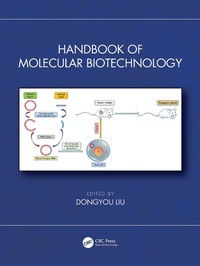
Handbook of Molecular Biotechnology
1st Edition
Published on 5. September 2024
762 pages
978-1-040-00564-4 (ISBN)
Description

With a history that likely dates back to the dawn of human civilization more than 10,000 years ago, and a record that includes the domestication and selective breeding of plants and animals, the harnessing of fermentation process for bread, cheese, and brewage production, and the development of vaccines against infectious diseases, biotechnology has acquired a molecular focus during the 20th century, particularly following the resolution of DNA double helix in 1953, and the publication of DNA cloning protocol in 1973, and transformed our concepts and practices in disease diagnosis, treatment and prevention, pharmaceutical and industrial manufacturing, animal and plant industry, and food processing.
While molecular biotechnology offers unlimited opportunities for improving human health and well-being, animal welfare, agricultural innovation and environmental conservation, a dearth of high quality books that have the clarity of laboratory manuals without distractive procedural details and the thoroughness of well-conversed textbooks appears to dampen the enthusiasm of aspiring students. In attempt to fill this glaring gap, Handbook of Molecular Biotechnology includes four sections, with the first three presenting in-depth coverage on DNA, RNA and protein technologies, and the fourth highlighting their utility in biotechnology. Recognizing the importance of logical reasoning and experimental verification over direct observation and simple description in biotechnological research and development, the Introduction provides pertinent discussions on key strategies (i.e., be first, be better, and be different), effective thinking (lateral, parallel, causal, reverse, and random), and experimental execution, which have proven invaluable in helping advance research projects, evaluate and prepare research reports, and enhance other scientific endeavors.
Key features
Presents state-of-the-art reviews on DNA, RNA and protein technologies and their biotechnological applications
Discusses key strategies, effective thinking, and experimental execution for scientific research and development
Fills the gap left by detailed-ridden laboratory manuals and insight-lacking standard textbooks
Includes expert contributions from international scientists at the forefront of molecular biotechnology research and development
Written by international scientists at the forefront of molecular biotechnology research and development, chapters in this volume cover the histories, principles, and applications of individual techniques/technologies, and constitute stand-alone, yet interlinked lectures that strive to educate as well as to entertain. Besides providing an informative textbook for tertiary students in molecular biotechnology and related fields, this volume serves as an indispensable roadmap for novice scientists in their efforts to acquire innovative skills and establish solid track records in molecular biotechnology, and offers a contemporary reference for scholars, educators, and policymakers wishing to keep in touch with recent developments in molecular biotechnology.
While molecular biotechnology offers unlimited opportunities for improving human health and well-being, animal welfare, agricultural innovation and environmental conservation, a dearth of high quality books that have the clarity of laboratory manuals without distractive procedural details and the thoroughness of well-conversed textbooks appears to dampen the enthusiasm of aspiring students. In attempt to fill this glaring gap, Handbook of Molecular Biotechnology includes four sections, with the first three presenting in-depth coverage on DNA, RNA and protein technologies, and the fourth highlighting their utility in biotechnology. Recognizing the importance of logical reasoning and experimental verification over direct observation and simple description in biotechnological research and development, the Introduction provides pertinent discussions on key strategies (i.e., be first, be better, and be different), effective thinking (lateral, parallel, causal, reverse, and random), and experimental execution, which have proven invaluable in helping advance research projects, evaluate and prepare research reports, and enhance other scientific endeavors.
Key features
Presents state-of-the-art reviews on DNA, RNA and protein technologies and their biotechnological applications
Discusses key strategies, effective thinking, and experimental execution for scientific research and development
Fills the gap left by detailed-ridden laboratory manuals and insight-lacking standard textbooks
Includes expert contributions from international scientists at the forefront of molecular biotechnology research and development
Written by international scientists at the forefront of molecular biotechnology research and development, chapters in this volume cover the histories, principles, and applications of individual techniques/technologies, and constitute stand-alone, yet interlinked lectures that strive to educate as well as to entertain. Besides providing an informative textbook for tertiary students in molecular biotechnology and related fields, this volume serves as an indispensable roadmap for novice scientists in their efforts to acquire innovative skills and establish solid track records in molecular biotechnology, and offers a contemporary reference for scholars, educators, and policymakers wishing to keep in touch with recent developments in molecular biotechnology.
More details
Edition
1. Auflage
Language
English
Place of publication
London
United Kingdom
Publishing group
Taylor & Francis Ltd
Target group
College/higher education
Professional and scholarly
Illustrations
73 Tables, black and white; 52 Line drawings, color; 14 Line drawings, black and white; 31 Halftones, color; 1 Halftones, black and white; 83 Illustrations, color; 15 Illustrations, black and white
File size
31,10 MB
ISBN-13
978-1-040-00564-4 (9781040005644)
Copyright in bibliographic data and cover images is held by Nielsen Book Services Limited or by the publishers or by their respective licensors: all rights reserved.
Schweitzer Classification
Other editions
Additional editions
Dongyou Liu
Handbook of Molecular Biotechnology
Book
09/2024
1st Edition
CRC Press
€403.01
Shipment within 15-20 days
Person
Dongyou Liu, Ph.D., studied veterinary science at Hunan Agricultural University, China and conducted postgraduate research on the generation and application of monoclonal antibodies for improved immunodiagnosis of human hydatidosis at The University of Melbourne, Australia. In the past three decades, he has worked at several research and clinical laboratories in Australia and the United States of America, with focuses on molecular characterization of microbial pathogens and detection of human genetic disorders and tumors/cancers. He is the first author of >50 original research and review articles in peer-reviewed international journals, the contributor of 294 book chapters, and the editor of Handbook of Listeria monocytogenes (2008), Handbook of Nucleic Acid Purification (2009), Molecular Detection of Foodborne Pathogens (2009), Molecular Detection of Human Viral Pathogens (2010), Molecular Detection of Human Bacterial Pathogens (2011), Molecular Detection of Human Fungal Pathogens (2011), Molecular Detection of Human Parasitic Pathogens (2012), Manual of Security Sensitive Microbes and Toxins (2014), Molecular Detection of Animal Viral Pathogens (2016), Laboratory Models for Foodborne Infections (2017), Pocket Guides to Biomedical Sciences: Tumors and Cancers - Central and Peripheral Nervous Systems (2017), Pocket Guides to Biomedical Sciences: Tumors and Cancers - Head, Neck, Heart, Lung and Gut (2017), Pocket Guides to Biomedical Sciences: Tumors and Cancers - Skin, Soft Tissue, Bone and Urogenitals (2017), Pocket Guides to Biomedical Sciences: Tumors and Cancers - Endocrine glands, Blood, Marrow and Lymph (2017), Handbook of Foodborne Diseases (2018), Handbook of Tumor Syndromes (2020), and Molecular Food Microbiology (2021), all of which are published by CRC Press. He is also a co-editor for Molecular Medical Microbiology, 2nd edition (2014), and Molecular Medical Microbiology, 3rd edition (2023), which are released by Elsevier.
Content
1. Molecular biotechnology: from past achievements to future breakthroughs. Section I DNA Technologies. 2. DNA structure and function. 3. DNA purification. 4. DNA amplification. 5. DNA sequencing. 6. DNA cloning vectors. 7. DNA cloning. 8. DNA mutagenesis. 9. CRISPR/Cas9-mediated genome editing: Current status. 10. DNA epigenetic modifications. Section II RNA Technologies. 11. RNA structure and function. 12. RNA purification. 13. RNA amplification. 14. In vitro RNA transcription. 15. RNA sequencing. 16. RNA cloning. 17. RNA interference. 18. RNA modifications. Section III Protein Technologies. 19. Protein structure and function. 20. Protein purification. 21. Protein sequencing. 22. Cell free gene expression. 23. Protein expression. 24. Polyclonal antibodies. 25. Monoclonal antibodies. 26. Recombinant antibodies. 27. Protein modification. 28. Protein-protein interactions: A technical overview. 29. Protein-DNA interaction. 30. Protein-RNA interaction. 31. Protein-lipid interaction. 32. Protein-carbohydrate interaction. Section IV Molecular Approaches to Biotechnology. Diagnostics. 33. Molecular systematics. 34. Nucleic acid diagnostics. 35. Immunodiagnostics. 36. Mutation detection. 37. Molecular epidemiology. 38. Antimicrobial resistance: Causes, mechanisms, origins and characterizatio. 39. Biofilms and their impact on human health: the beauty and the beast. 40. Microbiome. 41. Genomics. 42. Transcriptomics. 43. Proteomics. 44. Harnessing dynamic metabolomics for bioprocess prediction and beyond. 45. Biosensors. Therapeutics. 46. Probiotics and prebiotics. 47. Dietary supplements. 48. Vaccines. 49. Phage therapy: A clinician's guide. 50. Gene therapy. 51. Stem cell therapy. 52. Immuno- and targeted-therapies for cancer. 53. Biocontrol and bioremediation. Miscellaneous applications. 54 Forward and reverse genetics. 55. Genetically modified bacteria: History, principle, and utility. 56. Genetically modified Caenorhabditis elegans as an experimental model. 57. Genetically modified Drosophila melanogaster as an experimental model. 58. Genetically modified zebrafish as an experimental model. 59. In vitro tissue engineering. 60. Transgenic animals. 61. Transgenic plants. 62. Bioinformatics.
