

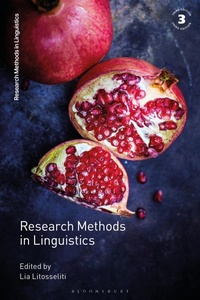
Research Methods in Linguistics
3rd Edition
Published on 12. December 2024
432 pages
978-1-350-42917-8 (ISBN)
Description

Research Methods in Linguistics guides the reader through the key issues, principles, and contributions of core methods in linguistic research. It is an essential resource for researchers and graduate students looking for clear introductions to key concepts, accessible discussions of theory and practice through illustrative examples and critical engagement with current debates.
Topics covered include developing research questions; combining methods; quantitative research designs (including questionnaires, chi-square tests and t-tests); corpus analysis; and qualitative research methods (interview methods, discourse analytic approaches and multimodal analysis).
Expanded throughout, this third edition also includes:
· New chapters on linguistic ethnography and digital discourse analysis
· New guided activities and updated further readings, online resources and discussion questions
· Refreshed examples, engaging with recent sources and materials
· A glossary of key terms for each chapter
· Learning outcomes for each chapter.
Guiding you through the main issues, techniques and approaches to developing your research in Linguistics, this book provides clear introductions to key concepts and discussions, from research questions to transcription, and takes you step-by-step through several quantitative and qualitative approaches in Linguistics research, including recent developments in multimodal and digital discourse analysis. Leading you towards the research methods and principles most appropriate to your work, and explaining them in detail, this is the ideal book for anyone working with linguistic data.
Topics covered include developing research questions; combining methods; quantitative research designs (including questionnaires, chi-square tests and t-tests); corpus analysis; and qualitative research methods (interview methods, discourse analytic approaches and multimodal analysis).
Expanded throughout, this third edition also includes:
· New chapters on linguistic ethnography and digital discourse analysis
· New guided activities and updated further readings, online resources and discussion questions
· Refreshed examples, engaging with recent sources and materials
· A glossary of key terms for each chapter
· Learning outcomes for each chapter.
Guiding you through the main issues, techniques and approaches to developing your research in Linguistics, this book provides clear introductions to key concepts and discussions, from research questions to transcription, and takes you step-by-step through several quantitative and qualitative approaches in Linguistics research, including recent developments in multimodal and digital discourse analysis. Leading you towards the research methods and principles most appropriate to your work, and explaining them in detail, this is the ideal book for anyone working with linguistic data.
More details
Series
Edition
3rd edition
Language
English
Place of publication
London
United Kingdom
Publishing group
Bloomsbury Publishing PLC
Illustrations
10 bw illus
ISBN-13
978-1-350-42917-8 (9781350429178)
Copyright in bibliographic data and cover images is held by Nielsen Book Services Limited or by the publishers or by their respective licensors: all rights reserved.
Schweitzer Classification
Other editions
Additional editions
Lia Litosseliti
Research Methods in Linguistics
Book
01/2025
3rd Edition
Bloomsbury Academic
€36.50
Shipment within 15-20 days
Previous edition
E-Book
09/2018
2nd Edition
Bloomsbury Academic
€35.49
Available for download
Person
Lia Litosseliti is Associate Professor in Linguistics at City, University of London, UK, and Senior Fellow of the Higher Education Academy, UK. Her research interests are in the areas of gender and language, discourse analysis and research methodologies.
Content
List of Figures
List of Tables
List of Contributors
Part I: Issues
1. Research Questions in Linguistics, Jane Sunderland (Lancaster University, UK)
2. Ethics in Linguistic Research, Christine Mallinson (University of Maryland, USA)
3. Transcription in Linguistics, Lorenza Mondada (University of Basel, Switzerland)
4. Quantitative, Qualitative, Mixed, or Holistic Research? Combining Methods in Linguistic Research, Jo Angouri (University of Warwick, UK)
5. Micro/Macro-Linguistic Considerations: Evaluating Discourse-Analytic Approaches to Text and Talk, Judith Baxter and Lia Litosseliti (University of London, UK)
Part II: Quantitative Perspectives
6. Quantitative Methods: Concepts, Frameworks and Issues, Sebastian M. Rasinger (Anglia Rusin University, UK)
7. Organizing and Processing Your Data: The Nuts and Bolts of Quantitative Analyses, Erez Levon (University of Bern, Switzerland)
8. Corpus Methods in Linguistics, Paul Baker (Lancaster University, UK)
Part III: Qualitative Perspectives
9. Interviews and Focus Groups in Social Science and Linguistics Research: a Critical Review, Nigel Edley (Nottingham Trent University, UK), Lia Litosseliti (University of London, UK) and Becky Moss
10. Linguistic Ethnography, Karin Tusting (Lancaster University, UK)
11. Digital Discourse Analysis, Camilla Vásquez (University of South Florida, USA) and Yaqian Jiang (Middle Tennessee State University, USA)
12. Multimodality: A Guide for Linguists, Jeff Bezemer (University College London, UK) and Carey Jewitt (University College London, UK)
13. Case Study Research in Applied Linguistics, Patricia A. Duff (University of British Columbia, Canada)
Index
List of Tables
List of Contributors
Part I: Issues
1. Research Questions in Linguistics, Jane Sunderland (Lancaster University, UK)
2. Ethics in Linguistic Research, Christine Mallinson (University of Maryland, USA)
3. Transcription in Linguistics, Lorenza Mondada (University of Basel, Switzerland)
4. Quantitative, Qualitative, Mixed, or Holistic Research? Combining Methods in Linguistic Research, Jo Angouri (University of Warwick, UK)
5. Micro/Macro-Linguistic Considerations: Evaluating Discourse-Analytic Approaches to Text and Talk, Judith Baxter and Lia Litosseliti (University of London, UK)
Part II: Quantitative Perspectives
6. Quantitative Methods: Concepts, Frameworks and Issues, Sebastian M. Rasinger (Anglia Rusin University, UK)
7. Organizing and Processing Your Data: The Nuts and Bolts of Quantitative Analyses, Erez Levon (University of Bern, Switzerland)
8. Corpus Methods in Linguistics, Paul Baker (Lancaster University, UK)
Part III: Qualitative Perspectives
9. Interviews and Focus Groups in Social Science and Linguistics Research: a Critical Review, Nigel Edley (Nottingham Trent University, UK), Lia Litosseliti (University of London, UK) and Becky Moss
10. Linguistic Ethnography, Karin Tusting (Lancaster University, UK)
11. Digital Discourse Analysis, Camilla Vásquez (University of South Florida, USA) and Yaqian Jiang (Middle Tennessee State University, USA)
12. Multimodality: A Guide for Linguists, Jeff Bezemer (University College London, UK) and Carey Jewitt (University College London, UK)
13. Case Study Research in Applied Linguistics, Patricia A. Duff (University of British Columbia, Canada)
Index
