

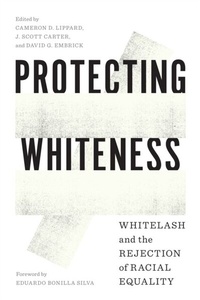
Protecting Whiteness
Description

Insights into the racialized fear of change in US society
The standoff at Cliven Bundy's ranch, the rise of white identity activists on college campuses, and the viral growth of white nationalist videos on YouTube vividly illustrate the resurgence of white supremacy and overt racism in the United States. White resistance to racial equality can be subtle as well?like art museums that enforce their boundaries as elite white spaces, ?right on crime? policies that impose new modes of surveillance and punishment for people of color, and environmental groups whose work reinforces settler colonial norms.
In this incisive volume, twenty-four leading sociologists assess contemporary shifts in white attitudes about racial justice in the US. Using case studies, they investigate the entrenchment of white privilege in institutions, new twists in anti-equality ideologies, and ?whitelash? in the actions of social movements. Their examinations of new manifestations of racist aggression help make sense of the larger forces that underpin enduring racial inequalities and how they reinvent themselves for each new generation.
All prices
More details
Other editions
Additional editions
Persons
Cameron D. Lippard is professor and chair of sociology at Appalachian State University and coauthor with J. Scott Carter of The Death of Affirmative Action: Racialized Tactics and the Fight for College Admissions. J. Scott Carter is associate professor of sociology at the University of Central Florida. David G. Embrick is associate professor of sociology and Africana studies at the University of Connecticut and coeditor of Challenging the Status Quo: Diversity, Democracy, and Equality in the 21st Century.
Content
Foreword by Eduardo Bonilla-Silva
Introduction. The Resurgence of Whitelash: White Supremacy, Resistance, and the Racialized Social System in Trumptopia
David G. Embrick, J. Scott Carter, and Cameron D. Lippard
Part I. The Ideological Reinforcement of White Supremacy
1. Post-Color Blindness? Trump and the Rise of the New White Nationalism
Ashley "Woody" Doane
2. The Unblackening: "White" License and the "Nice Racism" Trope
Johnny E. Williams
3. Polical Correctness: A Genuine Concern for Discussion or Slippery Language Rooted in Racial Animosity
J. Scott Carter and J. Micah Roos
4. Diversity Regimes: How University Diversity Initiatives Shape White Race Consciousness
James M. Thomas
Part II. The Reentrenchment of White Superiority in American Institutions
5. Institutional Racism Revisted: How Institutions Perpetuate and Promote Racism through Color Blindness
Charles A. Gallagher
6. Prison in the Street: What Market-Based Bipartisan Reform Means for Racial Stratification
Kasey Henricks and Bethany Nelson
7. Settler Culture and White Property: From the Bundy Ranch Standoff to the West Virginia Coalfields
Rebecca R. Scott
8. Local Immigration Enforcement: Shaping and Maintaining Policies through White Saviors and Economic Motivations
Felicia Arriaga
9. Recruiting White "Victims": White Supremacist Flyers on College Campuses
David Dietrich
10. The Whitening of South Asian Women
Bhoomi K. Thakore
11. Colorful Art, White Spaces: How an Art Museum Maintains White Spaces
Simon E. Weffer, David G. Embrick, and Silvia Dominguez
Part III. White Emotions, Expressions, and Movements
12. White Noise: How White Nationalist Content Creators Reproduce Narratives of White Power and Victimhood on YouTube
C. Doug Charles
13. Blue Lives Matter: Police Protection or Countermovement
Marette McDonald
14. Echoing Derrick A. Bell: Black Women's Resistance to White Supremacy in the Age of Trump
Marlese Durr
15. Solidarity and Struggle: White Antiracist Activism in the Time of Trump
Mary K. Ryan and David L. Brunsma
Conclusions. Where Do We Go from Here? Structural and Social Implications of Whitelash
J. Scott Carter, David G. Embrick, and Cameron D. Lippard
List of Contributors
Index

