

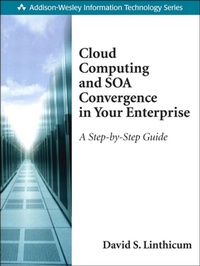
Cloud Computing and SOA Convergence in Your Enterprise
A Step-by-Step Guide
1st Edition
Published on 29. September 2009
264 pages
978-0-321-67093-9 (ISBN)
Description

Massive, disruptive change is coming to IT as software as a service (SaaS), SOA, mashups, Web 2.0, and cloud computing truly come of age. Now, one of the world's leading IT innovators explains what it all means-coherently, thoroughly, and authoritatively.
Writing for IT executives, architects, and developers alike, world-renowned expert David S. Linthicum explains why the days of managing IT organizations as private fortresses will rapidly disappear as IT inevitably becomes a global community. He demonstrates how to run IT when critical elements of customer, product, and business data and processes extend far beyond the firewall-and how to use all that information to deliver real-time answers about everything from an individual customer's credit to the location of a specific cargo container.
Cloud Computing and SOA Convergence in Your Enterprise offers a clear-eyed assessment of the challenges associated with this new world-and offers a step-by-step program for getting there with maximum return on investment and minimum risk. Using multiple examples, Linthicum
Reviews the powerful cost, value, and risk-related drivers behind the move to cloud computing-and explains why the shift will accelerate
Explains the technical underpinnings, supporting technologies, and best-practice methods you'll need to make the transition
Helps you objectively assess the promise of cloud computing and SOA for your organization, quantify value, and make the business case
Walks you through evaluating your existing IT infrastructure and finding your most cost-effective, safest path to the "cloud"
Shows how to choose the right candidate data, services, and processes for your cloud computing initiatives
Guides you through building disruptive infrastructure and next-generation process platforms
Helps you bring effective, high-value governance to the clouds
If you're ready to begin driving real competitive advantage from cloud computing, this book is the start-to-finish roadmap you need to make it happen.
Writing for IT executives, architects, and developers alike, world-renowned expert David S. Linthicum explains why the days of managing IT organizations as private fortresses will rapidly disappear as IT inevitably becomes a global community. He demonstrates how to run IT when critical elements of customer, product, and business data and processes extend far beyond the firewall-and how to use all that information to deliver real-time answers about everything from an individual customer's credit to the location of a specific cargo container.
Cloud Computing and SOA Convergence in Your Enterprise offers a clear-eyed assessment of the challenges associated with this new world-and offers a step-by-step program for getting there with maximum return on investment and minimum risk. Using multiple examples, Linthicum
Reviews the powerful cost, value, and risk-related drivers behind the move to cloud computing-and explains why the shift will accelerate
Explains the technical underpinnings, supporting technologies, and best-practice methods you'll need to make the transition
Helps you objectively assess the promise of cloud computing and SOA for your organization, quantify value, and make the business case
Walks you through evaluating your existing IT infrastructure and finding your most cost-effective, safest path to the "cloud"
Shows how to choose the right candidate data, services, and processes for your cloud computing initiatives
Guides you through building disruptive infrastructure and next-generation process platforms
Helps you bring effective, high-value governance to the clouds
If you're ready to begin driving real competitive advantage from cloud computing, this book is the start-to-finish roadmap you need to make it happen.
More details
Series
Edition
1. Auflage
Language
English
Place of publication
Hoboken
United States
Publishing group
Pearson Education (US)
Target group
College/higher education
File size
2,18 MB
ISBN-13
978-0-321-67093-9 (9780321670939)
Copyright in bibliographic data and cover images is held by Nielsen Book Services Limited or by the publishers or by their respective licensors: all rights reserved.
Schweitzer Classification
Other editions
Additional editions
Book
10/2009
Addison Wesley
€39.67
Article exhausted; check different version
Person
David S. Linthicum (Dave) knows cloud computing and service-oriented architecture (SOA). He is an internationally recognized industry expert and thought leader and the author and coauthor of thirteen books on computing, including the best-selling Enterprise Application Integration (Addison-Wesley). Dave keynotes at many leading technology conferences on cloud computing, SOA, Web 2.0, and enterprise architecture, and he has appeared on a number of television and radio shows as a computing expert. He is a blogger for InfoWorld, Intelligent Enterprise, and eBizq.net, covering SOA and enterprise computing topics. Dave also has columns in Government Computer News, Cloud Computing Journal, SOA Journal, and Align Journal, and is the editor of Virtualization Journal.
In his career, Dave has formed or enhanced many of the ideas behind modern distributed computing, including enterprise application integration, B2B application integration, and SOA, all of which are approaches and technologies in wide use today. For the last ten years, Dave has focused on the technology and strategies around cloud computing and how to make cloud computing work for the modern enterprise. This includes work with several cloud computing startups.
Dave's industry experience includes tenure as CTO and CEO of several successful software companies and upper-level management positions in Fortune 100 companies. In addition, he was an associate professor of computer science for eight years and continues to lecture at major technical colleges and universities, including the University of Virginia, Arizona State University, and the University of Wisconsin.
In his career, Dave has formed or enhanced many of the ideas behind modern distributed computing, including enterprise application integration, B2B application integration, and SOA, all of which are approaches and technologies in wide use today. For the last ten years, Dave has focused on the technology and strategies around cloud computing and how to make cloud computing work for the modern enterprise. This includes work with several cloud computing startups.
Dave's industry experience includes tenure as CTO and CEO of several successful software companies and upper-level management positions in Fortune 100 companies. In addition, he was an associate professor of computer science for eight years and continues to lecture at major technical colleges and universities, including the University of Virginia, Arizona State University, and the University of Wisconsin.
Content
Preface xv
Acknowledgments xxi
About the Author xxiii
Chapter 1: Where We Are, How We Got Here, and How to Fix It 1
How Things Got Off Track 2
SOA to the Rescue? 4
What the Heck Is SOA, and Why Should I Care? 5
SOA Meets Cloud Computing 7
Defining Cloud Computing 9
The Components of Cloud Computing 11
The Dream Team of Cloud Computing and SOA 14
What SOA Can Learn from Cloud Computing 15
What Cloud Computing Can Learn from SOA 16
Making the Leap 17
Being Positively Disruptive 18
Chapter 2: Reaching for the Clouds 21
Diving Deeper into Cloud Computing 22
What's New in the Clouds? 25
The Potential Value of the Clouds 28
Cloud Computing Benefits and Drawbacks 28
When the Cloud Fits 33
Doing Something Different 35
Chapter 3: Defining the Clouds for the Enterprise 37
Storage-as-a-Service 39
Database-as-a-Service 41
Information-as-a-Service 43
Process-as-a-Service 48
Application-as-a-Service 51
Platform-as-a-Service 53
Integration-as-a-Service 55
Security-as-a-Service 56
Management/Governance-as-a-Service 57
Testing-as-a-Service 57
Infrastructure-as-a-Service 58
Next Steps 58
Chapter 4: Making the Business Case for Clouds 61
Defining the Holistic Value 62
It Is All about the Business 79
Chapter 5: Working from Your Data to the Clouds 81
Old or New? 82
Data First 84
Selecting a Problem Domain 87
Defining the Information Model 87
Building the Information Model 103
Importance of Data with SOA Using Cloud Computing 105
Chapter 6: Working from Your Services to the Clouds 107
Services Provide the Moving Parts 112
What Is a Service? 116
Understanding Coupling for the Clouds 118
Are You Loosely Coupled? 120
Defining Metaservices 121
Creating the Services Directory 122
The Need for a Service-Level Understanding 126
Chapter 7: Working from Your Processes to the Clouds 127
What Is BPM? 128
Bringing Process to the Clouds 131
Defining Processes 133
SOA, Agility, and Processes 136
Value of BPM for the Clouds 139
Drilling Down on BPM 142
BPM and Cloud Computing 143
Chapter 8: Bringing Governance to the Clouds 145
People and Processes 148
Governance for the Clouds 149
Creating the Governance Model 153
Governance Technology 158
The Value of Service Governance 160
Chapter 9: Testing from SOA to the Clouds 163
Why We Need a New Take on Testing 164
Testing from the Enterprise to the Clouds and Back 165
Creating a Test Plan 173
Black Box Cloud Testing 174
Testing Is Important 177
Chapter 10: Defining Candidate Data, Services, and Processes for the Clouds 179
Where Are the Applications? 180
When Cloud Computing Fits 184
When the Applications and/or Services Are New 193
Jumping to the Clouds 194
Chapter 11: Making the Move to Cloud Computing 197
Selecting Platforms 198
The Process of Moving to the Clouds 203
Analyze and Test Candidate Platforms 209
Select Target Platforms 210
Deploy to Target Platforms 211
What about Private Clouds? 213
New "Cloudy" Platforms 215
Chapter 12: Moving Onward 217
Index 231
Acknowledgments xxi
About the Author xxiii
Chapter 1: Where We Are, How We Got Here, and How to Fix It 1
How Things Got Off Track 2
SOA to the Rescue? 4
What the Heck Is SOA, and Why Should I Care? 5
SOA Meets Cloud Computing 7
Defining Cloud Computing 9
The Components of Cloud Computing 11
The Dream Team of Cloud Computing and SOA 14
What SOA Can Learn from Cloud Computing 15
What Cloud Computing Can Learn from SOA 16
Making the Leap 17
Being Positively Disruptive 18
Chapter 2: Reaching for the Clouds 21
Diving Deeper into Cloud Computing 22
What's New in the Clouds? 25
The Potential Value of the Clouds 28
Cloud Computing Benefits and Drawbacks 28
When the Cloud Fits 33
Doing Something Different 35
Chapter 3: Defining the Clouds for the Enterprise 37
Storage-as-a-Service 39
Database-as-a-Service 41
Information-as-a-Service 43
Process-as-a-Service 48
Application-as-a-Service 51
Platform-as-a-Service 53
Integration-as-a-Service 55
Security-as-a-Service 56
Management/Governance-as-a-Service 57
Testing-as-a-Service 57
Infrastructure-as-a-Service 58
Next Steps 58
Chapter 4: Making the Business Case for Clouds 61
Defining the Holistic Value 62
It Is All about the Business 79
Chapter 5: Working from Your Data to the Clouds 81
Old or New? 82
Data First 84
Selecting a Problem Domain 87
Defining the Information Model 87
Building the Information Model 103
Importance of Data with SOA Using Cloud Computing 105
Chapter 6: Working from Your Services to the Clouds 107
Services Provide the Moving Parts 112
What Is a Service? 116
Understanding Coupling for the Clouds 118
Are You Loosely Coupled? 120
Defining Metaservices 121
Creating the Services Directory 122
The Need for a Service-Level Understanding 126
Chapter 7: Working from Your Processes to the Clouds 127
What Is BPM? 128
Bringing Process to the Clouds 131
Defining Processes 133
SOA, Agility, and Processes 136
Value of BPM for the Clouds 139
Drilling Down on BPM 142
BPM and Cloud Computing 143
Chapter 8: Bringing Governance to the Clouds 145
People and Processes 148
Governance for the Clouds 149
Creating the Governance Model 153
Governance Technology 158
The Value of Service Governance 160
Chapter 9: Testing from SOA to the Clouds 163
Why We Need a New Take on Testing 164
Testing from the Enterprise to the Clouds and Back 165
Creating a Test Plan 173
Black Box Cloud Testing 174
Testing Is Important 177
Chapter 10: Defining Candidate Data, Services, and Processes for the Clouds 179
Where Are the Applications? 180
When Cloud Computing Fits 184
When the Applications and/or Services Are New 193
Jumping to the Clouds 194
Chapter 11: Making the Move to Cloud Computing 197
Selecting Platforms 198
The Process of Moving to the Clouds 203
Analyze and Test Candidate Platforms 209
Select Target Platforms 210
Deploy to Target Platforms 211
What about Private Clouds? 213
New "Cloudy" Platforms 215
Chapter 12: Moving Onward 217
Index 231
