

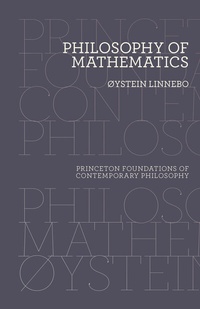
Philosophy of Mathematics
1st Edition
Published on 22. May 2017
216 pages
978-1-4008-8524-4 (ISBN)
Description

A sophisticated, original introduction to the philosophy of mathematics from one of its leading contemporary scholars
Mathematics is one of humanity's most successful yet puzzling endeavors. It is a model of precision and objectivity, but appears distinct from the empirical sciences because it seems to deliver nonexperiential knowledge of a nonphysical reality of numbers, sets, and functions. How can these two aspects of mathematics be reconciled? This concise book provides a systematic yet accessible introduction to the field that is trying to answer that question: the philosophy of mathematics.
Written by Øystein Linnebo, one of the world's leading scholars on the subject, the book introduces all of the classical approaches to the field, including logicism, formalism, intuitionism, empiricism, and structuralism. It also contains accessible introductions to some more specialized issues, such as mathematical intuition, potential infinity, the iterative conception of sets, and the search for new mathematical axioms. The groundbreaking work of German mathematician and philosopher Gottlob Frege, one of the founders of analytic philosophy, figures prominently throughout the book. Other important thinkers whose work is introduced and discussed include Immanuel Kant, John Stuart Mill, David Hilbert, Kurt Gödel, W. V. Quine, Paul Benacerraf, and Hartry H. Field.
Sophisticated but clear and approachable, this is an essential introduction for all students and teachers of philosophy, as well as mathematicians and others who want to understand the foundations of mathematics.
Mathematics is one of humanity's most successful yet puzzling endeavors. It is a model of precision and objectivity, but appears distinct from the empirical sciences because it seems to deliver nonexperiential knowledge of a nonphysical reality of numbers, sets, and functions. How can these two aspects of mathematics be reconciled? This concise book provides a systematic yet accessible introduction to the field that is trying to answer that question: the philosophy of mathematics.
Written by Øystein Linnebo, one of the world's leading scholars on the subject, the book introduces all of the classical approaches to the field, including logicism, formalism, intuitionism, empiricism, and structuralism. It also contains accessible introductions to some more specialized issues, such as mathematical intuition, potential infinity, the iterative conception of sets, and the search for new mathematical axioms. The groundbreaking work of German mathematician and philosopher Gottlob Frege, one of the founders of analytic philosophy, figures prominently throughout the book. Other important thinkers whose work is introduced and discussed include Immanuel Kant, John Stuart Mill, David Hilbert, Kurt Gödel, W. V. Quine, Paul Benacerraf, and Hartry H. Field.
Sophisticated but clear and approachable, this is an essential introduction for all students and teachers of philosophy, as well as mathematicians and others who want to understand the foundations of mathematics.
More details
Other editions
Additional editions
Oystein Linnebo
Philosophy of Mathematics
Book
03/2020
Princeton University Press
€27.50
Available immediately
Oystein Linnebo
Philosophy of Mathematics
Book
05/2017
Princeton University Press
€37.20
Shipment within 10-20 days
Person
Øystein Linnebo is professor of philosophy at the University of Oslo, and previously held positions in Bristol, London, and Oxford. He is the coeditor of New Waves in the Philosophy of Mathematics and the author of Thin Objects: An Abstractionist Approach (forthcoming).
Content
Acknowledgments vii
Introduction 1
1 Mathematics as a Philosophical Challenge 4
2 Frege's Logicism 21
3 Formalism and Deductivism 38
4 Hilbert's Program 56
5 Intuitionism 73
6 Empiricism about Mathematics 88
7 Nominalism 101
8 Mathematical Intuition 116
9 Abstraction Reconsidered 126
10 The Iterative Conception of Sets 139
11 Structuralism 154
12 The Quest for New Axioms 170
Concluding Remarks 183
Bibliography 189
Index 199
Introduction 1
1 Mathematics as a Philosophical Challenge 4
2 Frege's Logicism 21
3 Formalism and Deductivism 38
4 Hilbert's Program 56
5 Intuitionism 73
6 Empiricism about Mathematics 88
7 Nominalism 101
8 Mathematical Intuition 116
9 Abstraction Reconsidered 126
10 The Iterative Conception of Sets 139
11 Structuralism 154
12 The Quest for New Axioms 170
Concluding Remarks 183
Bibliography 189
Index 199
