

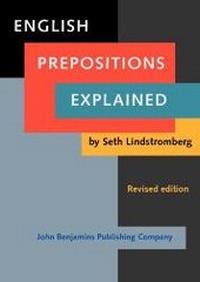
English Prepositions Explained
<strong>Revised edition</strong>
2nd Edition
Published on 11. August 2010
XIII, 273 pages
978-90-272-8789-2 (ISBN)
Description

This completely revised and expanded edition of English Prepositions Explained (EPE), originally published in 1998, covers approximately 100 simple, compound, and phrasal English prepositions of space and time - with the focus being on short prepositions such as at, by, in, and on. Its target readership includes teachers of ESOL, pre-service translators and interpreters, undergraduates in English linguistics programs, studious advanced learners and users of English, and anyone who is inquisitive about the English language. The overall aim is to explain how and why meaning changes when one preposition is swapped for another in the same context. While retaining most of the structure of the original, this edition says more about more prepositions. It includes many more figures - virtually all new. The exposition draws on recent research, and is substantially founded on evidence from digitalized corpora, including frequency data. EPE gives information and insights that will not be found in dictionaries and grammar handbooks.
More details
Other editions
Additional editions
Book
08/2010
2nd Edition
John Benjamins Publishing Co
€104.94
Shipment within 10-15 days
Person
Content
- English Prepositions Explained
- Title page
- LCC data
- Dedication
- Table of contents
- Acknowledgements
- Preface to the second edition
- Symbols, abbreviations and features of format
- Chapter 1. Introduction and orientation
- 1. Who is this book for?
- 2. Why not just consult a grammar handbook or dictionary?
- 3. Prepositions covered in this book
- 4. Prepositions not focused on
- 5. Where have the example sentences and phrases come from?
- 6. Prepositions in whose minds?
- 7. Collocations, strong collocations, fixed expressions
- 8. The 'Subjects' and 'Landmarks' of prepositions
- 8.1. The basics
- 8.2 People as Subjects and Landmarks
- 8.3 Plurals
- 8.4 Locating events in time
- 8.5 Arrangements of grammatical Subject and Landmark
- 8.6 Events, activities, and similar as Subject or Landmark
- 8.7 Grammatical subjects and landmarks in questions
- 8.8 Prepositions of path
- 8.9 Omission of lexical landmarks
- 8.10 Abstract Subjects and Landmarks
- 8.11 Secondary Landmarks
- 9. Meaning and form
- 10. Meaning, sense and usage
- 11. Literal, spatial meanings and abstract, figurative usages
- 12. Geometry, function and role
- 13. The icons as aids to understanding
- 14. Classifying prepositions
- 15. Prototypical (~ 'primary' or 'most representative') meanings and secondary (~ 'extended') meanings
- 16. Phrasal verbs (~ multi-word verbs)
- 17. Ordinary, idiomatic phrasal verbs vs perfective phrasal verbs
- 18. Prepositions, directional adverbs and particles
- 19. Prepositions and the guessability of idioms
- 20. The roles of functionality and metonymy
- 21. Major non-spatial notions
- Chapter 2. Toward(s), to, in/into, inward, outward, through, out (of), from (vs off), away (from)
- 1. Overview
- 2. Toward(s)
- 2.1 The meaning of toward(s)
- 2.2 The suffix -ward(s)
- 3. To
- 3.1 To: Basic, meaning
- 3.2 To ~ 'toward'
- 4. In/into
- 4.1 In/into vs to
- 4.1.1 Basic differences
- 4.1.2 The difference in the scale of mental images for In/into and to
- 4.2 In vs into
- 4.3 Metaphorical usages of in & into
- 5. Inward(s)
- 6. Through
- 6.1 Two literal meanings
- 6.2 Metaphorical through
- 6.3 Metaphorical through ~ 'because of', 'by means of', 'owing to the action of'
- 7. Out (of)
- 7.1 The of in out of
- 7.2 Out
- 7.2.1 The basic meaning of out
- 7.2.2 Out ~ 'in all directions away from a central Landmark'
- 7.2.3 Out: Straightforward metaphorical usages of the basic meaning
- 7.3 More metaphorical senses and usages of out
- 7.3.1 Out for extension/expansion beyond former boundaries
- 7.3.2 Out ~ 'From the beginning to the end'
- 7.3.3 Out ~ 'better than'
- 7.4 Out and the matter of viewpoint
- 7.4.1 Leaving a house: The possible vantage points
- 7.4.2 Person B's viewpoint: Out & ex- ~ 'not here/there', 'gone'
- 7.4.3 Person C's viewpoint: Out & ex - ~ 'in the open', 'not hidden' ~ 'understandable' or 'available'
- 7.4.4 Person A's viewpoint: Out for loss of possession or supply
- 8. Outward(s) = 'away from the center'
- 9. From'
- 9.1 From: Literal meanings
- 9.1.1 From: The basic meaning
- 9.1.2 From and other prepositions of 'separation': Out, off, off from
- 9.1.3 Literal from vs of
- 9.2 From: Metaphorical usages
- 9.2.1 From for order of finishing
- 9.2.2 More on from vs of
- 9.2.3 A variation from the basic meaning: Keep from .-ing
- 9.2.4 From & to: Different from/to & similar expressions
- 9.3 Out of and off as colloquial alternatives to from
- 9.3.1 A stylistic difference between out of and from
- 9.3.2 A stylistic difference between off and from
- 10. Away (from) ~ 'farther (from)', 'in the opposite direction (from)'
- 10.1 Away and away from
- 10.2 Away: More about its basic meaning and literal usages
- 10.3 Metaphorical usages of Away
- 10.3.1 Away for metaphorical taking and removing
- 10.3.2 Away for gradual disappearance
- 10.3.3 Away for acting freely, again and again
- 11. Time
- Chapter 3. On1 off, on2
- 1. Overview
- 2. On1: 'Contact' & 'support'
- 2.1 The basic spatial meaning of on1
- 2.2 On1: Variations in application & a variation in meaning
- 2.3 On1: Contact at ends & edges
- 2.3.1 Supportive contact blends into non-supportive contact
- 2.3.2 Catch on, hook on.
- 3. On2: 'in the direction being faced' &/or 'in the same direction as before'
- 4. Onto: 'forceful contact'
- 5. Off, the opposite of on1
- 5.1 Off as a preposition of path
- 5.2 Off as a preposition of place
- 6. On top (of)
- 7. On the right/left (hand)(side) (of) vs to the right/left (hand)(side)(of)
- 8. More about literal on2
- 8.1 On2 vs along, away, off
- 8.2 On2 vs out
- 8.3 On2 & toward(s)
- 9. Some common metaphorical usages of on1 and off
- 9.1 On1 for metaphorical contact vs off
- 9.1.1 On1 with topic Landmarks vs about, around, concerning
- 9.1.2 The burden metaphor: on1, under, upon, off
- 9.1.3 On1: Forceful contact from above
- 9.1.4 On1: Contact from any direction, including very forceful contact
- 9.1.5 On1: The Landmark as an object of slower action
- 9.1.6 The basis metaphor: On1 & do X 'on the back of' Y
- 9.1.7 Bet/spend x on y
- 9.2 On1 & off: Additional common metaphorical usages
- 9.2.1 On1 (vs off): Accessibility, availability, existence, currency
- 9.2.2 Not on & off ~ 'not good enough'
- 9.2.3 Off suggests 'up' as in lift off, take off
- 9.2.4 Live off x vs live on x
- 9.2.5 On fire/watch/guard/duty/patrol.& on the run, on the go.
- 9.2.6 Visual contact: Look on x
- 10. Metaphorical on2
- 11. On1& on2
- 11.1 A probably illusory, figurative blend of on1 & on2
- 11.2 Are on1& on2 related?
- 12. Time
- 12.1 On1 vs at & in
- 12.2 On2 & onto
- 12.3 Off
- 12.4 Ahead (of)
- Chapter 4. In, on1 out, into
- 1. Overview
- 2. In vs other prepositions including on1
- 2.1 In, on, within, inside, out (of): Representative applications
- 2.2 In re a Landmark which is like a line, but on1 re a line of one dimension
- 2.3 Being 'in' without really being geometrically 'in'
- 3. In and its relatives
- 3.1 In, inside, within
- 3.2 Inside & within vs outside & without
- 3.3 Be in vs be on a bus, train, etc.
- 4. Common metaphorical usages of in(to)
- 5. Time
- 5.1 In vs on1 & at
- 5.1.1 Long spans of time: In
- 5.1.2 Days: On
- 5.1.3 The expressions in the day/night/afternoon.
- 5.1.4 the morning/afternoon.of.: In vs on
- 5.2 Set phrases with in & on
- 5.3 During vs in, at & on
- 5.4 Do something in x seconds/minutes/hours.
- 5.5 Inside & within
- 5.6 In doing (~ 'while doing') vs on doing (~ 'when doing')
- Chapter 5. Beside, along, against, alongside, aside
- 1. Overview
- 2. Basic spatial meanings
- 2.1 Beside vs along, alongside
- 2.2 Beside & along vs against
- 2.2.1 Place or endpoint of a path
- 2.2.2 Landmarks that flow: against, into, with, along
- 2.3 Alongside vs beside & along
- 3. Metaphorical usages
- 3.1 Along
- 3.2 Along with ~ 'in addition to'
- vs together with & with
- 3.3 Besides
- 3.4 Alongside, beside ~ 'in cooperation with'
- 3.5 Beside yourself with anger
- 4. Aside
- 5. Right/left - to the right/left (of), etc.
- 6. Time
- Chapter 6. Between, among(st)
- 1. Overview
- 2. Literal and metaphorical usages of between
- 2.1 Between as a preposition of place & in Between
- 2.2 Between: Movement to an endpoint between a double Landmark & in between
- 2.3 Between as a preposition of path vs in Between
- 2.4 Between for dividing and sharing
- 2.5 Between for choosing, distinguishing, discerning.
- 2.6 The difference between/among
- There's nothing in it!
- 2.7 Between for stating a range
- 3. Literal and metaphorical usages of among(st) ~ 'in a group or crowd'
- 4. Among vs between
- 5. Amid(st) vs among(st) & in the midst of, in the middle (of)
- 6. Inter-
- 7. Time
- Chapter 7. Across (from), opposite (from), on the other side (of), beyond
- 1. Overview
- 2. Across (from) vs opposite (from)
- 2.1 Across & opposite: More about flexibility of application
- 3. On the other side (of) vs across (from) & opposite
- 4. at the other/at the opposite end (of) vs on the other side (of)
- 5. Beyond
- 5.1 a typical physical scene
- beyond vs on the other side of, behind & over
- 5.2 Beyond: Metaphorical usages
- 6. Time
- Chapter 8. Behind, on the other side (of), in back (of), in front (of)
- 1. Overview
- 2. Behind
- 2.1 Behind, in back (of) vs on the other side (of)
- 2.2 Behind: Faces, fronts, and points of view
- 2.3 Behind: Metaphorical usages
- 3. In back (of)
- 4. In front (of) & before
- 4.1 Basic meanings
- 4.2 In front (of) for spatial location vs before/prior (to) (& after) for chronological sequence
- 4.3 In front (of) & ahead (of) for literal and metaphorical leading
- 4.4 Before for location
- 5. In front/back (of) vs in the front/back (of)
- 6. Time
- Chapter 9. Above, over
- 1. Overview
- 2. Basic literal meanings of Above & over
- 2.1 Above (~ 'situated directly up & separated from') & over
- 2.2 Above & over for movement to an endpoint
- 2.3 Above ~ 'at a greater altitude but off to one side'
- 3. More about over & above
- 3.1 Over vs Above
- 3.1.1 More about basic spatial meanings
- 3.1.2 More about spatial usages of over vs above & on
- 3.1.3 Summary of the basic spatial applications of over & above
- 3.2 Over: Variations from its basic spatial applications
- 3.2.1 Over for paths of virtual (or 'fictive') motion
- 3.2.2 Over for spread contact
- 3.2.3 Fall 'over'
- 3.2.4 Roll over
- 4. Above & over: Additional metaphorical usages
- 4.1 Metaphorical above
- 4.1.1 Above ~ 'more than'
- 4.1.2 Above for separation, exaltedness
- 4.1.3 above for (near) inaudibility
- 4.1.4 above for location in written texts
- 4.2 Metaphorical over
- 4.2.1 Over- for excess, as in overflow, overeat, etc.
- 4.2.2 Over' metaphorical obstacles
- 4.2.3 Over ~ 'on account of, because of'
- 4.2.4 Over for mastery of
- 4.2.5 Over ~ 'again'
- 4.2.6 Over ~ 'finished'
- 4.2.7 Over ~ 'more than'
- 4.2.8 over in statements of preference
- 4.2.9 over concerning transformation
- 4.2.10 Over for hiding, obscuring
- 4.2.11 Over ~ 'remaining'
- 4.2.12 Look over vs overlook
- 5. Across
- 5.1 Across: Basic literal usages
- 5.2 Across vs over
- 5.3 Across ~ 'all over'
- 5.4 Metaphorical usages of across
- 5.4.1 Get a point across
- 5.4.2 Come across x ~'encounter by chance'
- 5.4.3 Some less idiomatic expressions
- 6. Through
- 6.1 Literal usages
- 6.1.1 Basic meanings, typical physical Landmarks
- 6.1.2 through vs across vs over
- 6.2 Through: Metaphorical usages
- 6.2.1 Situations viewed as spaces in time
- 6.2.2 Through (with) ~ 'finished (with)'
- 6.2.3 Be through(with) ~ 'finished (with)' vs be over ~ 'finished'
- 7. Via
- 8. Time
- 8.1 Over ~ 'more than'
- 8.2 Extent of time: Over, throughout, during, through, across
- 8.2.1 over & throughout
- 8.2.2 During vs throughout & in
- 8.2.3 throughout & over vs during
- 8.2.4 Throughout vs through
- 8.2.5 Across vs over & through
- Chapter 10. Around/Round, by, past
- 1. Overview
- 2. Around as a preposition of path: Spatial meanings & metaphorical usages
- 2.1 Go around vs go by/go past
- 2.2 Go around vs go over/under
- 2.3 Water flowing around a stone in a stream
- 2.4 Walk around a lake & swim around a lake
- 2.5 Turn/spin around ~ 'rotate, retrace your steps'
- 2.6 Around ~ 'in all directions'
- 2.7 Around for aimless movement vs about
- 2.8 Around for metaphorical circumvention
- 3. Around as a preposition of place
- 3.1 Around for literal surrounding
- 3.2 (All) around ~ 'randomly scattered' vs all over & all across
- 3.3 Around ~ 'approximately'
- 3.4 Around ~ 'concerning in a general sort of way'
- 4. About
- 4.1 About's spatial meaning
- about vs (a)round
- 4.2 about as a topic marker vs on, around, concerning, to, over
- 4.2.1 About, on, around, concerning
- 4.2.2 over ~ 'because of'
- 4.2.3 Speak to a topic
- 4.3 About ~ 'approximately'
- 5. Roundabout
- 6. Time
- 6.1 Around, about & roundabout ~ 'approximately'
- 6.2 Past ~ 'to and after', 'after'
- 6.3 By for times and events that have 'approached' us out of the future and continued on into the past
- 6.4 By for times that we pass as we go into the future
- 6.5 By day, by night
- 6.6 By ~ 'not after'
- Chapter 11. By, near, past
- 1. Overview
- 2. By & its semantic cousins
- 2.1 By & near, close (to), next to
- 2.2 By ~ 'past'
- 2.3 By & past vs around
- 2.4 By, past & beyond
- 2.4.1 By vs past as prepositions of path referring to 'border' and to 'opening' Landmarks
- 2.4.2 By & past as prepositions of place: By ~ 'near' vs past ~ 'beyond, on the other side of'
- 3. By: Metaphorical, abstract & idiomatic meanings
- 3.1 By ~ 'incidental' or 'of secondary importance'
- 3.2 By for 'means' & 'manner' vs in, on, with
- 3.3 By for rate & amount of change
- 3.4 By in passives
- 4. Near, nearby & near to
- 4.1 Near & nearby
- 4.2 Near vs near to
- 5. Close to ~ 'rather or very near'
- 6. Next & next to vs near, close to & beside
- 6.1 Next & next to vs near, close to
- 6.2 next to vs beside
- 7. Additional metaphorical usages of near, close to & next to
- 8. Time
- 8.1 Near, around, about, round, close to, roundabout, close to ~ 'approximately'
- 8.2 Next to
- Chapter 12. Under, below
- 1. Overview
- 2. Under vs below, underneath & beneath
- 2.1 Under & below: Basic spatial meanings
- 2.2 Underneath and its kin
- 2.3 Beneath and its kin
- 3. At/On the bottom (of)
- 4. More about spatial under and its kin
- 4.1 Under: 'from one side of something to the other'
- 4.2 Under ~ '(more) thoroughly in', vs in
- 5. Metaphorical under
- 5.1 under: And the metaphor down is bad, vs below
- 5.2 under: And the metaphor whereby a situation is a kind of covering, like a low sky
- 5.3 Under: The metaphor whereby unpleasant experiences are burdens
- 5.4 To be under something is to be hidden from view
- 5.5 Under: Imageable dioms & lost metaphors
- 6. Metaphorical usages of below
- 6.1 Below ~ 'less than, less important, less good.'
- 6.2 Below ~ 'less than'
- 7. Time
- Chapter 13. Back, backward(s)
- 1. Overview
- 2. Back
- 2.1 Back ~ 'in the opposite direction to the direction the Subject is facing'
- 2.2 Back ~ 'to or toward the place the Subject was before'
- 3. Backwards
- 3.1 Backward(s): Basic meaning & back, forward
- 3.2 Backward(s): (semi)figurative usages
- 3.3 The negative sense of backward as an adjective
- 4. Time
- 4.1 Back/backward(s) in time
- 4.2 Back ~ 'to a later time'
- 4.3 Travel forward/ahead in time
- Chapter 14. At
- 1. Overview
- 2. Spatial meanings of at
- 2.1 At for zooming out
- at for intersections & junctions vs on1
- 2.2 At for points on a route - way stations, ports of call, pause points, end points
- 2.3 At for points on a scale
- 2.4 At for contact with (or extreme nearness to) edges, ends & extremities in general & near, by, close to, on1
- 2.5 At for location in broad scope views
- 2.6 At with hotels, restaurants, etc.
- 3. At: Non-spatial meanings (vs various other prepositions)
- 3.1 At as an expression of 'typical activity-related connection'
- 3.2 At as an indicator of 'focal point'
- 3.3 At for indicating that the Landmark is a target vs to for indicating it is a recipient
- 4. At, on & in in non-fixed phrasal expressions
- 4.1 At, on & in with verbs of perception, contemplation, and emotion
- 4.2 Emotion expressions such as: Be delighted at/by, delight in
- 5. At in fixed, idiomatic expressions
- 6. Time
- Chapter 15. Against
- 1. Overview
- 2. The literal senses of against
- 2.1 Firm or forceful contact'
- 2.2 Against vs near & by: 'contact' vs 'proximity'
- 2.3 Against & on1
- 2.3.1 The question of direction
- 2.3.2 The question of support and attachment
- 2.3.3 The vividness of against
- 2.4 Against regarding countervailing forces
- 2.5 Against vs into
- 2.6 Against vs at
- 3. Abstract senses of against
- 3.1 Against ~ 'in opposition to' vs for
- 3.2 Against re offsets & trade-offs
- 3.3 Against ~ 'in exchange for'
- 3.4 Against the background of.
- 4. Time
- Chapter 16. Up, down
- 1. Overview
- 2. Up & down: Basic spatial meanings
- 2.1 Meanings of up & down in which perspective is not an issue
- 2.2 Up & down: Senses that depend on perspective
- 2.3 Up & down for static scenes
- 3. Related spatial usages
- 3.1 Up for horizontal approach
- 3.2 Up & down for long-distance travel where altitude is not a factor
- 3.3 Up & down for local travel where altitude is not a factor
- 4. Systemic metaphors expressed by up
- 4.1 Up ~ 'more'
- 4.2 Up ~ 'more important, better'
- 4.3 Up ~ 'active, functioning, in good condition'
- 4.4 Perfective up: 'Completion', 'thoroughness', 'briskness', 'intensity', 'ease'
- 4.5 Up ~ 'in a good mood'
- 4.6 Up for 'into view/existence/public visibility'
- 4.7 Up for metaphorical approach
- 4.8 Up ~ 'unresolved, undecided'
- 4.9 Up for disappearance
- 4.10 Up for acquisition and adoption
- 5. Imageable idioms with up
- 6. Systemic metaphors expressed by down
- 6.1 Down: Negative figurative usages
- 6.2 Down: Additional neutral and positive figurative usages
- 6.2.1 Down ~ 'accessible'
- 6.2.2 Down ~ 'inactive' in the positive sense of being fixed and secured
- 6.2.3 Down for attribution vs up
- 6.2.4 Down for groundedness, earthiness, contact with reality, seriousness
- 7. Down in imageable idioms
- 8. Up & down: Nuances & revealing contrasts
- 8.1 Up & down for transitions
- 8.2 Perfective up & down ~ 'less'
- 8.3 Down is less vs off is gone & out is gone
- 8.4 Up vs out & in
- 8.4.1 Dry up vs dry out
- 8.4.2 Give up vs give out & give in
- 9. Time
- 9.1 Up for metaphorical approach
- 9.1.1 Up to ~ 'for as long as', 'until'
- 9.1.2 Upcoming (events) vs coming up to Christmas
- 9.2 Up (or down) to the bitter end/end of time
- Chapter 17. Of
- 1. Overview
- 2. The integrative function of of (vs with, at, in, about)
- 3. Of for possession
- 4. A friend of mine vs a friend to me
- 5. Traces of the ancient, 'separative', spatial meaning of of
- 5.1 From as marginal or even acceptable substitute for of
- 5.2 Of in expressions of privation, ridding, emptying
- 6. A giant of a man
- 7. Time
- 7.1 Of in American clock times
- 7.2 Of for parts of units of time
- Chapter 18. With
- 1. Overview
- 2. With as used to describe spatial scenes
- 2.1 With: Its depictable meaning
- 2.2 With: 'Proximity' plus 'co-classification'
- 2.3 What is a natural landmark for with?
- 3. With: Additional types of ensemble
- 3.1 With: The Subject is in some way super-ordinate to the Landmark
- 3.1.1 Subject is a whole + part, whole + feature
- 3.1.2 The Subject + appurtenance(s), the Subject + possession(s)
- 3.1.3 Subject is a location (place, container.) + contents
- 3.1.4 Agent + material and agent + device ensembles
- 3.1.5 Agent + attribute ensembles, where the attribute suggests a manner
- 3.1.6 Product + ingredient ensembles (with vs from)
- 3.1.7 Ensembles of person + task, problem, problematic phenomenon
- 3.2 With: Ensembles in which the Subject & Landmark are relatively equal
- 3.2.1 With for accompaniment
- 3.2.2 With for 'co-operation' vs against & for
- 3.2.3 Talk/Speak with vs talk/speak to
- 3.2.4 With for 'competition'
- 3.3 With: Additional generalizations of the meaning 'non-specific proximity'
- 3.3.1 The Subject is likened to one object sitting with another object
- 3.3.2 With ~ '(as if) in the presence of' 'in the case of' ~ 'given'
- 3.3.3 The Landmark is a completed action likened to a possession
- 4. The potential ambiguity of with
- 5. With in idioms
- 6. Without
- 6.1 Without: The converse of with re some senses of 'co-classification' but not re 'proximity'
- be/run out of something
- 6.2 The Landmark is an action
- 7. Together & with
- 7.1 Together as a substitute for with
- 7.2 Together as an emphasizer
- 8. Apart (from)
- 9. Time
- 9.1 With & without
- 9.2 Together & apart
- Chapter 19. For
- 1. Overview
- 2. A thumbnail semantic history of for
- 3. for vs to: Focus on intention vs focus on end/destination
- 4. For's implications of 'benefit' and 'support' vs to & against
- 5. For: Variations on the notion of ear-marking
- 5.1 For for 'correspondence'
- 5.2 For ~ 'on account of'
- 5.3 For: For the reverse of 'on account of'
- for vs of
- 5.4 For for 'function' vs to for 'purpose'
- 5.5 For ~ 'as'
- 5.6 The complementizer for.to
- 6. Idiomatic usages of for
- 6.1 For for distances
- 6.2 For in hedges (~ assertion qualifiers)
- 6.3 For in fixed idioms
- 7. Time
- 7.1 For & in when the Landmark is a length of time
- 7.2 Getting on for/toward [clock time]
- 7.3 Come at x o'clock for y o'clock
- 7.4 For the nth time
- Chapter 20. To
- 1. Overview
- 2. Metaphorical usages of to
- 2.1 To for metaphorical giving/sending, whether actual, potential or just intended
- 2.2 To for metaphorical pointing
- 2.3 Connect/correspond to vs connect/correspond with, and similar expressions
- 2.4 Belong to vs belong with, stake a claim to, the key to the door
- 2.5 To vs for
- 2.6 To for metaphorical presentation
- against as a vivid, negative option
- 2.7 Vulnerable to & similar expressions
- 2.8 To & toward(s) for metaphorical orientation
- 2.9 To vs for after words such as helpful and appropriate
- 2.10 Idiomatic usages of to
- 3. Verb + to + verb constructions
- 3.1 With to
- 3.2 With -ing not to
- 3.3 Interesting cases
- Chapter 21. Survey and Index of important abstract notions expressed by prepositions
- 1. Introduction
- 2. The notions
- References
- Glossary
- General index
