

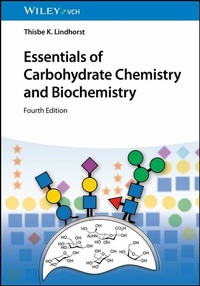
Website to accompany Essentials of Carbohydrate Chemistry and Biochemistry
4th Edition
Published on 7. May 2026
384 pages
978-3-527-83864-6 (ISBN)
Description

From synthesis to biological function, "Essentials of Carbohydrate Chemistry and Biochemistry" introduces the entire range of modern carbohydrate chemistry and chemical biology. In this new edition, the increasing recognition of the role of carbohydrates in biology, pharmacology, and medicine is reflected in greatly expanded sections on glycobiology and glycomimetics. The new edition also features a new set of illustrations, many of which are now in color, as well as intriguing practical examples and story-telling text boxes providing context for the relevance of carbohydrates in science and society.
Didactically written by an experienced lecturer and graduate student advisor, "Essentials of Carbohydrate Chemistry and Biochemistry" includes information on:
- Protecting groups for carbohydrates, including protection of the anomeric center, acyl, ether, and acetal protecting groups
- Methods for the analysis of carbohydrates, covering polarimetry, NMR spectroscopy, and mass spectrometry
- Important modifications and functionalizations of the sugar ring, such as deoxy derivatives, anhydro sugars, and epimerizations
- Principal approaches to the chemical and enzymatic synthesis of glycosides and glycopeptides, and modern examples of advancing the art of glycoside synthesis employing solution as well as solid phase methods
- Structural diversity and biosynthesis of oligosaccharides and glycoconjugates
- A greatly expanded section on glycobiology that focuses on the role of carbohydrates in membrane architecture, cell-cell-recognition. cell adhesion, and their biomedical applications.
Updated and thoroughly modernized for more efficient classroom teaching and self-learning, the Fourth Edition of "Essentials of Carbohydrate Chemistry and Biochemistry" is essential reading for students in chemistry, biochemistry, biotechnology, and pharmacy with an interest in glycochemistry and glycobiology.
Didactically written by an experienced lecturer and graduate student advisor, "Essentials of Carbohydrate Chemistry and Biochemistry" includes information on:
- Protecting groups for carbohydrates, including protection of the anomeric center, acyl, ether, and acetal protecting groups
- Methods for the analysis of carbohydrates, covering polarimetry, NMR spectroscopy, and mass spectrometry
- Important modifications and functionalizations of the sugar ring, such as deoxy derivatives, anhydro sugars, and epimerizations
- Principal approaches to the chemical and enzymatic synthesis of glycosides and glycopeptides, and modern examples of advancing the art of glycoside synthesis employing solution as well as solid phase methods
- Structural diversity and biosynthesis of oligosaccharides and glycoconjugates
- A greatly expanded section on glycobiology that focuses on the role of carbohydrates in membrane architecture, cell-cell-recognition. cell adhesion, and their biomedical applications.
Updated and thoroughly modernized for more efficient classroom teaching and self-learning, the Fourth Edition of "Essentials of Carbohydrate Chemistry and Biochemistry" is essential reading for students in chemistry, biochemistry, biotechnology, and pharmacy with an interest in glycochemistry and glycobiology.
More details
Other editions
Additional editions
Thisbe K. Lindhorst
Website to accompany Essentials of Carbohydrate Chemistry and Biochemistry
Book
approx. 06/2026
4th Edition
Wiley-VCH
€79.90
Not yet published
Person
Thisbe Lindhorst is full professor at the Faculty of Mathematics and Natural Science of Christiana Albertina University of Kiel (Germany). She studied chemistry at the Universities of München and Münster, received her diploma in chemistry/biochemistry in 1988 and her Ph.D. in Organic Chemistry in 1991 at the University of Hamburg. After a postdoctoral stay at the University of British Columbia she became Private Docent in 1998 at the University of Hamburg. Since 2000 she holds a chair in Organic and Biological Chemistry in Kiel. Her scientific interests are in the field of synthetic organic chemistry and in biological chemistry, especially in glycochemistry and glycobiology. Current research is focussed on the study of glycosylated surfaces and control of cell adhesion. She is the author of over 150 publications and of the textbook "Essentials in Carbohydrate Chemistry and Biochemistry". She has been an elected member of the DFG Forschungsforum from 2008 to 2016 and served as elected president of the German Chemical Society (GDCh) in 2016-2017.
Content
1 Structure of saccharides
1.1 Structure of monosaccharides
1.2 Structure of oligosaccharides
1.3 Structure of polysaccharides
1.4 Nomenclature of saccharides
References and key terms
2 Protecting groups for carbohydrates
2.1 Acyl protecting groups
2.2 Ether protecting groups
2.3 Selective protection of the primary hydroxyl group
2.4 Cyclic protecting groups
2.5 Orthoesters as protecting groups
2.6 Protection of the anomeric centre
2.7. One catalyst-one pot protections of per-silylated sugars
2.8 N-Protection for amino sugars
2.9 Enzymes in protecting group chemistry
2.10 Strategic protecting-group sequences on carbohydrate scaffolds
References and key terms
3 O-Glycoside synthesis
3.1 1,2-trans and 1,2-cis Glycosidation
3.2 Factors that influence a glycosylation reaction
3.3 The Koenigs-Knorr method
3.4 Glycosyl acetimidates
3.5 Thioglycosides
3.6 n-Pentenyl glycosides
3.7. Gold?catalysed glycoside synthesis
3.8 Synthesis of 2-deoxy glycosides
3.9 Synthesis of alpha-D-glucosides and beta-D-mannosides
3.10 Synthesis of 2-acetamido-2-deoxy glycosides
3.11 Solid phase oligosaccharide synthesis
3.12 Glycoside synthesis employing enzymes
3.13 Glycosylation strategies
References and key terms
4 Important modifications of the sugar ring
4.1 Activation?substitution reactions at the carbohydrate ring: Deoxyhalo derivatives
4.2 Deoxygenation of carbohydrates
4.3 Epimerisations
4.4 From azido to amino and more: N-functionalised sugars
4.5 Important unsaturated saccharides
4.6 Unexpected journeys of sugars
References and key terms
5 Structure and biosynthesis of glycoconjugates
5.1 Size, diversity, and representation
5.1.1 The actual size of carbohydrates
5.1.2 Structural diversity of oligosaccharides
5.1.3 The symbol representation of carbohydrates
5.2 Structures of glycoconjugates
5.3 Biosynthesis of oligosaccharides
5.3.1 Biosynthesis of N-glycoproteins
5.3.2 Biosynthesis of O-glycoproteins
5.3.3 Biosynthesis of glycosphingolipids
References and key terms
6 Glycobiology
6.1 The glycocalyx
6.2 The lectins
6.3 Carbohydrate microarrays
6.4 Glycomimetics and carbohydrate drugs
6.5 Microbial adhesion - FimH antagonists and catch bonds
6.6 The clinical impact of glycobiology
6.8 Glycan atlassing
References and key terms
1.1 Structure of monosaccharides
1.2 Structure of oligosaccharides
1.3 Structure of polysaccharides
1.4 Nomenclature of saccharides
References and key terms
2 Protecting groups for carbohydrates
2.1 Acyl protecting groups
2.2 Ether protecting groups
2.3 Selective protection of the primary hydroxyl group
2.4 Cyclic protecting groups
2.5 Orthoesters as protecting groups
2.6 Protection of the anomeric centre
2.7. One catalyst-one pot protections of per-silylated sugars
2.8 N-Protection for amino sugars
2.9 Enzymes in protecting group chemistry
2.10 Strategic protecting-group sequences on carbohydrate scaffolds
References and key terms
3 O-Glycoside synthesis
3.1 1,2-trans and 1,2-cis Glycosidation
3.2 Factors that influence a glycosylation reaction
3.3 The Koenigs-Knorr method
3.4 Glycosyl acetimidates
3.5 Thioglycosides
3.6 n-Pentenyl glycosides
3.7. Gold?catalysed glycoside synthesis
3.8 Synthesis of 2-deoxy glycosides
3.9 Synthesis of alpha-D-glucosides and beta-D-mannosides
3.10 Synthesis of 2-acetamido-2-deoxy glycosides
3.11 Solid phase oligosaccharide synthesis
3.12 Glycoside synthesis employing enzymes
3.13 Glycosylation strategies
References and key terms
4 Important modifications of the sugar ring
4.1 Activation?substitution reactions at the carbohydrate ring: Deoxyhalo derivatives
4.2 Deoxygenation of carbohydrates
4.3 Epimerisations
4.4 From azido to amino and more: N-functionalised sugars
4.5 Important unsaturated saccharides
4.6 Unexpected journeys of sugars
References and key terms
5 Structure and biosynthesis of glycoconjugates
5.1 Size, diversity, and representation
5.1.1 The actual size of carbohydrates
5.1.2 Structural diversity of oligosaccharides
5.1.3 The symbol representation of carbohydrates
5.2 Structures of glycoconjugates
5.3 Biosynthesis of oligosaccharides
5.3.1 Biosynthesis of N-glycoproteins
5.3.2 Biosynthesis of O-glycoproteins
5.3.3 Biosynthesis of glycosphingolipids
References and key terms
6 Glycobiology
6.1 The glycocalyx
6.2 The lectins
6.3 Carbohydrate microarrays
6.4 Glycomimetics and carbohydrate drugs
6.5 Microbial adhesion - FimH antagonists and catch bonds
6.6 The clinical impact of glycobiology
6.8 Glycan atlassing
References and key terms
