

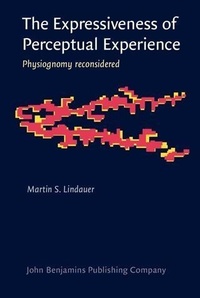
The Expressiveness of Perceptual Experience
Physiognomy reconsidered
1st Edition
Published on 31. October 2013
XI, 174 pages
978-90-272-7111-2 (ISBN)
Description

A face strikes us immediately as sad, and so, too, do a mourner, a willow tree, a house on a prairie, and a group of onlookers. The spontaneous emergence of affective and other qualities of people, things, places, and events falls under the heading of physiognomy, a phenomenon discussed since at least Aristotle, and a key feature of evolutionary theory, psychology, and perception as well as professional practice ("profiling") and popular talk. However, physiognomy is a controversial topic because of a suspect history, and is often renamed as non-verbal communication.
The Expressiveness of Perceptual Experience: Physiognomy Reconsidered examines this venerable, attractive, and contentious topic within the unique perspective of research-oriented psychology. Included are the processes involved, primarily perceptual; origins, mainly evolutionary; and social-cultural factors as supplements. Discussed within a holistic-experiential (phenomenological)-aesthetic framework are physiognomy's ties to the arts as well as emotions, synesthesia, learning, development, and personality. Empirical investigations are summarized, including the author's.
The Expressiveness of Perceptual Experience: Physiognomy Reconsidered examines this venerable, attractive, and contentious topic within the unique perspective of research-oriented psychology. Included are the processes involved, primarily perceptual; origins, mainly evolutionary; and social-cultural factors as supplements. Discussed within a holistic-experiential (phenomenological)-aesthetic framework are physiognomy's ties to the arts as well as emotions, synesthesia, learning, development, and personality. Empirical investigations are summarized, including the author's.
More details
Other editions
Additional editions
Book
10/2013
John Benjamins Publishing Co
€95.40
Shipment within 10-15 days
Person
Content
- The Expressiveness of Perceptual Experience
- Editorial page
- Title page
- LCC data
- Dedication page
- A page of profiles
- Table of contents
- Preface
- 1. An overview
- I. Background
- 2. Physiognomy described
- Quotations on the physiognomic meanings of the body and their acceptance: A study
- The language of physiognomy
- Physiognomy and synesthesia
- Physiognomic and synesthetic descriptors compared: A study
- 3. Historical background and methods of study
- Methods of study
- The phenomenological approach
- Research materials and strategies
- II. Physiognomy and the arts
- 4. Physiognomy in paintings, literature, and the other arts
- Physiognomy in the visual arts
- Literature
- Physiognomy across the arts
- 5. The arts, physiognomy, perception, and Gestalt psychology
- Studies of physiognomy in literature
- Poetry
- Fictional names of characters in adult and children's literature
- Titles in Hungarian short stories
- Titles in art
- Physiognomic parallels between the visual and verbal arts
- Physiognomy and synesthesia in the arts
- Gestalt psychology, art, and physiognomy
- III. A perceptual framework for physiognomy
- 6. Physiognomy as an emergent phenomenon
- The problem of perception
- Color perception
- An exercise: Matching color names and forms
- Space perception
- Movement perception
- The stimuli for the physiognomic perception of people
- Organizing the physiognomic cues of person perception: The theories of Heider and Lewin
- The innate basis for physiognomic perception: Darwin and evolutionary theory
- 7. The physiognomy of person perception
- The stimuli for the physiognomic perception of people
- Vocalizations
- The body
- Kinesics
- Distances between people
- Organizing the physiognomic cues of person perception: The theories of Heider and Lewin
- Heider's balance theory
- Lewin and the perceived life-space
- The innate basis for physiognomic perception: Darwin and evolutionary theory
- IV. Answers and questions
- 8. Theories of physiognomy
- Gestalt psychology and physiognomy
- The constructionist position on physiognomy
- Physiognomy and evolution
- 9. Summing up, remaining issues, future research
- References cited
- The index
