

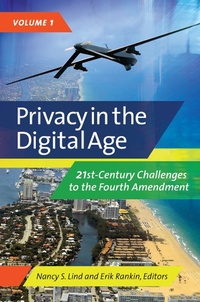
Privacy in the Digital Age
21st-Century Challenges to the Fourth Amendment [2 Volumes]
1st Edition
Published on 19. June 2015
704 pages
979-8-216-13255-4 (ISBN)
Description

A collection of expert essays examines the privacy rights that have been lost in the post-9/11 era-giving students and others the knowledge they need to take back their constitutional protections.
This timely two-volume collection shares information every citizen should have, tackling the erosion of privacy rights engendered by the ability of digital technology to intercept, mine, and store personal data, most often without the knowledge of those being monitored. Examining its subject through the lens of Fourth Amendment rights, the work focuses on technological advances that now gather personal data on an unprecedented scale, whether by monitoring social media, tracking cell phones, or using thermal imaging to watch people's movement. It also examines the possible impact of the widespread gathering of such data by law enforcement and security agencies and by private corporations such as Google.
Organized by hot-button topics confronting U.S. citizens in the post-9/11 era, the work reviews the original intent of the Fourth Amendment and then traces the development and erosion of interpretations of that amendment in the 21st century. Topical essays offer a comprehensive treatment and understanding of current Fourth Amendment issues, including those that have been brought before the courts and those relative to the continuing governmental and societal emphasis on security and public safety since the Columbine shootings in 1999 and the events of September 11, 2001.
This timely two-volume collection shares information every citizen should have, tackling the erosion of privacy rights engendered by the ability of digital technology to intercept, mine, and store personal data, most often without the knowledge of those being monitored. Examining its subject through the lens of Fourth Amendment rights, the work focuses on technological advances that now gather personal data on an unprecedented scale, whether by monitoring social media, tracking cell phones, or using thermal imaging to watch people's movement. It also examines the possible impact of the widespread gathering of such data by law enforcement and security agencies and by private corporations such as Google.
Organized by hot-button topics confronting U.S. citizens in the post-9/11 era, the work reviews the original intent of the Fourth Amendment and then traces the development and erosion of interpretations of that amendment in the 21st century. Topical essays offer a comprehensive treatment and understanding of current Fourth Amendment issues, including those that have been brought before the courts and those relative to the continuing governmental and societal emphasis on security and public safety since the Columbine shootings in 1999 and the events of September 11, 2001.
More details
Edition
1. Auflage
Language
English
Place of publication
New York
United States
Publishing group
Bloomsbury Publishing Plc
Target group
Interest Age: From 7 to 17 years
ISBN-13
979-8-216-13255-4 (9798216132554)
Copyright in bibliographic data and cover images is held by Nielsen Book Services Limited or by the publishers or by their respective licensors: all rights reserved.
Schweitzer Classification
Other editions
Additional editions
Nancy S. Lind | Erik T. Rankin
Privacy in the Digital Age
21st-Century Challenges to the Fourth Amendment [2 volumes]
Book
06/2015
Praeger Publishers Inc
€174.10
Article exhausted; check different version
Persons
Nancy S. Lind, PhD, is professor of politics and government at Illinois State University.
Erik T. Rankin, MA, MS/MPS, and doctoral student, is assistant to the Department Chair at Illinois State University.
Erik T. Rankin, MA, MS/MPS, and doctoral student, is assistant to the Department Chair at Illinois State University.
Content
Acknowledgments
Introduction
Nancy S. Lind
VOLUME 1
1.Developments on the Fourth Amendment and Privacy to the ?21st Century
Katharine Leigh
2.Wiretaps, Electronic Surveillance, and the Fourth Amendment
Jason Hochstatter
3.Forensic DNA Analysis, the Fourth Amendment, and ?Personal Privacy
Wendy Watson
4.Biometric Identification as a Requirement for Work Access ?and Forced Surrendering of Private Information
Pamela LaFeber
5.Employee Expectations of Privacy in the Workplace: ?Drug Tests, Work Spaces, Computers, and Social Media
R. Craig Curtis
6.The Privacy Rights of Minors in a Digital Age
Gardenia Harris
7.Library Patrons and the National Security State
Chad Kahl
8.Where Is the Suspect? The Potential for the Use ?of Private Location-Tracking Data by Law Enforcement
R. Craig Curtis
9.Drones and Police Practices
John C. Blakeman
10.So Long, Stakeout? GPS Tracking and the Fourth Amendment
Maureen Lowry-Fritz and Artemus Ward
11.Drones, Domestic Surveillance, and Privacy: Legal and ?Statutory Implications
David L. Weiden
12.21 st-Century Developments in Fourth Amendment ?Privacy Law
Timothy O. Lenz
13.The Changing Expectations of Privacy in the Digital Age
Meghan E. Leonard
VOLUME 2
14.Beyond OnStar: The Future and the Trespass-versus-?Privacy Debate
Ronald L. Nelson
15.Closed Circuit TVs, Videomation, and Privacy
Elizabeth Wheat
16.Airport Scanners and the Fourth Amendment
Cara E. Rabe-Hemp
17.Social Media and the Fourth Amendment Privacy Protections
Renee Prunty and Amanda Swartzendruber
18.Hacking, the Limits to the Fourth Amendment, and ?Challenges to Local Administration in the 21st Century
Eric E. Otenyo
19. Data Mining in the 21st Century
Todd C. Hiestand
20.The Role of Security in Wireless Privacy
Glen Sagers
21.Identity Theft in the 21st Century
John C. Navarro and Cara E. Rabe-Hemp
22.Maintaining the Technological Neutrality of the ?Fourth Amendment
L. J. Zigerell
23.Developments in Search-and-Seizure Cases ?in the Post-September 11 Era
Thomas E. McClure
Appendix: Table of Cases
Bibliography
About the Editors and Contributors
Index
Introduction
Nancy S. Lind
VOLUME 1
1.Developments on the Fourth Amendment and Privacy to the ?21st Century
Katharine Leigh
2.Wiretaps, Electronic Surveillance, and the Fourth Amendment
Jason Hochstatter
3.Forensic DNA Analysis, the Fourth Amendment, and ?Personal Privacy
Wendy Watson
4.Biometric Identification as a Requirement for Work Access ?and Forced Surrendering of Private Information
Pamela LaFeber
5.Employee Expectations of Privacy in the Workplace: ?Drug Tests, Work Spaces, Computers, and Social Media
R. Craig Curtis
6.The Privacy Rights of Minors in a Digital Age
Gardenia Harris
7.Library Patrons and the National Security State
Chad Kahl
8.Where Is the Suspect? The Potential for the Use ?of Private Location-Tracking Data by Law Enforcement
R. Craig Curtis
9.Drones and Police Practices
John C. Blakeman
10.So Long, Stakeout? GPS Tracking and the Fourth Amendment
Maureen Lowry-Fritz and Artemus Ward
11.Drones, Domestic Surveillance, and Privacy: Legal and ?Statutory Implications
David L. Weiden
12.21 st-Century Developments in Fourth Amendment ?Privacy Law
Timothy O. Lenz
13.The Changing Expectations of Privacy in the Digital Age
Meghan E. Leonard
VOLUME 2
14.Beyond OnStar: The Future and the Trespass-versus-?Privacy Debate
Ronald L. Nelson
15.Closed Circuit TVs, Videomation, and Privacy
Elizabeth Wheat
16.Airport Scanners and the Fourth Amendment
Cara E. Rabe-Hemp
17.Social Media and the Fourth Amendment Privacy Protections
Renee Prunty and Amanda Swartzendruber
18.Hacking, the Limits to the Fourth Amendment, and ?Challenges to Local Administration in the 21st Century
Eric E. Otenyo
19. Data Mining in the 21st Century
Todd C. Hiestand
20.The Role of Security in Wireless Privacy
Glen Sagers
21.Identity Theft in the 21st Century
John C. Navarro and Cara E. Rabe-Hemp
22.Maintaining the Technological Neutrality of the ?Fourth Amendment
L. J. Zigerell
23.Developments in Search-and-Seizure Cases ?in the Post-September 11 Era
Thomas E. McClure
Appendix: Table of Cases
Bibliography
About the Editors and Contributors
Index
