

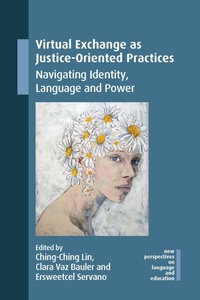
Virtual Exchange as Justice-Oriented Practices
Navigating Identity, Language and Power
Published on 15. May 2026
296 pages
978-1-78892-123-7 (ISBN)
Description

Reconceptualizes virtual exchange as a vehicle for humanizing education, expanding global perspectives and fostering values of inclusion and non-discrimination.
This book brings a justice-oriented focus to virtual exchange, highlighting how equity, inclusion and critical awareness can be meaningfully integrated into global learning environments.
The chapters in this book illuminate the intertwined nature of identity, language and power, shedding light on how these elements can perpetuate deficit narratives and structural inequality within virtual exchanges. To counter this, readers are introduced to diverse justice-based perspectives, frameworks, protocols, case studies and materials that support the design and facilitation of critical virtual exchange experiences.
The chapters engage with issues including partnerships and collaborations between the Global North and South, dialogue amid conflict and war, and the use of varieties of English and practices to foster student agency and collective accountability. Each chapter includes practical case studies and critical discussion questions designed for teacher education, facilitator training and professional development in culturally diverse classrooms.
This book brings a justice-oriented focus to virtual exchange, highlighting how equity, inclusion and critical awareness can be meaningfully integrated into global learning environments.
The chapters in this book illuminate the intertwined nature of identity, language and power, shedding light on how these elements can perpetuate deficit narratives and structural inequality within virtual exchanges. To counter this, readers are introduced to diverse justice-based perspectives, frameworks, protocols, case studies and materials that support the design and facilitation of critical virtual exchange experiences.
The chapters engage with issues including partnerships and collaborations between the Global North and South, dialogue amid conflict and war, and the use of varieties of English and practices to foster student agency and collective accountability. Each chapter includes practical case studies and critical discussion questions designed for teacher education, facilitator training and professional development in culturally diverse classrooms.
Reviews / Votes
This volume reconceptualizes virtual exchange as a transformative third space, not a substitute for face-to-face interaction. Grounded in rich theoretical frameworks and deeply informed by lived, multilingual, and transnational experiences, it examines how identity, language, and power are negotiated in digital encounters. An essential read for scholars, teacher educators, and practitioners committed to dialogue, solidarity, and social justice. * Xiao-lei Wang, Adelphi University, USA * Timely, highly relevant, and meaningful, this academic work elevates present-day discourses on virtual exchange. I appreciate the balance of theory, research, and practical examples to highlight ways educators and learners can navigate identity, language, and power so as to shape equitable and transformative learning environments. This is a must-read for anyone engaged in global education. * Maico Demi B. Aperocho, University of Mindanao, Philippines *More details
Series
Language
English
Place of publication
Bristol
United Kingdom
Target group
College/higher education
Product notice
Reflowable
File size
5,48 MB
ISBN-13
978-1-78892-123-7 (9781788921237)
Copyright in bibliographic data and cover images is held by Nielsen Book Services Limited or by the publishers or by their respective licensors: all rights reserved.
Schweitzer Classification
Other editions
Additional editions
Ching-Ching Lin | Clara Vaz Bauler | Ersweetcel Servano
Virtual Exchange as Justice-Oriented Practices
Navigating Identity, Language and Power
Book
approx. 07/2026
Multilingual Matters
€50.00
Shipment within 3-4 weeks
Persons
Ching-Ching Lin is a teacher educator and scholar in TESOL and Bilingual Education at Adelphi University in New York, USA. Her work centers on designing culturally sustaining and linguistically inclusive curricula that advance equity and ecological sustainability in education. Most recently she was co-editor of Reimagining Dialogue on Identity, Language and Power (Multilingual Matters, 2024, with Clara Vaz Bauler).
Clara Vaz Bauler is a Professor of TESOL/Bilingual Education at Adelphi University, New York, USA. She is invested in pedagogical practices that validate and affirm all multilingual students' knowledge, experiences and linguistic-semiotic resources. She advocates for the naturalization of multimodality, multilingualism and dialogue in language teaching and learning spaces via digital media technology.
Ersweetcel Servano is a Professor and Dean of the College of Education at Notre Dame of Dadiangas University in General Santos City, Philippines. Her research interests include language and law, Systemic Functional Linguistics, identity and hybridity, memory and trauma, virtual exchange, World Englishes and home language.
Clara Vaz Bauler is a Professor of TESOL/Bilingual Education at Adelphi University, New York, USA. She is invested in pedagogical practices that validate and affirm all multilingual students' knowledge, experiences and linguistic-semiotic resources. She advocates for the naturalization of multimodality, multilingualism and dialogue in language teaching and learning spaces via digital media technology.
Ersweetcel Servano is a Professor and Dean of the College of Education at Notre Dame of Dadiangas University in General Santos City, Philippines. Her research interests include language and law, Systemic Functional Linguistics, identity and hybridity, memory and trauma, virtual exchange, World Englishes and home language.
Content
Contributors
Robert O'Dowd: Foreword
Ching-Ching Lin, Clara Vaz Bauler and Ersweetcel Servano: Introduction
Part 1: Virtual Exchange as a Site for Identity Negotiation and Transformation
Chapter 1. Marina Orsini-Jones, Yu-Hua Chen, Guray Koseoglu, Patience Mkpayah, Preeti Suri and Kai Zhang: Virtual Exchange as an Equality, Diversity and Inclusion Approach in English Language Teacher Education: Female Voices in the Third Space
Chapter 2. Ching-Ching Lin, Lorenzo Dumalina, Ersweetcel Servano, Stef Wu, Victoria Distl and Keane Allado: Fostering Co-learning and Humility in Virtual Exchange: Auto-Ethnographic Insights in the Context of Global English
Chapter 3. Huy Lam-Nguyen, Devin Thornburg, Jody McBrien and Rachael LeClear: Being Together for Global Justice: Illuminating Partnerships Among Higher Education Institutions, Non-Profit Organizations and LGBTI Communities
Chapter 4. Constanze Ackermann-Bostroem and Anne Reath Warren: Fracturing Academia? Exploring an Online Professional Development Activity for Multilingual Tutors
Chapter 5. M. Laura Angelini, Rut Muniz, Roberta Diamanti and Isabel Torrijos: Voices from the Virtual Classroom: Observer and Student Perceptions of the Sim+VE Project in Teacher Education
Part 2: Fostering Critical 'Language' Awareness and Reflection in Cross-Cultural Learning
Chapter 6. Clara Vaz Bauler: Asynchronous Interactions: The Hidden Dimension of Virtual Exchange
Chapter 7. Robert Remmerswaal: Be SPECIFIC: Designing a Transformative and Inclusive Virtual Exchange
Chapter 8. Ersweetcel C. Servano and Khim Reginald C. Soria: Solidarity Amidst the Odds: An Exploration of Engagement Equity in Global North-South Virtual Exchange
Chapter 9 Lindsay N. Herron: Expanding Perspectives, Engaging Empathy: Critical Cosmopolitan Connections in a Virtual Exchange in Korea
Chapter 10. Natalia A. Ward, Amber N. Warren, Renee Rice Moran: Promoting Culturally Sustaining Pedagogy through International Virtual Lecture Exchange
Part 3: Challenging and Reshaping Power Dynamics through Collaborative Virtual Exchange
Chapter 11. Francesca Helm, Maysa Abuzant and Alia Gilbrecht-Hendi: Virtual Exchange as Resistance: Sumud Pedagogy and Epistemic Sustainability in Occupied Palestinian Territories (oPt)
Chapter 12. Fernanda Liberali and Antonieta Megale: Unveiling Alternatives: Virtual Exchange as a Response to Neoliberal Bi/Multilingual Education Policies
Chapter 13. Anastasia Khawaja, Mary Hillis, Monica Baker and Jane Hoelker: Decolonizing Dialogue: Stories of Virtual Exchanges and Inclusive Spaces
Chapter 14. Lourdes Evangelina Zilberberg Oviedo and Jan Krimphove: Humanist and Solidarity-Driven Internationalization through Virtual Exchange: A Brazilian Perspective
Chapter 15. Manuela Wagner and Alice Gruber: Virtual Exchange and Emerging Technologies: A Critical Perspective on Pedagogical and Intercultural Implications
Index
Robert O'Dowd: Foreword
Ching-Ching Lin, Clara Vaz Bauler and Ersweetcel Servano: Introduction
Part 1: Virtual Exchange as a Site for Identity Negotiation and Transformation
Chapter 1. Marina Orsini-Jones, Yu-Hua Chen, Guray Koseoglu, Patience Mkpayah, Preeti Suri and Kai Zhang: Virtual Exchange as an Equality, Diversity and Inclusion Approach in English Language Teacher Education: Female Voices in the Third Space
Chapter 2. Ching-Ching Lin, Lorenzo Dumalina, Ersweetcel Servano, Stef Wu, Victoria Distl and Keane Allado: Fostering Co-learning and Humility in Virtual Exchange: Auto-Ethnographic Insights in the Context of Global English
Chapter 3. Huy Lam-Nguyen, Devin Thornburg, Jody McBrien and Rachael LeClear: Being Together for Global Justice: Illuminating Partnerships Among Higher Education Institutions, Non-Profit Organizations and LGBTI Communities
Chapter 4. Constanze Ackermann-Bostroem and Anne Reath Warren: Fracturing Academia? Exploring an Online Professional Development Activity for Multilingual Tutors
Chapter 5. M. Laura Angelini, Rut Muniz, Roberta Diamanti and Isabel Torrijos: Voices from the Virtual Classroom: Observer and Student Perceptions of the Sim+VE Project in Teacher Education
Part 2: Fostering Critical 'Language' Awareness and Reflection in Cross-Cultural Learning
Chapter 6. Clara Vaz Bauler: Asynchronous Interactions: The Hidden Dimension of Virtual Exchange
Chapter 7. Robert Remmerswaal: Be SPECIFIC: Designing a Transformative and Inclusive Virtual Exchange
Chapter 8. Ersweetcel C. Servano and Khim Reginald C. Soria: Solidarity Amidst the Odds: An Exploration of Engagement Equity in Global North-South Virtual Exchange
Chapter 9 Lindsay N. Herron: Expanding Perspectives, Engaging Empathy: Critical Cosmopolitan Connections in a Virtual Exchange in Korea
Chapter 10. Natalia A. Ward, Amber N. Warren, Renee Rice Moran: Promoting Culturally Sustaining Pedagogy through International Virtual Lecture Exchange
Part 3: Challenging and Reshaping Power Dynamics through Collaborative Virtual Exchange
Chapter 11. Francesca Helm, Maysa Abuzant and Alia Gilbrecht-Hendi: Virtual Exchange as Resistance: Sumud Pedagogy and Epistemic Sustainability in Occupied Palestinian Territories (oPt)
Chapter 12. Fernanda Liberali and Antonieta Megale: Unveiling Alternatives: Virtual Exchange as a Response to Neoliberal Bi/Multilingual Education Policies
Chapter 13. Anastasia Khawaja, Mary Hillis, Monica Baker and Jane Hoelker: Decolonizing Dialogue: Stories of Virtual Exchanges and Inclusive Spaces
Chapter 14. Lourdes Evangelina Zilberberg Oviedo and Jan Krimphove: Humanist and Solidarity-Driven Internationalization through Virtual Exchange: A Brazilian Perspective
Chapter 15. Manuela Wagner and Alice Gruber: Virtual Exchange and Emerging Technologies: A Critical Perspective on Pedagogical and Intercultural Implications
Index
