

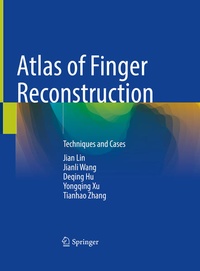
Atlas of Finger Reconstruction
Description

The book mainly contains two parts: Part 1 focuses on development of the history of finger reconstruction, applied anatomy of the extremities, commonly used equipment and materials, frequently used medicines, preoperative treatment, selection of anesthesia, fundamental skill for finger reconstruction, postoperative treatment and management and methods of functional recovery after finger reconstruction. It is not uncommon in clinical scenarios that severe traumas caused by high energy damage in hands leading to life-long disability. The initial injury management is crucial. Surgeons face the arduous task of attempting to repair and reconstruct the injuries, reduce the patient's disability and improve their quality of life. Part 2 demonstrates the concepts of different types of finger reconstruction with key points described by case presentations. Depending on the types and the severity of the lesions, accuracy of doctor's judgment and proficiency of surgery skill have vital significance during the treatment of hand trauma together with patients' compliance on functional rehabilitation.
More details
Other editions
Additional editions
Persons
Jian Lin is Professor, the Chief of Department of Center for Orthopaedic Repair and Reconstruction, Chongming Hospital Affiliated to Shanghai University of Medicine & Health Sciences(Xinhua Hospital Chongming Branch); The Chief of Institute of Wound Prevention and Treatment, Shanghai University of Medicine & Health Sciences, Shanghai, China.
Jianli Wang is Professor of Department of Orthopaedic, The 80th Group Army Hospital of PLA, Weifang, Shangdong, China.
Deqing Hu is Professor of Department of Orthopaedics, The First Affiliated Hospital of Fujian Medical University, Fuzhou, Fujian, China.
Yongqing Xu is Professor of Institute of Traumatology and Orthopedics, 920th Hospital of Joint Logistics Support Force, PLA, Kunming, Yunnan, China.
Tianhao Zhang is Professor of Department of Center for Orthopaedic Repair and Reconstruction, Chongming Hospital Affiliated to Shanghai University of Medicine & Health Sciences(Xinhua Hospital Chongming Branch); professor of Institute of Wound Prevention and Treatment, Shanghai University of Medicine & Health Sciences, Shanghai, China.
