

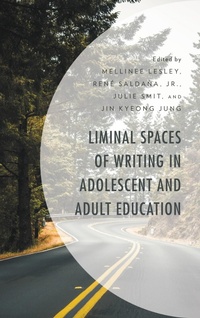
Liminal Spaces of Writing in Adolescent and Adult Education
Lexington Books (Publisher)
1st Edition
Published on 3. March 2022
1 pages
978-1-9787-9604-1 (ISBN)
Description

Liminal Spaces of Writing in Adolescent and Adult Education addresses the persistent gap in writing reform at the middle, secondary, and post-secondary level. Through an examination of "useful" and "liminal" writing, the book explores the intellectual and creative space where structured expectations verge with individual imagination in writing. The premise of the book is built around a multiplicity of ways to invite adolescent and adult students to enter into states of liminality where they are encouraged to experiment with style, form, genre, and voice. Through research featuring the perspectives of adolescents, classroom teachers, teacher educators, graduate students, and literacy researchers, the book offers numerous insights into fostering a liminal and useful approach to writing instruction. Each author takes the reader through a journey of finding the liminal as teachers, writers, and researchers. Taken together, this tapestry of perspectives puts forth the argument that liminal moments are necessary caveats to explore in order to cultivate fully actualized writing where students are in control of structures and traditional writing expectations but also free to imagine new ways of breaking with conventions and being as writers. Thus, the book argues liminal writing is critical in bringing about sustained writing reform.
More details
Edition
1. Auflage
Language
English
Place of publication
United States
Publishing group
Bloomsbury Publishing Plc
Target group
Professional and scholarly
ISBN-13
978-1-9787-9604-1 (9781978796041)
Copyright in bibliographic data and cover images is held by Nielsen Book Services Limited or by the publishers or by their respective licensors: all rights reserved.
Schweitzer Classification
Other editions
Additional editions
Mellinee Lesley | Rene Saldana | Julie Smit
Liminal Spaces of Writing in Adolescent and Adult Education
Book
03/2022
Lexington Books
€104.00
Shipment within 3-4 weeks
Persons
Mellinee Lesley is professor in the Language, Diversity & Literacy Studies program in the College of Education at Texas Tech University.
René Saldaña, Jr. is associate professor of Language, Diversity & Literacy Studies in the Department of Curriculum and instruction at Texas Tech University.
Julie Smit is associate professor of Language, Diversity & Literacy Studies in the Department of Curriculum and Instruction at Texas Tech University.
Jin Kyeong Jung is assistant professor of Language, Diversity & Literacy Studies in the Department of Curriculum and Instruction at Texas Tech University.
René Saldaña, Jr. is associate professor of Language, Diversity & Literacy Studies in the Department of Curriculum and instruction at Texas Tech University.
Julie Smit is associate professor of Language, Diversity & Literacy Studies in the Department of Curriculum and Instruction at Texas Tech University.
Jin Kyeong Jung is assistant professor of Language, Diversity & Literacy Studies in the Department of Curriculum and Instruction at Texas Tech University.
Content
Preface
Mellinee Lesley, René Saldaña, Jr., Julie Smit, Jin Kyeong Jung
Introduction: The Role of Liminality in Developing Useful Writing
René Saldaña, Jr., Mellinee Lesley, Julie Smit, Jin Kyeong Jung
Chapter One: More than the Second 'R': Revisiting Writing Instruction for Young Adults
Kristine E. Pytash and Mellinee Lesley
Chapter Two: Why We Write: The Scribal Identities of Adolescents Working against Standardization
R. Joseph Rodriguez
Chapter Three: The Shifting Identities of Literacy Graduates: From Learners of Writing Instruction to Novice Teachers of Adolescent Writers
Thea Yurkewecz-Stellato, Shelby Erhard, and Richard Rappold
Chapter Four: In Search of the Aesthetic: An Arts-based Approach to Writing Up Our Research
Elizabeth Stewart and René Saldaña, Jr.
Chapter Five: Literacy Legacies
Stephanie Millet
Chapter Six: Creating a Liminal Writing Class for Multilingual Adolescent Writers
Jin Kyeong Jung
Chapter Seven: Video Games in the Middle School Reading Classroom: A Cultural Canon
Mellinee Lesley, René Saldaña, Jr., Julie Smit, Jin Kyeong Jung
Introduction: The Role of Liminality in Developing Useful Writing
René Saldaña, Jr., Mellinee Lesley, Julie Smit, Jin Kyeong Jung
Chapter One: More than the Second 'R': Revisiting Writing Instruction for Young Adults
Kristine E. Pytash and Mellinee Lesley
Chapter Two: Why We Write: The Scribal Identities of Adolescents Working against Standardization
R. Joseph Rodriguez
Chapter Three: The Shifting Identities of Literacy Graduates: From Learners of Writing Instruction to Novice Teachers of Adolescent Writers
Thea Yurkewecz-Stellato, Shelby Erhard, and Richard Rappold
Chapter Four: In Search of the Aesthetic: An Arts-based Approach to Writing Up Our Research
Elizabeth Stewart and René Saldaña, Jr.
Chapter Five: Literacy Legacies
Stephanie Millet
Chapter Six: Creating a Liminal Writing Class for Multilingual Adolescent Writers
Jin Kyeong Jung
Chapter Seven: Video Games in the Middle School Reading Classroom: A Cultural Canon
