

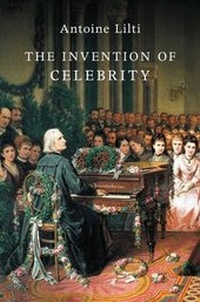
The Invention of Celebrity
Description

Reviews / Votes
"Lilti's achievement is highly impressive. He provides a new perspective on the transformations of Western culture in the age of revolutions, and on the genesis of modern notions of selfhood and personal authenticity. And he reminds us that even as we laugh at contemporary celebrity culture, we need to take it seriously, and not merely as an excrescence or a pathology, but as a constituent element of political and cultural modernity." David A. Bell, Princeton University "With The Invention of Celebrity, Antoine Lilti has established himself as one of the most significant and talented historians of eighteenth-century France...It is an imaginative study, at once audacious and theoretically grounded, that establishes celebrity as an object of historical analysis and lays the groundwork for further studies of the phenomenon." Colin Jones, Queen Mary University of London "Exhaustively researched, with in-depth analysis, this book is not a light read, but is definitely an interesting read for those who have more than a passing curiosity for the history behind the rise of 'celebrity.'" Feathered Quill Book Reviews "Good history opens up sightlines not only to the past but to the present as well. It allows us to see aspects of our current circumstances as the product of developments that are deeper and richer than we knew... Antoine Lilti's The Invention of Celebrity is a book that does just that. A chronicle of the origins and development of our modern société du spectacle, it provides a genealogy of the media-driven world of celebrities and personalities who now dominate our headlines and crowd (out) our public debates." Literary Review "An original and seminal work of outstanding scholarship that is thoroughly 'reader friendly' in organization and presentation, "The Invention of Celebrity" is an impressively informative and insightful work that is enhanced with the inclusion of a section of full color illustrations, fifty-six pages of Notes, and a thirteen page Index." Midwest Book ReviewMore details
Other editions
Additional editions
Persons
Content
Introduction:
Celebrity and Modernity
"Marie-Antoinette is Lady Di!" On the set where his daughter Sofia was making her film on the French queen, Francis Ford Coppola was struck by the parallel between the two women's destinies.1 This comparison is strongly suggested by the anachronistic angle taken by the film: Sofia Coppola presents Marie-Antoinette as a young woman today, torn between her thirst for freedom and the constraints imposed by her royal station.
The film's music, which mixes baroque works, 1980s rock groups, and more recent electronic pieces, deliberately emphasizes this interpretation. After the enigmatic and melancholy young women of The Virgin Suicides and Lost in Translation, Marie-Antoinette at first appears to be a new incarnation of the eternal adolescent girl. Then another theme emerges that Sofia Coppola took up overtly in her following films: celebrities' way of life. Like the actor of Somewhere, holed up in his luxury hotel, where he is dying of boredom but does not envisage leaving, Marie-Antoinette is confronted by the obligations associated with her status as a public figure. She can have anything she wants, except perhaps what she really wants most: to escape the exigencies of court society, which appears as a prefiguration of the "society of the spectacle" (Guy Debord). One scene in the film shows the young crown princess's astonishment and embarrassment when, having awakened after moving into her quarters at Versailles, she finds herself surrounded by courtiers staring at her like modern paparazzi scrutinize the private lives of celebrities. Rejecting the choice between condemning and rehabilitating the queen, Sofia Coppola presents a futile young woman whose historical role seems to consist in a long series of luxurious parties. Filming Marie-Antoinette's life at Versailles as if she were filming the amusements of Hollywood stars, the director foresees a world in which the royal family is no different from that of show business stars.
In general, historians don't like anachronisms. However, it is worth considering this image of Marie-Antoinette as a celebrity avant la lettre who is forced to live constantly under the eyes of others, deprived of all privacy, hobbled in her quest for authentic communication with her contemporaries. It is true that this parallel leaves out an essential element: the court ceremonial. This ceremonial placed sovereigns under the permanent observation of the courtiers and was very different from the modern mechanisms of celebrity. It was not the result of a vast audience's curiosity about the private life of famous people, but instead fulfilled a political function following from the theory of royal representation. Whereas the culture of celebrity is based on the distinction between an inversion of the private and the public (private life being made public by the media), monarchical representation presupposed their identity. In the time of Louis XIV, the lever du roi was not that of a private individual, but rather that of a wholly public person who incarnated the state. Between the political rituals of monarchical representation and the media and commercial apparatuses of celebrity, a profound change made the former obsolete and the latter possible: the conjoint invention of private life and publicity.
Nonetheless, there is something singularly right in Sofia Coppola's view of the queen's condition. At the end of the eighteenth century, Versailles was no longer the isolated space of monarchical representation. The court henceforth lived in Paris's orbit, and it was deeply affected by the changes in the public sphere, the multiplication of newspapers and images, the development of fashion, shows, and the commercialization of leisure activities. Under Louis XIV, protocol placed the monarch's whole life before the public and made manifest the radical separation between the sovereign's grandeur and his subjects, but this protocol was completely controlled by the king. In the course of the eighteenth century, it was gradually emptied of its meaning; courtiers, preferring the amusements of the capital, reduced their stays at Versailles to the strict minimum; sovereigns themselves gradually ceased to play a game in which they no longer really believed and developed a private life separate from the ceremonial; in the end, this privacy was intensely scrutinized and exposed. Whereas Louis XIV was attacked for his politics, Louis XVI and Marie-Antoinette were attacked for their sex lives, supposed or real.
Granted, by projecting her favorite themes and no doubt part of her personal experience onto Marie-Antoinette, Sofia Coppola was not claiming to do the work of a historian, but she makes clear the changes that were then affecting court society and the status of the queen under the impact of the nascent culture of celebrity. In the course of the eighteenth century, something happened that has to be accounted for. This is where the rights of the historian come into play.
But the historian has to exercise these rights. Whereas today celebrity is a characteristic trait of most societies, historians hesitate to take an interest in it. Stars are everywhere, in the periodicals devoted to them and in the general media, on movie screens and on television, on radio and on the internet. Specialists in the media and popular culture have devoted numerous studies to them, dealing with their audiences, their fates, and the meaning of the fascination they exercise. There is a semiology and a sociology of celebrity, and even, more recently, an economics of celebrity - a sign that the theme is beginning to gain legitimacy.2 But historians have shown little interest in the origins of this phenomenon. Where did they come from, these stars who colonize our screens and our imaginations?
In the absence of genuine historical works on celebrity, two opposed interpretations share the market of received ideas. The first asserts that celebrity is a universal phenomenon, which is found in all societies and periods. Leo Braudy provided a persuasive illustration of this view in a massive general study, The Frenzy of Renown, which traces the history of celebrity and the desire for fame from Alexander the Great down to our own time.3 As is often the case with such an undertaking, one can admire the effort taken to produce a synthesis or the accuracy of certain analyses while remaining skeptical about the result: what is the use of such a broad conception of celebrity, one that lumps together in a single word phenomena as disparate as the glory of the Roman emperors and the celebrity of contemporary actresses? Inversely, a second interpretation of celebrity sees it as a very recent phenomenon connected with the rise of mass culture, with "the society of the spectacle," and the omnipresence of audiovisual media.4 This kind of celebrity is defined by its most extreme manifestations: the fans' hysteria; the endless multiplication of celebrity images; the stars' exponentially increasing incomes; their eccentricities; TV reality shows; and the success of the celebrity press. These two interpretations are strangely compatible. They feed a critical, conservative, and now very conventional discourse that goes more or less this way: there have always been very well-known people; they used to owe their notoriety to their adventures, their talents, and their deeds, whereas now they are famous only in proportion to their exposure in the media, and they have no other "claim to fame." Celebrity is supposed to be only a degenerate form of glory, a tautological media phenomenon, whose formula was defined by the American historian Daniel Boorstin: celebrity designates people "well-known for their well-knownness," individuals without talent and without achievements, whose sole merit is to be on television.5
These interpretations are not satisfactory. They are based on definitions of celebrity that are too broad or too reductive, and they do not allow us to understand either its origins or its meaning. When they extend to all forms of fame, it prevents an examination of the specificity of the phenomenon's contemporary mechanisms. Conversely, when they reduce celebrity to the current excesses of the star-system, they fail to see that the phenomenon has its roots in the very heart of modernity, in forms of public recognition that appeared, as we shall see, during the Enlightenment. So it is not surprising that studies of contemporary celebrity struggle to escape these confusions. Celebrity is presented sometimes as the foundation of a new elite endowed with a capital of visibility and benefiting from privileges, and sometimes as a mechanism of alienation that binds famous people to the desire of an all-powerful public. In some authors, it appears as a modern substitute for religious beliefs and myths: the "cult of the stars" is supposed to be an anthropological variant of the cult of saints and heroes, a modern idolatry. "Worshipped as heroes, divinized, the stars are more than objects of admiration. They are also subjects of a cult. A religion in embryo has formed around them," Edgar Morin wrote in 1957, in one of the first essays devoted to movie stars.6 This hypothesis, which at that time had the merit of being new, has now become a commonplace. For other writers, celebrity is, on the contrary, a completely secularized consequence of the economy of the spectacle and the culture industry, whose peculiar logic consists in concentrating prestige and income on a few individuals. Celebrity,...
