

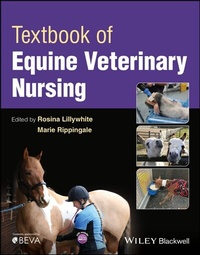
Textbook of Equine Veterinary Nursing
Description

Discover a practical approach to equine veterinary nursing care, for use in clinical practice and education.
Textbook of Equine Veterinary Nursing provides an introduction to the required knowledge and fundamental skills involved with veterinary nursing care for equine patients. It is a rigorous and comprehensive resource for any individual working in the equine veterinary industry, covering core topics including anatomy and physiology, clinical examination, medication administration, husbandry, infection control, and critical care for equine patients. Specific nursing care requirements for neonates and donkeys are also included.
Textbook of Equine Veterinary Nursing readers will also find:
- Detailed discussion of topics including applied equine welfare, equine medical and surgical disorders, and equine anaesthesia
- Information, revision aids, and exam guidance specific to the current syllabi for the equine veterinary nursing qualification
- Advice on career progression, further qualifications, and training in equine care
Written by a team of experienced equine veterinary nurses and equine veterinary surgeons and based on evidence-based research, Textbook of Equine Veterinary Nursing is ideal for equine veterinary nurses, student equine veterinary nurses, veterinary students and equine science students. This textbook can also be used for higher education equine courses.
More details
Other editions
Additional editions
Persons
The Editors
Rosina Lillywhite QTLS, Cert Ed, IQA, REVN is Head of Centre at the VetPartners School of Nursing and a Regisitered Equine Veterinary Nurse at Liphook Equine Hospital in Hampshire, UK.
Marie Rippingale BSc (Hons), REVN, G-SQP, DipHE CVN, DipAVN (Equine), IQA is the Programme Lead for the Level 3 Diploma in Equine Veterinary Nursing at Bottle Green Training Ltd in Derby, UK.
Content
List of Contributors xi
Foreword xiii
Preface xv
About the Companion Website xvii
1 Operational Requirements in Equine Practice 1
Rosina Lillywhite
Glossary 1
1.1 Aims of Health and Safety 1
1.2 Health and Safety Legislation 2
1.3 Risk Assessments 17
1.4 Fire Safety 18
1.5 Personal Protective Equipment (PPE) 23
1.6 Accident Reporting 24
1.7 Maintaining Equipment in Practice 25
1.8 Emergency First Aid 29
1.9 Working Time Requirements and Pay 30
References 31
2 Professional Relationships and Communication 33
Marie Rippingale, Sophie Pearson, and Rosina Lillywhite
Introduction 33
2.1 The Dynamics of Communication 33
2.2 Communicating with Clients 42
2.3 Factors Affecting Working Relationships with Clients 45
2.4 Relationships and Communication Within the Veterinary Team 48
2.5 Operation of a Veterinary Reception Desk 50
2.6 Customer Service 54
References 56
Further Reading 57
3 Professional Veterinary Nursing Responsibilities 59
Judith Parry
3.1 The Legal Framework for Veterinary Nursing Practice 59
3.2 Professional Status and Accountability 61
3.3 Ethical Principles 65
3.4 Consent 69
3.5 Legal and Ethical Duties to Self, Clients, Colleagues and Animals 74
3.6 The Professional Role of an Equine Registered Veterinary Nurse in Practice 76
References 76
Useful Websites 77
4 Equine Anatomy and Physiology 79
Lucy Middlecote and Sophie Pearson
4.1 Veterinary Terminology 79
4.2 Anatomical Boundaries and Body Cavities 79
4.3 Cell Biology 86
4.4 Basic Tissue Types 90
4.5 Structure and Function of the Integument 92
4.6 Structure and Function of the Musculoskeletal System 94
4.7 Structure and Function of the Nervous System and the Special Senses 109
4.8 Structure and Function of the Endocrine System 117
4.9 Structure and Function of the Circulatory System 120
4.10 Structure and Function of the Lymphatic System 126
4.11 Structure and Function of the Respiratory System 128
4.12 Structure and Function of the Digestive System 131
4.13 Structure and Function of the Urinary System 138
4.14 Structure and Function of the Reproductive System 141
References 145
5 Applied Equine Welfare, Health and Husbandry 147
Nicola Smith, Louise Pailor, Lynn Irving, Kassie Hill, George Hunt, Cassie Woods, Bonny Millar, and Marie Rippingale
Introduction 147
5.1 The Principles of Equine Welfare 147
5.2 Essential Factors for Maintaining Equine Health 150
5.3 Nutritional Requirements of Equine Patients 169
5.4 Methods of Equine Identification 186
5.5 Behaviour and Handling and Restraint Techniques 192
5.6 Transportation of Equine Patients 197
References 201
Further Reading 204
6 Infection Control 205
Jane Devaney
6.1 Disease Transmission 205
6.2 Microorganisms 209
6.3 Antimicrobial Resistance 215
6.4 Infection Control Measures in Equine Practice 218
6.5 Antiseptics and Disinfectants 218
6.6 Effective Clinical Cleaning 218
6.7 Isolation and Barrier Nursing 223
6.8 Clinical Audits 225
Acknowledgement 225
References 225
Further Reading 226
7 Diagnostic Imaging 227
Rosina Lillywhite and Cassie Woods
Glossary 227
7.1 Key Features of Legislation and Radiation Safety 228
7.2 Principals and Production of Radiation 231
7.3 Scintigraphy 273
7.4 Other Imaging Modalities 275
References 291
Further Reading 292
8 Laboratory 293
Victoria Milne, Marie Rippingale, and Rosina Lillywhite
Introduction 293
8.1 Safe Use of Laboratory Equipment 293
8.2 Sample Collection and Testing 300
8.3 Commercial Test Kits 325
8.4 Causes of Sample Deterioration or Loss 326
8.5 Packaging of Samples 326
8.6 Laboratory Sample Paperwork 328
8.7 Laboratory Results 328
References 328
Further Reading 329
9 Pharmacology and Dispensary Management 331
Phillippa Pritchard, Rosina Lillywhite, and Marie Rippingale
Pharmacy Terminology and Abbreviations 331
9.1 Legal Requirements for Storing and Supplying Veterinary Medicines 331
9.2 The Role of the Suitably Qualified Person - SQP 340
9.3 Pharmacology 345
9.4 Common Classifications of Medications 350
9.5 Routes of Administration for Medications 377
9.6 Adverse Reactions 380
References 381
Further Reading 384
10 Anaesthesia and Analgesia 385
Alison Bennell, Kate Loomes, and Marie Rippingale
Glossary 385
10.1 The Principles of Anaesthesia 385
10.2 Anaesthetic Drugs 393
10.3 Anaesthetic Equipment 399
10.4 Anaesthetic Risks and Induction 415
10.5 Monitoring Techniques for Anaesthetised Equine Patients 424
10.6 Anaesthetic Emergencies 444
References 449
Further Reading 456
11 Theatre Practice 457
Rosie Heath, Nicola Rose, and Rosina Lillywhite
Glossary 457
11.1 The Principles of Operating Theatre Design and Use 457
11.2 Maintenance and Cleaning of the Theatre Suite 461
11.3 Roles in the Operating Theatre 464
11.4 Instruments 473
11.5 Suture Materials 487
11.6 Instrument Care and Sterilisation 495
References 501
12 Surgical Nursing and Patient Care 505
Natalie Karla Fisk, Lisa Harrison, Rosina Lillywhite, Marie Rippingale, and Nicola Rose
Glossary 505
12.1 Admitting the Surgical Patient 505
12.2 Preparing the Surgical Patient 507
12.3 Wounds 517
12.4 Fracture Repair 522
12.5 Equine Dental Surgery 543
12.6 Sinus Surgery 545
12.7 Requirements for Handover from the Operating Theatre 546
12.8 Surgical Nursing and Patient Care for Specific Procedures 547
12.9 Oncological Treatments 557
References 559
Further Reading 561
13 Medical Nursing and Patient Care 563
Victoria Gregory and Lyndsey Bett
Glossary 563
Introduction 563
13.1 Commonly Encountered Medical Disorders 563
13.2 Pathophysiological States and Common Pathologies Affecting Patients 593
13.3 Abnormal Diagnostic Test Results 595
13.4 Care Plans and Care Bundles 599
13.5 Chronic Wound Care 611
13.6 Effective Home and Follow-up Care for Horses with Long-term Illness 619
References 623
Further Reading 624
14 Emergency and Critical Care Nursing 625
Bonny Millar, Phillippa Pritchard, Marie Rippingale, and Rosina Lillywhite
14.1 First Aid 625
14.2 Work-up of the Emergent Patient 631
14.3 Accommodation for Critically Ill Patients 634
14.4 Nursing Requirements of the Critically Ill Horse 638
14.5 Critical Care Techniques for Respiratory Disorders 640
14.6 Management of the Patient with Critical Thoracic Trauma 642
14.7 Intensive Nursing Requirements for Horses 642
14.8 Fluid Therapy 648
14.9 Blood Products 654
14.10 Pain Assessment in Equine Patients 657
References 661
Further Reading 663
Useful Links 664
15 Equine Reproduction, Parturition and Neonatal Nursing Care 665
Sarah Baillie
15.1 Equine Reproduction and Breeding 665
15.2 Normal Foal Physiology and Development 672
15.3 Foal Nutrition and Feeding 679
15.4 Routine Veterinary Care of Normal Foals 683
15.5 Nursing Requirements of Sick Foals 686
15.6 Nursing Support of Foals Undergoing Investigations and Supportive Therapies 691
15.7 Monitoring Techniques for Sick Foals 695
References 696
Further Reading 697
16 Donkeys 699
Dominique Doyle, Chloe Skewes, and Marie Rippingale
Introduction 699
16.1 Behaviour 699
16.2 Handling and Restraint 700
16.3 Nutrition 702
16.4 Differences in Anatomy and Physiology 703
16.5 Common Donkey Disorders 707
16.6 Pain Recognition in Donkeys 717
16.7 The Role of the RVN in Facilitating Owner Concordance 718
16.8 Conclusion 720
Acknowledgement 720
References 720
Further Reading 721
Useful Links 721
17 Practical Equine Veterinary Nursing 723
Marie Rippingale, Kate Lambert, Cassie Woods, Tamsyn Amos, and Bonny Millar
17.1 Clinical Examination 723
17.2 Administration of Medication 730
17.3 Intravenous Catheter Placement 738
17.4 Bandaging Techniques 744
17.5 Nasogastric Intubation 752
17.6 Urinary Catheterisation 756
17.7 Physical Therapy Techniques 759
17.8 Euthanasia 771
References 774
Further Reading 776
18 Exam Technique and Revision Aids 777
Susan L. Holt
18.1 Preparing to Study 777
18.2 Revision 779
18.3 Written Exam Technique 781
18.4 Practical and Oral Assessments 781
18.5 Summary 783
Example Questions 784
References 786
Further Reading 787
Links 787
19 Career Progression 789
Sarah Baillie
Introduction 789
19.1 Progression Within Clinical Practice 789
19.2 Management Roles in Practice 792
19.3 Roles in Education 795
19.4 Opportunities to Undertake Further Education 796
19.5 Roles in Research 797
19.6 Charitable Volunteering of Time and Skills 797
19.7 Career Sustainability 797
References 798
Further Reading 798
Index 799
1
Operational Requirements in Equine Practice
Rosina Lillywhite
VetPartners Nursing School, Petersfield, United Kingdom
Glossary
- Hazard
- A hazard is a dangerous phenomenon, substance, human activity or condition. It may cause loss of life, injury or other health impacts and property damage [1].
- Risk
- Risk is the possibility of something bad happening. Risk involves uncertainty about the effects/implications of an activity concerning something that humans value, often focusing on negative, undesirable consequences [1].
- Risk assessment
- A risk assessment is simply a careful examination of what could cause harm to people to enable precautions to be taken to prevent injury and ill health [1].
1.1 Aims of Health and Safety
Effective health and safety within a veterinary practice aims to ensure the well-being and safety of all individuals involved, including staff, clients and animals. The specific aims can be summarised as follows:
- Reduction of risks: Effective health and safety practices aim to identify, assess and minimise risks within the veterinary practice. This involves conducting thorough risk assessments to identify potential hazards, such as dangerous equipment, hazardous substances or unsafe working conditions. The risks can be significantly reduced or eliminated by implementing appropriate controls and safety measures, such as providing personal protective equipment (PPE), establishing safe work procedures and maintaining a clean and organised environment.
- Utilising assessments, controls and quality improvement: Health and safety assessments are crucial to identify hazards and assess risks within the veterinary practice. Regular inspections and evaluations of the premises, equipment and procedures are conducted to ensure compliance with relevant health and safety regulations. Controls, such as engineering controls like ventilation systems and administrative controls like training programs, are implemented to prevent or minimise risks. Additionally, continuous quality improvement processes are established to monitor and enhance health and safety practices within the veterinary practice.
- Identification of animals: It is essential to accurately identify animals within a veterinary practice to ensure proper care and minimise potential risks. This involves maintaining thorough records that include the animal's identity, such as name, species, breed, age and any relevant medical history. Additionally, information regarding the animal's temperament and behaviour is essential for staff to handle and interact with the animals safely and appropriately. Each patient should have an identity tag attached to their mane and additional tags attached to any equipment that clients leave at the practice. Details on the tag include the name of the patient, the name of the client, the procedure to be performed and the date the patient was admitted.
Effective health and safety measures within a veterinary practice consider clients' and staff's specific needs and vulnerabilities. Some individuals may be at special risk due to various factors, such as:
- Asthma: Steps should be taken to minimise exposure to allergens or irritants that could trigger asthma attacks. This may involve proper ventilation, regular cleaning and avoiding known allergens.
- Visual or hearing impediments: Adequate measures should be in place to ensure effective communication with individuals who have visual or hearing impairments. This may include using visual aids, written instructions or providing sign language interpreters.
- Impaired literacy: Clear and easily understandable communication materials should be provided to accommodate individuals with impaired literacy. This could involve using visual aids, simple language and providing necessary assistance.
- Pregnancy: Pregnant staff members should be provided with appropriate information and support to ensure their safety and the well-being of the developing foetus. This may involve modifying work tasks or providing additional protective measures.
- Age: Special consideration should be given to younger and older individuals regarding their physical capabilities and vulnerabilities. Adjustments may be necessary to accommodate their specific needs and ensure their safety (adjustments may include ensuring the elderly can sit if required and the young are not left unattended on a yard).
- Disabilities: Individuals with disabilities should be provided with reasonable accommodations to ensure their safety and ability to perform their job responsibilities effectively. This may include modifying workstations, providing assistive devices or offering additional support as needed.
By considering the specific needs and risks associated with these individuals, veterinary practices can create a safe and inclusive environment that promotes the well-being of all staff and clients.
1.2 Health and Safety Legislation
In the United Kingdom, health and safety legislation is governed by various acts and regulations that aim to protect worker's and the general public's health, safety and welfare. The primary legislation that forms the foundation of health and safety regulations in the United Kingdom is the Health and Safety at Work Act 1974 (HSWA) and other health and safety legislation in the United Kingdom include [2]:
Health and Safety at Work Act 1974 (HSWA)
This is a primary piece of legislation in the United Kingdom that sets out the legal framework for workplace health and safety. It applies to all employers, employees, self-employed individuals and anyone who controls workplaces and the health and safety of others. Some key aspects of the HSWA are as follows [2]:
- General duties [2]: The HSWA places general duties on employers, employees, self-employed individuals and others to ensure the health, safety and welfare of individuals at work. These duties include:
- Employers: Have a duty to provide a safe working environment, including safe equipment, proper training and competent supervision. Employers must also ensure the health and safety of others who may be affected by the work activities, such as visitors or the public.
- Employees: Have a duty to take reasonable care of their own health and safety, as well as that of others who may be affected by their actions at work. They should follow the provided training, use safety equipment properly and report any hazards or concerns to their employer.
- Self-employed individuals: They are responsible for ensuring their health and safety and that of others affected by their work activities. They must safely conduct their work and comply with relevant regulations.
- Risk assessment: The HSWA requires employers to conduct risk assessments to identify hazards in the workplace and evaluate the associated risks. Risk assessments should be reviewed regularly and updated as necessary. The aim is to identify suitable control measures to eliminate or minimise risks to health and safety.
- Consultation and information: The HSWA emphasises the importance of consultation and communication between employers and employees regarding health and safety matters. Employers must consult with safety representatives or employee representatives on health and safety issues, and employees should be provided with relevant information and training.
- Enforcement and inspections: The Health and Safety Executive (HSE) is the regulatory body responsible for enforcing health and safety laws in Great Britain. The Act grants the HSE powers to inspect workplaces, investigate accidents, issue improvement or prohibition notices if necessary and prosecute those who fail to comply with the legislation.
- Offences and penalties: The HSWA establishes various offences and penalties for non-compliance with health and safety duties. Serious breaches of the HSWA can result in fines, imprisonment or both. The Act also provides for the liability of company directors, managers and other individuals who have consented to or connived in an offence.
- Application to other workplaces: The HSWA applies to a wide range of workplaces, including offices, factories, construction sites, mines, offshore installations and other premises where people work. It also covers activities that may affect the health and safety of individuals, such as construction work, maintenance and use of equipment.
- The HSWA 1974 is a broad and comprehensive piece of legislation that sets the foundation for health and safety management in the United Kingdom. It establishes the general duties and responsibilities of employers, employees and others and provides a legal framework for promoting a safe and healthy working environment.
Management of Health and Safety at Work Regulations 1999
The Management of Health and Safety at Work Regulations 1999 (MHSWR) is pivotal in ensuring workers' health, safety and welfare in the United Kingdom. These regulations, introduced under the HSWA, provide a comprehensive framework for managing workplace risks and fostering a safety culture. The key provisions of the MHSWR highlight their significance in safeguarding workplace well-being [3].
Risk Assessment
Central to the MHSWR is the requirement for employers to systematically assess...
