

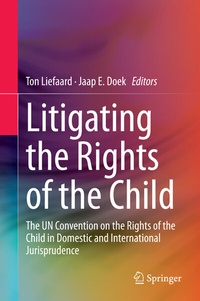
Litigating the Rights of the Child
Description

This book examines the impact of the UN Convention on the Rights of the Child (CRC) on national and international jurisprudence, since its adoption in 1989. It offers state of the art knowledge on the functions, challenges and limitations of the CRC in domestic, regional and international children's rights litigation. Litigating the Rights of the Child provides insight in the role of the CRC in domestic jurisprudence in ten countries from different parts of the world, with civil law, common law and Islamic law systems. In addition, it offers analyses of the jurisprudence of regional courts, in Europe and the Americas, and of human rights treaty bodies, including the Human Rights Committee, Committee on the Elimination of Discrimination against Women and the African Committee of Experts on the Rights and Welfare of the Child. This book presents a global and comparative picture on the use of the CRC in litigation and identifies emerging trends. This book serves as an important source of reference and inspiration for academics, students, legal professionals, including judges and lawyers, and (inter)national organisations working in the area of children's rights.
More details
Other editions
Additional editions
Persons
Content
Acknowledgements.- List of Acronyms.- About the Authors.- Chapter 1: Litigating the Rights of the Child: Taking Stock after 25 Years of the Child: Taking Stock after 25 Years of the CRC.- Chapter 2: South Africa.- Chapter 3: India.- Chapter 4.- England and Wales.- Chapter 5: United States.- Chapter 6: The Netherlands,- Chapter 7: Belgium.- Chapter 8: France.- Chapter 9: Serbia.- Chapter 10: Algeria.- Chapter 11.- CRC in litigation under the ICCPR and CEDAW.- Chapter 12.- CRC in litigation under the ECHR.- Chapter 13.- The use of the CRC in litigation under EU law.- Chapter 14: The CRC as a litigation tool before the Inter-American System of Protection of Human Rights.- Chapter 15: Children's Rights Litigation in the African Religion: Lesson from the Communications Procedure under the ACRWC.- References.
