

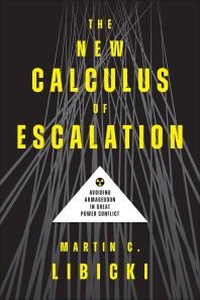
The New Calculus of Escalation
Description

A reevaluation of conflict thresholds in the context of complex cyber, conventional, and nuclear war
The return of great power competition has renewed concerns about managing escalation, lest a minor crisis inadvertently spiral into nuclear war. This has become apparent during the war between Russia and Ukraine, as Western aid for Ukraine has been predicated on avoiding Russian escalation.
The New Calculus of Escalation updates our understanding of conflict escalation dynamics for the twenty-first century with the goal of reducing the possibility of a catastrophic war. To improve mutual understanding among states, Libicki rethinks conflict thresholds and exit ramps that manage escalation. During the Cold War, there were two critical thresholds?one between peace and war, and one between conventional war and nuclear war. But ongoing developments in cyber and other advanced military technologies threaten command and control and blur the old thresholds.
Military strategists, international relations scholars, and graduate students will benefit from this book's cogent analytic framework in shaping future debates.
More details
Other editions
Additional editions
Person
Martin C. Libicki is the Maryellen and Richard L. Keyser Distinguished Visiting Professor in Cyber Security Studies at the US Naval Academy and an adjunct senior management scientist at the RAND Corporation. He is the author of Cyberspace in Peace and War (2021) and other works.
Content
List of Figures
Acknowledgments
Introduction
Chapter One: Escalation and its Motivations
Chapter Two: Is Cyberwar War?
Chapter Three: The Space Between Nonlethal and Lethal War
Chapter Four: Is There a Feasible Local-Global Threshold?
Chapter Five: Conventional Operations against Nuclear Systems
Chapter Six: The Putative Tactical-Strategic Nuclear Threshold
Chapter Seven: Will Thresholds Emerge on their Own?
Conclusions
Appendix A: Deterrence, Thresholds, and Norms
Appendix B: With Nuclear Threats, Might Makes Won't
Index
About the Author
