

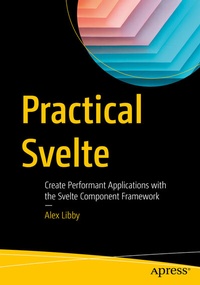
Practical Svelte
Description

Practical Svelte is an excellent resource for getting acquainted with creating and manipulating websites or online applications using a component framework approach. It takes the view that we don't have to create something complex and unwieldy. We can build something quickly, using less code than some of its competitors, and extend it using the power of the API and plugins over time, without sacrificing speed or features.
You will learn how to use the Svelte framework to rapidly create and deploy websites or online applications that are performant, with the minimum of fuss and using existing tools already available in the browser, get up to speed with individual features of the Svelte framework, and work through a series of small projects that will combine to produce a finished site at the end of the book - this to help consolidate skills from day one and create something that you can use as a basis for future projects.
What You Will Learn
- Understand why Svelte's popularity makes it the go-to framework for constructing applications
- Learn how to scaffold and implement web sites or online applications using Svelte
- Create reusable components using Svelte that are interoperable with other frameworks and can solve real-world problems
- Perform automated testing and deployment using tools such as CI/CD testing
- Work through some mini projects from start to finish, understanding what we can achieve using Svelte and where we may need to bring other tools into play
Who This Book Is For
Website developers who are already familiar with JavaScript, CSS, and HTML and are keen to learn how to leverage the Svelte component framework to quickly create web sites or online applications with little more than a text editor. It's perfect for development teams who do not want to follow the mold and use a credible alternative to React or Angular.
More details
Other editions
Additional editions
Person
Alex Libby is a frontend engineer and seasoned computer book author who hails from England. His passion for all things Open Source dates back to the days of his degree studies, where he first came across web development and has been hooked ever since. His daily work involves extensive use of React, NodeJS, JavaScript, HTML, and CSS; Alex enjoys tinkering with different open source libraries to see how they work. He has spent a stint maintaining the jQuery Tools library and enjoys writing about Open Source technologies, principally for front end UI development.
