

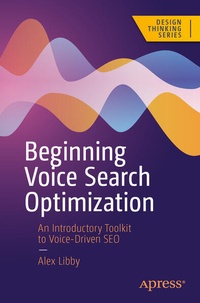
Beginning Voice Search Optimization
Description

This book explains how to leverage the power of Voice Search Optimization (VSO) to perform search engine optimization (SEO) that aligns with changes in how customers interact with websites. This book gets you up to speed with the main concepts and topics as well as the design and accessibility considerations required, giving you everything you need to understand the process of implementing VSO for any site using little more than browser tools or tools you most likely already know, such as Google Analytics. It will equip the you with a starting toolkit you can use to develop future projects and work collaboratively with wider teams to implement changes needed for your business or organization's websites.
Beginning Voice Search Optimization is an excellent resource for getting acquainted with this excited and much needed technology, ensuring that developers understand what changes we need to make but that we can do this in a progressive manner and use early results to help refine and steer the changes going forward as we develop websites. We live in an age where speed, natural language, and simplicity are of the essence - and this book provides a perfect way to effect changes quickly that help align our websites to how customers interact with sites on a daily basis.
You Will:
- Understand the relevance and impact of Voice Search Optimization
- Gain an appreciation of what might need to change as you formulate a content strategy for your website
- Understand some possible solutions to follow, as well as any limitations and constraint
This Book is for:
Agile front-end developers, UX designers, product managers, content writers, marketing and SEO professionals.
More details
Other editions
Additional editions
Person
Alex Libby is an A/B testing developer and seasoned tech book author, who hails from England. His passion for all things open-source dates back to the days of his degree studies, when he first came across web development and has been hooked ever since. His daily work involves extensive use of React, JavaScript, HTML, and CSS to manipulate existing website content; Alex enjoys tinkering with different open-source libraries to see how they work. He has spent a stint maintaining the jQuery Tools library, and enjoys writing about open-source technologies, principally for front-end UI development.
Content
Chapter 1: Getting Started.- Chapter 2: Design Considerations.- Chapter 3: Optimizing Content.- Chapter 4: Adding Speech Capabilities.- Chapter 5: Adding International Support.
