

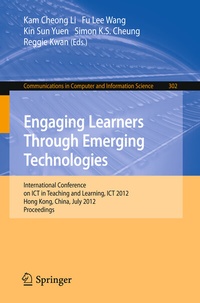
Engaging Learners Through Emerging Technologies
International Conference on ICT in Teaching and Learning, ICT 2012, Hong Kong, China, July 4-6, 2012. Proceedings
Published on 25. June 2012
XII, 228 pages
978-3-642-31398-1 (ISBN)
Description

This book constitutes the refereed proceedings of the International Conference on ICT in Teaching and Learning, ICT 2012, held in Hong Kong, China, in July 2012.
The 19 revised full papers presented were carefully reviewed and selected from numerous submissions. They explore the use of information technology to improve learning and teaching and showcase innovative
pedagogical practices. The papers are organized in topical sections on the construct of student engagement and the applications of ICT; emerging pedagogies through ICT; applications of ICT in teaching and
learning; research/case studies on ICT in engaged learning; and finally three papers on open textbooks, which address the current problems with conventional textbooks in Hong Kong.
More details
Other editions
Additional editions
Kam Cheong Li | Fu Lee Wang | Kin Sun Yuen
Engaging Learners Through Emerging Technologies
International Conference on ICT in Teaching and Learning, ICT 2012, Hong Kong, China, July 4-6, 2012. Proceedings
Book
06/2012
Springer
€53.49
Shipment within 7-9 days
Content
- Title
- Preface
- Organization
- Table of Contents
- The Construct of Student Engagementand the Applications of ICT
- Student Engagement: Meanings, Approaches and Ideas for Educators Interested in ICT
- Introduction
- Perspectives
- Factors Affecting Student Engagement
- ICT as Key Tool to Provide Desirable Factors
- Conclusion
- References
- Emerging Pedagogies through ICT
- Learning Management System: Japanese Student Perceptions and Expectations
- Introduction
- Purpose of the Study
- Research Questions
- Methodology
- The Setting and Student Profiles
- Procedures
- The Learning Management System
- Findings
- Discussion of Findings
- Conclusions
- References
- e-Assessment: A Case of Student-Centred Learning
- Introduction
- Literature Review
- e-Assessment Project
- Feedback and Major Findings
- Impact and Conclusion
- References
- A Report on the Online Learning Experience of Students in Accounting Course
- Introduction
- Blended Learning Implementation
- Survey Results a and Findings
- SOUL 2.0 Access In nformation
- Summary of y Survey Results
- Discussion of Surve ey Results
- Conclusion
- References
- An Enhanced e-Assessment System for the Acquisition of Putonghua
- Introduction
- Literature Review
- Background
- General Structure of the System.
- Assessment
- New Features of the System
- Extended Curriculum
- System Rationale of o the New Curriculum
- Question Formats
- Assessment Report
- Evaluation of the Prototype
- Potential Use of the Enhanced e-Assessment System
- Conclusion
- Acknowledgement.
- References
- Using a Facebook Closed-Group as Part of an Online Course
- Introduction
- Creating a Facebook Closed-Group
- Student Survey
- Participants
- Results of the Student Survey
- Conclusion
- References
- Social Network Sites and e-Learning Adoption
- Introduction
- Technology and Higher Education
- Use of Social Networks as a Moderating Factor in e-Learning Platform Acceptance
- Methodology
- Development of the Model
- Field Work
- Results
- Structural Model
- Multigroup Analysis - Interaction Effect
- Quasi-Moderated Relationships
- Analysis of the Results
- Conclusion
- Confirmation of the Relationships Posited in the Model
- The Moderating Role of SNS Use in e-Learning Adoption
- Implications for Universities
- References
- Applications of ICT in Teaching and Learning
- An Effective Tool to Support Teaching and Learning of Modular Programming
- Introduction
- Difficulties in Teaching and Learning of Computer
- Programming
- Electronic Submission System
- Evaluation and Discussion
- Difficulties Addressed by the System
- Good Practices of Computer Programming
- Evaluation
- Post-course Observation
- Conclusion
- References
- A Mobile Application to Enhance Teaching and Learning in Classroom Environment
- Introduction
- Attendance Record Management
- Online Quiz Management
- Methodology
- Results
- Login to the Mobile Application
- Real-Time Attendance Taking and Management
- Online Quiz Management
- Conclusions
- References
- Design and Development of Multi-subject Item Bank in an M-Learning System
- Introduction
- Design Concept
- User Experience
- Core Ideas
- Value for Learners.
- Learners Willingness to Use.
- System Design
- Database Design
- Question Group Generation Subsystem
- The Mistake Collection Subsystem
- Architecture
- Methodology
- Techniques
- Operation of the Item Bank
- Advantages
- Existing Problems
- Conclusion
- References
- An e-Learning System for Piano Instruction
- Introduction
- Background
- Contrast Traditional Piano Learning with the e-Learning System
- Composition of the e-Learning System
- Hardware
- Software for Demonstration
- Software for Management
- Survey of the Teaching Effect
- Improvements
- Conclusion
- References
- Research/Case Studies on ICT in Engaged Learning
- Analysis of Experts' and Novices' Thinking Process in Program Debugging
- Introduction
- Literature Review
- Implications of Debugging
- Program Error Types
- Related Studies
- Research Methods
- The Experiment
- Language Debugging Program
- Debugging Behaviors
- Research Procedure
- Research Findings and Discussion
- Analysis of Program Debugging Time for Experts and Novices
- Analysis of Program Debugging Thinking Process in Experts and Novices
- Analysis of Student's C Language Debugging Time
- Conclusions
- References
- Student Teachers' Perception of the VBL System to Enhance Technology Integration Competencies
- Introduction
- The Internship Program
- The VBL System
- Design of the Study
- Participants
- Instrument
- Procedure
- Results
- Results from the Questionnaire
- Results from the Interviews
- Discussion
- Conclusion
- References
- Citizenship Education via an Online Peer Discussion Blended Learning Approach: Lessons Learned
- Introduction
- Background
- Theoretical Framework
- Attitudes, Beliefs and Persuasion
- Use of Asynchronous Online Discussion
- Method
- Pre-implementation Phase
- Actual Implementation Phase
- Post-implementation Phase
- Results
- Lessons Learned
- Conclusion
- References
- Tree-Based Comparison for Plagiarism Detection and Automatic Marking of Programming Assignments
- Introduction
- Program Comparing Methods
- Program Plagiarism
- Automatic Marking
- Comparison on Existing Systems
- System Architecture
- Methodology
- Overview
- Parse Tree
- Program Comparator
- Plagiarism Detection
- Automatic Marking
- Results
- Parse Tree
- Program Comparator
- Plagiarism Detection
- Automatic Marking
- Online Assignment Management System
- Conclusions
- References
- Research on the Learner Guide Mechanism in the Virtual Experiment Platform of Physics Based on the Theory of User-Centered Design
- Introduction
- The Virtual Experiment Platform for Physics
- The Learners' Mental Model
- The Learner Guide Mechanism
- The Principles in User-Centered Design
- Three Concept Models
- Seven Principles
- A Supplement to the Learners' Mental Model
- The Activity Model during the Network Learning Process
- The Learner-Centered Psychological Principles
- An Improved Learners' Mental Model
- The Learner Guide Mechanism and Design Scheme
- Invisible Guide
- Beginners Guide
- Encouraging Guide
- Conclusions
- References
- Turning to a New Page of Open Textbooks
- Overcoming Copyright Hurdles in the Development of Learning Materials in the Digital Era
- Introduction
- Copyright
- Developing Learning Materials
- Writing Your Own Course 'Based On' Existing Learning Materials
- Copying a Small Amount of Other People's Work
- Providing Links to Materials on the Web
- Using Copyrighted Material: By Permission of the Copyright Owner
- Using Copyrighted Material: Through a Copyright Collective Administration
- Copyrighted Material with CC Licenses
- Open Education Resources (OER)
- Open Textbooks
- Public Domain Resources
- Other Free Materials
- Conclusion
- References
- Appendix 1: Some OER Websites
- Appendix 2: Examples of Open Textbooks and OER Projects
- Open Access Textbooks: Opportunities and Challenges
- Introduction
- Open Access Textbooks
- Implementation of Open Access Textbooks
- Open Access Textbook Platform
- Open Access Textbook Contents
- Quality Assurance System
- Continuous Culture and Capacity Building
- Sustainable Development of Open Access Textbooks
- Conclusion
- References
- eVolution from Conventional Textbooks to Open Textbooks: A Way Out for Hong Kong
- Introduction
- Conventional Textbooks: Taxing Problems to the Authority and Parents
- High and Increasing Prices
- Inflexibility in Revision or Updating
- Weight
- Bundling Students' Textbooks with Teaching Materials for Teachers
- Marketing Strategy
- Approach Adopted by the Government / Education Bureau
- Results Thus Far
- Textbook Problems - A General Phenomenon
- From Conventional Textbooks to the eWorld
- Constraint of Conventional Textbooks
- The Move towards ICT
- Open Textbooks: A Promising Solution
- Characteristics
- Strengths
- Conclusion
- References
- Author Index
