

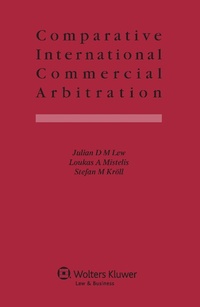
Comparative International Commercial Arbitration
Published on 16. May 2003
994 pages
978-90-411-7377-5 (ISBN)
Description

International arbitration is the preferred method for the settlement of international business disputes. As a private, autonomous and international dispute resolution mechanism arbitration has become independent from national laws in practice.
This new and comprehensive treatise addresses all significant issues pertaining to international arbitration. The perspective is international and comparative and reference is made to all major international treaties and instruments, arbitration rules and national laws.
The authors trace the realities of international arbitration practice, i.e. what parties and arbitrators do, how arbitration is conducted, and the principles pertaining to the arbitration agreement, the formation, role and functions of the arbitration tribunal, and the importance and effect of the arbitration award. These are illustrated by published awards, international instruments and arbitration rules, and national court decisions recognising and giving effect to these autonomous international arbitration practices.
At every stage of the arbitration process there remains a conceptual legal conflict between the inherent international and autonomous character of arbitration and the national laws of the parties, the place of arbitration, and the place where the award is to be enforced. These issues are reviewed with particular reference to national constitutional and regulatory systems, the effect of mandatory laws of connected states, and European and international law including international human rights instruments. The book describes participation in international arbitration of states and state entities, and the interaction between commercial and investment arbitrations.
No two international arbitrations are the same. This book analyses the various structures, practical arrangements, procedures and legal implications for arbitrations wherever the arbitration takes place. It also provides a guide for lawyers involved in the international arbitration process whatever the nationality of the parties and the composition of the tribunal. The book is an indispensable tool for practising and academic lawyers concerned with international trade law, international litigation and commercial arbitration. It is also an essential guide for those seeking to understand a particular issue in international arbitration.
This new and comprehensive treatise addresses all significant issues pertaining to international arbitration. The perspective is international and comparative and reference is made to all major international treaties and instruments, arbitration rules and national laws.
The authors trace the realities of international arbitration practice, i.e. what parties and arbitrators do, how arbitration is conducted, and the principles pertaining to the arbitration agreement, the formation, role and functions of the arbitration tribunal, and the importance and effect of the arbitration award. These are illustrated by published awards, international instruments and arbitration rules, and national court decisions recognising and giving effect to these autonomous international arbitration practices.
At every stage of the arbitration process there remains a conceptual legal conflict between the inherent international and autonomous character of arbitration and the national laws of the parties, the place of arbitration, and the place where the award is to be enforced. These issues are reviewed with particular reference to national constitutional and regulatory systems, the effect of mandatory laws of connected states, and European and international law including international human rights instruments. The book describes participation in international arbitration of states and state entities, and the interaction between commercial and investment arbitrations.
No two international arbitrations are the same. This book analyses the various structures, practical arrangements, procedures and legal implications for arbitrations wherever the arbitration takes place. It also provides a guide for lawyers involved in the international arbitration process whatever the nationality of the parties and the composition of the tribunal. The book is an indispensable tool for practising and academic lawyers concerned with international trade law, international litigation and commercial arbitration. It is also an essential guide for those seeking to understand a particular issue in international arbitration.
More details
Other editions
Additional editions
Julian D. M. Lew
Comparative International Commercial Arbitration
Book
05/2003
Kluwer Law International
€506.58
Shipment within 10-20 days
Content
- Cover
- Half Title Page
- ABOUT THE AUTHORS
- Title Page
- Copyright Page
- FOREWORD
- SUMMARY TABLE OF CONTENTS
- Table of Contents
- TABLE OF ABBREVIATIONS
- Chapter 1 ARBITRATION AS A DISPUTE SETTLEMENT MECHANISM
- 1. WHAT IS ARBITRATION?
- 1.1. Definitions of Arbitration
- 1.2. Fundamental Features of Arbitration
- (a) An alternative to national courts
- (b) A private mechanism for dispute resolution
- (c) Selected and controlled by the parties
- (d) Final and binding determination of parties' rights and obligations
- 1.3. Arbitration Compared with National Courts
- 2. WHAT ARBITRATION Is NOT
- 3. OTHER ALTERNATIVE DISPUTE RESOLUTION MECHANISMS
- 3.1. Definitive Determination
- 3.2. Mechanisms Requiring Parties' Agreement for Resolution of Dispute
- Chapter 2 REGULATORY FRAMEWORK FOR ARBITRATION
- 1. HISTORICAL DEVELOPMENT OF INTERNATIONAL ARBITRATION
- 2. INTERNATIONAL REGULATION OF ARBITRATION
- 2.1. Early Efforts to Support International Arbitration
- 2.2. The Geneva Conventions 1923 and 1927
- 2.3. The New York Convention
- 2.4. Other Arbitration Conventions
- 3. INFLUENCE OF INTERNATIONAL ARBITRATION INSTRUMENTS AND PRACTICE
- 3.1. The UNECE and UNECAFE Arbitration Rules
- 3.2. The UNCITRAL Arbitration Rules
- 3.3. The UNCITRAL Model Law and the Development of Modern Arbitration Laws in many jurisdictions
- 4. EFFECT OF THE REGULATORY WEB
- Chapter 3 FORMS OF ARBITRATION
- 1. THE PRINCIPAL FORMS OF ARBITRATION
- 2. AD HOC ARBITRATION
- 2.1. Characteristics of ad hoc Arbitration
- 2.2. Regulating ad hoc Arbitration
- 2.3. Advantages of ad hoc Arbitration
- 3. GENERAL STRUCTURE OF INSTITUTIONAL ARBITRATION
- 3.1. Characteristics of Institutional Arbitration
- 3.2. Advantages of Institutional Arbitration
- 3.3. International Arbitration Institutions
- (a) Private international institutions
- (b) Industry focused and commodity institutions
- (c) Public international law institutions
- 3.4. Special Purpose Institutions
- (a) Iran-US Claims Tribunal
- (b) United Nations Compensation Commission
- 3.5. Online Dispute Resolution Institutions
- Chapter 4 ESSENTIAL CHARACTERISTICS OF INTERNATIONAL COMMERCIAL ARBITRATION
- 1. THE MEANING OF "COMMERCIAL
- 1.1. Importance of the Definition of "Commercial
- 1.2. "Commercial" in the UNCITRAL Model Law and Model Law Countries
- 1.3. "Commercial" in National Legislation
- 1.4. "Commercial" in Arbitration Rules
- 1.5. "Commercial" in International Conventions
- 2. THE MEANING OF "INTERNATIONAL
- 2.1. Relevant Criteria
- (a) The objective criterion: Dispute with foreign element or of international character
- (b) The subjective criterion: Diversity of nationality/place of business of parties
- (c) The modern combined criterion: The Model Law approach and other national legal systems
- 2.2. Nationality of Arbitration: "International" Arbitration in International Conventions
- 3. TRANSNATIONAL AND DELOCALISED ARBITRATION
- Chapter 5 JURIDICAL NATURE OF ARBITRATION
- 1. JURIDICAL NATURE OF ARBITRATION
- 1.1. The Jurisdictional Theory
- 1.2. The Contractual Theory
- 1.3. The Mixed or Hybrid Theory
- 1.4. The Autonomous (sui juris) Theory
- 2. INTERPLAY OF INTERNATIONAL COMMERCIAL ARBITRATION AND NATIONAL LEGAL SYSTEM
- 2.1. Relationship between Arbitration and State Justice System
- 2.2. Arbitration Agreement as a Constitutional Prerequisite
- 3. HUMAN RIGHTS AND ARBITRATION
- 3.1. The Application of Human Rights Law to Arbitration
- 3.2. "Due Process" and Arbitration
- Chapter 6 ARBITRATION AGREEMENTS - AUTONOMY AND APPLICABLE LAW
- 1. AUTONOMY OF THE ARBITRATION AGREEMENT
- 1.1. Separability of the Arbitration Agreement
- 1.2. Effect of Autonomy on the Determination of the Applicable Law
- 2. LAW GOVERNING THE ARBITRATION AGREEMENT
- 2.1. Multiplicity of Applicable Rules
- 2.2. Different Stages where the Issue Arises
- 2.3. International Conventions and National Arbitration Laws
- 3. LAW APPLICABLE TO FORMAL VALIDITY
- 3.1. Article II New York Convention and the Different National Form Requirements
- 3.2. Scope of Article 7 Model Law and Comparable Provisions
- 3.3. Laws to be Applied by Arbitrator
- 4. LAW APPLICABLE TO CAPACITY OF THE PARTIES
- 5. LAW APPLICABLE TO SUBSTANTIVE VALIDITY OF THE ARBITRATION AGREEMENT
- 5.1. Traditional Conflict of Laws Approaches
- 5.2. Substantive Rule of Private International Law
- 5.3. French Approach
- 5.4. International Arbitration Practice
- Chapter 7 ARBITRATION AGREEMENTS - VALIDITY AND INTERPRETATION
- 1. FORMAL VALIDITY OF THE ARBITRATION AGREEMENT
- 1.1. Form Requirement: Function and Criticism
- 1.2. Different International and National Rules
- 1.3. Interpretation of the Writing Requirement by Courts and Arbitration Tribunals
- 2. CAPACITY OF THE PARTIES TO ENTER INTO AN ARBITRATION AGREEMENT
- 3. SUBSTANTIVE VALIDITY OF THE ARBITRATION AGREEMENT
- 3.1. Agreement between the Parties
- (a) Reference to standard terms and conditions
- (b) Related agreements
- (c) Consent by third parties
- (d) Assignment
- 3.2. Other Factors Affecting the Validity of the Agreement
- 4. SCOPE AND INTERPRETATION OF THE ARBITRATION AGREEMENT
- 4.1. Disputes covered by the Arbitration Agreement
- 4.2. Set-off and Counterclaims
- 4.3. Defective Arbitration Clauses
- 5. EFFECT AND ENFORCEMENT OF THE ARBITRATION AGREEMENT
- 6. TERMINATION AND WAIVER OF THE RIGHT TO ARBITRATE
- Chapter 8 DRAFTING OF THE ARBITRATION AGREEMENT
- 1. ESSENTIAL INGREDIENTS OF AN ARBITRATION AGREEMENT
- 1.1. The Agreement to Arbitrate
- 1.2. Scope of the Arbitration Agreement
- 1.3. Finality of Awards
- 2. OTHER RELEVANT CONSIDERATIONS
- 2.1. The Institution Chosen
- 2.2. The Seat of the Arbitration
- 2.3. Number, Method of Selection and Qualifications of Arbitrators
- 2.4. Language of the Arbitration
- 2.5. Procedure to be followed
- 2.6. Applicable Substantive Rules
- 2.7. Timetable for the award
- 2.8. Enter Judgment on the Award
- 2.9. Costs of the Arbitration
- 2.10. Confidentiality
- 2.11. Waiver of Sovereign Immunity
- 3. AD HOC ARBITRATIONS
- 4. MULTIPARTY ARBITRATIONS
- 5. MULTI-TIERED DISPUTE RESOLUTION
- Chapter 9 ARBITRABILITY
- 1. LAW APPLICABLE TO QUESTIONS OF ARBITRABILITY
- 1.1. International Conventions
- 1.2. National Arbitration Laws
- 1.3. Arbitration Practice
- 2. SUBSTANTIVE RULES ON OBJECTIVE ARBITRABILITY
- 2.1. Antitrust and Competition Laws
- 2.2. Securities Transactions
- 2.3. Insolvency Law
- 2.4. Intellectual Property Rights
- 2.5. Illegality and Fraud
- 2.6. Bribery and Corruption
- 2.7. Investment Contracts relating to Infrastructure and Natural Resources
- 3. DUTY TO DEAL WITH THE LACK OF ARBITRABILITY EX OFFICIO
- Chapter 10 SELECTION AND ApPOINTMENT OF ARBITRATORS BY PARTIES AND INSTITUTIONS
- 1. NUMBER OF ARBITRATORS
- 1.1. Sole Arbitrator
- 1.2. Three Member Tribunals
- 1.3. Even Number of Arbitrators and Umpires
- 1.4. Five or more Arbitrators
- 2. SELECTION OF ARBITRATORS
- 2.1 Interviewing Potential Arbitrators
- 2.2 Qualifications
- 2.3 Requirements Imposed by the Parties
- 3. PARTICIPANTS IN THE APPOINTMENT PROCESS
- 3.1. Role of the Parties
- 3.2. Role of Appointing Authorities
- 3.3. Role of National Courts
- 4. PROCEDURES FOR APPOINTING ARBITRATORS
- 4.1. Appointment of a Sole Arbitrator
- 4.2. Appointment of a Three Member Tribunal
- (a) Party appointed arbitrators
- (b) Chairman or third arbitrator
- 5. LIMITS ON THE PARTIES FREEDOM TO DETERMINE THE APPOINTMENT PROCESS
- Chapter 11 IMPARTIALITY AND INDEPENDENCE OF ARBITRATORS
- 1. THE ARBITRATOR'S DUTY OF IMPARTIALITY AND INDEPENDENCE
- 1.1. The Concept of "Impartiality
- 1.2. The Concept of "Independence
- 2. DUTY OF DISCLOSURE
- 3. SPECIAL ROLE OF THE PARTY APPOINTED ARBITRATOR
- Chapter 12 RIGHTS AND DUTIES OF ARBITRATORS AND PARTIES
- 1. CONTRACTUAL RELATIONSHIP BETWEEN PARTIES AND ARBITRATOR
- 2. OBLIGATIONS OF THE ARBITRATOR OWED TO THE PARTIES
- 2.1. Settle the Dispute between the Parties
- 2.2. Complete the Mandate
- 2.3. Stay Impartial and Independent
- 2.4. Conduct the Arbitration Fairly and Without Undue Delay
- 2.5. Keep the Arbitration Confidential
- 3. REMUNERATION OF ARBITRATORS
- 3.1. Bases for Remunerating Arbitrators
- 3.2. Fixing the Arbitrator's Remuneration
- 4. REMEDIES AND SANCTIONS
- 4.1. Removal of the Arbitrator
- 4.2. Challenge of the Award
- 4.3. Action for Damages against the Arbitrator
- 5. IMMUNITY OF ARBITRATORS
- 5.1. Contractual Limitations and the Different Arbitration Rules
- 5.2. The Position of the National Arbitration Laws
- 5.3. Scope and Limitations of the Liability of Arbitrators
- 5.4. Liability of Arbitration Institutions
- Chapter 13 CHALLENGE, REMOVAL AND REPLACEMENT OF ARBITRATORS
- 1. CHALLENGE OF AN ARBITRATOR
- 1.1. Grounds for Challenge
- 1.2. Limitation of the Right to Challenge
- 1.3. Procedure for Challenge
- (a) Provisions of the Arbitration Rules
- (b) Provisions of the Arbitration Laws
- 1.4. Challenges after an Award has been Rendered
- 1.5. Exclusion of the Right to Challenge the Award
- 2. TERMINATION OF THE ARBITRATOR'S MANDATE
- 3. REPLACEMENT OF ARBITRATORS
- 4. TRUNCATED TRIBUNALS
- Chapter 14 DETERMINATION OF JURISDICTION
- 1. DETERMINATION OF JURISDICTION BY ARBITRATION TRIBUNALS
- 1.1. Competence-Competence
- 1.2. Separability and other Techniques to Strengthen Arbitrator's Jurisdiction
- 1.3. Form of Decision on Jurisdiction
- 1.4. Review of Arbitrator's Decision by Courts
- 2. DETERMINATION OF JURISDICTION BY A NATIONAL COURT
- 2.1. Actions on the Merits despite an Arbitration Agreement
- (a) Request for a stay of court proceedings in favour of arbitration
- (b) "Null and void, inoperative or incapable of being performed
- (c) Standard of review of arbitration agreement
- (d) "Referral" to arbitration
- 2.2. Special Actions to Determine Jurisdiction
- 2.3. Actions in Support of Arbitration
- Chapter 15 ARBITRATION AND THE COURTS
- 1. GENERAL APPROACH TO COURT INVOLVEMENT
- 2. SPECIFIC AREAS OF COURT INVOLVEMENTS
- 2.1. Proceedings Concerning Validity of the Arbitration Agreement
- 2.2. Anti-suit Injunctions
- (a) Injunctions restraining arbitration proceedings
- (b) Injunctions restraining parallel court proceedings
- 2.3. The Role of the Court before the Tribunal is Established
- 2.4. Proceedings in relation to the Composition of the Arbitration Tribunal
- 2.5. Court Involvement during the Arbitration Proceedings
- (a) Governing principles
- (b) Assistance in the taking of evidence
- (c) Interim relief
- (d) Extension of time limits
- (e) Preliminary determination of question of law
- 2.6. The Role of the Court Involvement after the Award has been rendered: Challenge, Appeals and Enforcement
- Chapter 16 MULTIPARTY AND MULTICONTRACT ARBITRATION
- 1. MULTIPARTY ARBITRATION ARISING OUT OF A SINGLE CONTRACT
- 1.1. Consent to Multiparty Arbitration
- 1.2. Equal Treatment in the Appointment of Arbitrators
- 1.3. Other Issues
- 2. MULTIPARTY ARBITRATIONS ARISING OUT OF SEPARATE OR A SERIES OF CONTRACTS
- 2.1. Joinder and Intervention of Third Parties
- 2.2. Consolidation of Different Arbitrations
- (a) Arbitration agreement
- (b) Arbitration rules
- (c) Arbitration laws
- (d) Other possible consolidation solutions
- 3. CONSOLIDATION OF DIFFERENT ARBITRATIONS BETWEEN THE SAME PARTIES
- 4. GUIDELINES AS TO THE APPROPRIATENESS OF MULTIPARTY ARBITRATION
- 5. PROBLEMS OF ENFORCING AWARDS IN MULTIPARTY ARBITRATION
- Chapter 17 DETERMINATION OF APPLICABLE LAW
- 1. CHOICE OF LAW BY THE PARTIES - PARTY AUTONOMY
- 1.1. Party Autonomy in Context
- 1.2. Express or Implied Choice of Law
- 1.3. Scope and Subject Matter of the Parties' Choice of Law
- 1.4. Limitations to Party Autonomy
- (a) Mandatory rules
- (b) International public policy
- 2. CHOICE OF LAW BY THE TRIBUNAL - ARBITRATOR' S AUTONOMY
- 2.1. The Relevance of Conflict of Laws Rules
- 2.2. Indirect Determination of Substantive Law via Conflict of Laws Rules
- (a) Conflict rules of the place of arbitration
- (b) Conflict rules most closely connected with the subject matter
- (c) Conflict rules the tribunal considers appropriate
- (e) General principles of conflict of laws rules
- 2.3. Direct Determination of Substantive Law
- (a) Unlimited voie directe
- (b) Limited voie directe
- 3. THREE-STEP METHOD
- Chapter 18 APPLICABLE SUBSTANTIVE LAW
- 1. PROOF OF APPLICABLE LAW
- 1.1. Proof of Law or Non-Legal Standard
- 1.2. Interpretation
- 2. APPLICATION OF NATIONAL LAW
- 2.1. Ambit of National Law
- 2.2. Application of Several Laws or Standards
- 2.3. Stabilised Law: the Inter-Temporal Problem
- 3. SUBSTANTIVE INTERNATIONAL AND TRANSNATIONAL RULES
- 3.1. Notion of Lex Mercatoria and Transnational Law
- 3.2. Method and Content of Lex Mercatoria in International Arbitration Practice
- 3.3. Principles of International Business
- (a) INCOTERMS 2000 and Uniform Customs and Practice for Documentary Credits
- (b) UNIDROIT Principles
- (c) Convention on the International Sale of Goods
- 3.4. Public International and Supranational Law
- 4. NON-LEGAL STANDARDS
- 4.1. Contract Itself
- 4.2. Amiable Composition and Ex Aequo et Bono
- 4.3. Technical Standards and Quality Arbitration
- Chapter 19 ARBITRATION AND EUROPEAN LAW
- 1. REFERENCES TO THE ECJ FOR PRELIMINARY RULINGS
- 2. APPLICATION OF EUROPEAN COMPETITION LAW BY ARBITRATORS
- 2.1. The ECJ Decision in Eco Swiss v Benetton
- 2.2. Arbitrability of Competition Law Disputes
- 2.3. Effect of Concurrent Investigations by the Commission
- 2.4. Ex officio Application of Competition Law by Tribunal
- 2.5. Arbitration in the area of Merger Control
- 3. APPLICATION OF OTHER PROVISIONS OF EC LAW
- 4. ARBITRATION AND THE JUDICIAL COOPERATION WITHIN THE EUROPEAN UNION
- 4.1. The Legal Framework of Judicial Cooperation: Brussels Convention and Regulation 4412001
- 4.2. The Arbitration Exception and its Relevance
- 4.3. The ECJ Decisions in the Mare Rich and Van Uden cases
- 4.4. Consequences of these Decisions
- (a) Proceedings directed at preventing a breach of the arbitration agreement
- (b) Proceedings in breach of the arbitration agreement
- 4.5. The Effect of Regulation 44/2001 Depends on the Nature of the Issue in Dispute
- Chapter 20 COMMENCEMENT OF ARBITRATION
- 1. LEGAL CONSEQUENCES
- 2. TIME LIMITS
- 2.1. Contractual Time Limits
- 2.2. Statutory Time Limits
- 2.3. Date of Commencement
- 2.4. Fulfillment of Pre-Arbitration Procedures
- 3. DOCUMENTS FOR INITIATING THE ARBITRATION PROCESS
- 3.1. Different Types of Documents and Requirements
- 3.2. Service of Documents and Receipt
- 3.3. Failure to Comply with Requirements
- Chapter 21 ARBITRATION PROCEDURE
- 1. FIXING THE ARBITRATION PROCEDURE
- 1.1. Party Agreement
- 1.2. Arbitrators Fixing the Procedure
- 1.3. Limitations to Procedure Adopted
- 2. TERMS OF REFERENCE AND PROCEDURAL DIRECTIONS
- 2.1. Need for Planning
- 2.2. Terms of Reference
- 2.3. Procedural Directions
- 3. PROCEDURAL ISSUES
- 3.1. Inquisitorial or Adversarial Proceedings?
- 3.2. Timetable, Written Submissions, and Hearings
- (a) Timetable
- (b) Hearings or documents only?
- (c) Written submissions
- (d) Place(s) of hearing
- (e) Language of hearing
- (f) Notices and time limits
- 3.3. Power of Tribunal to Decide Procedural Issues
- 4. REPRESENTATION OF PARTIES
- 5. DEFAULT PROCEEDINGS
- 5.1. Forms of Default
- 5.2. Proceedings in the Absence of one or more Parties
- 6. EXPEDITED PROCEDURES
- Chapter 22 TAKING EVIDENCE IN INTERNATIONAL ARBITRATION
- 1. LIMITED SOURCES AND EMERGING UNIFORM PRACTICES
- 1.1. Taking Evidence in Common and Civil Law Procedures and in International Commercial Arbitration
- 1.2. General Principles
- (a) Party autonomy and tribunal's flexibility
- (b) Applicable law issues
- (c) Burden and standard of proof
- (d) Methods of presenting evidence
- (e) Admission and probative value
- (f) Hearings
- 2. EVIDENTIARY MEANS
- 2.1. Documents
- (a) Admissibility and timing
- (b) Production of documents and discovery
- (c) Copies and translations
- 2.2. Witnesses
- (a) Admissibility issues
- (b) Written witness statements
- (c) Procedure for hearing witness evidence
- (d) Examination of witnesses
- 2.3. Expert Evidence
- (a) Tribunal appointed experts
- (b) Party appointed experts
- (c) Institutional rules
- 2.4. Site or Subject Matter Inspections
- 3. ASSISTANCE OF NATIONAL COURTS
- Chapter 23 INTERIM AND CONSERVATORY MEASURES
- 1. GRANT OF INTERIM MEASURES BY ARBITRATION TRIBUNALS
- 1. 1. General Power to Order Interim Measures
- (a) The changing approach
- (b) Arbitrators' authority under national laws
- (c) International arbitration rules
- (d) Implied authority of arbitrators
- (e) Inherent limits of the arbitrators' powers
- 1.2. Interim Measures which Arbitration Tribunals May Order
- (a) Measures for the preservation of evidence
- (b) Measures to regulate and stabilise
- (c) Measures to secure enforcement
- (d) Measures intended to provide security for costs
- (e) Orders for interim payments
- 1.3. Prerequisites for the Grant of Interim Measures
- 1.4. Procedure for Applications for Interim Measures
- (a) Measures must be requested by a party
- (b) The tribunal must have jurisdiction
- (c) The tribunal must hear both parties
- 1.5. Form of and Security for Orders for Interim Measures
- 2. ENFORCEMENT OF INTERIM MEASURES ORDERED BY ARBITRATION TRIBUNALS
- 2.1. National Laws to Assist Enforcement of Interim Measures
- 2.2. Applying the Rules for Enforcing Awards to Enforce Orders for Interim Measures
- 2.3. Development of International Rules to Enforce Orders for Interim Measures
- 2.4. Enforcement of Interim Measures Ordered after Hearing only the Party Seeking the Order
- 3. PROVISIONAL MEASURES ORDERED BY COURTS IN SUPPORT OF ARBITRATION
- 3.1. Effect of the Arbitration Agreement
- 3.2. No Waiver of the Right to Arbitrate
- 4. CONCURRENT POWERS OF STATE COURTS AND ARBITRATION TRIBUNALS
- Chapter 24 ARBITRATION AWARD
- 1. DECISIONS OF THE ARBITRATION TRIBUNAL
- 2. TYPES OF AWARD
- 2.1. Final Award
- 2.2. Partial Award
- 2.3. Interim Award
- 2.4. Award on Agreed Terms
- 2.5. Default Award
- 2.6. Additional Award
- 3. MAKING OF AN AWARD
- 3.1. Time Limits
- 3.2. Majority or Unanimity
- 3.3. Dissenting and Concurring Opinions
- 3.4. Notification and Deposit
- 4. CONTENT AND FORM OF AWARD
- 4.1. Content of Award
- 4.2. In Writing and Signed
- 4.3. Place and Date
- 4.4. Reasons
- 5. RELIEFS ORDERED
- 5.1. Remedies
- (a) Specific performance
- (b) Damages
- (c) Declaratory order
- (d) Gap-filling and contract adaptation
- 5.2. Decision on Costs
- 5.3. Interest
- 6. CORRECTION AND INTERPRETATION OF AWARD
- 6.1. Correction
- 6.2. Interpretation
- 7. CONFIDENTIALITY AND PUBLICATION OF AWARDS
- 8. TERMINATION OF PROCEEDINGS WITHOUT AWARD
- Chapter 25 CHALLENGES TO AWARD
- 1. REQUIREMENTS FOR CHALLENGE
- 1.1. Legal Bases for Challenge
- 1.2. National Courts
- 1.3. Time Limits
- 2. GROUNDS FOR SETTING ASIDE
- 2.1. Natural Justice and Legality
- 2.2. Other Grounds under National Laws
- 3. APPEAL ON A QUESTION OF LAW
- 4. CONSEQUENCES OF CHALLENGE CLAIMS
- 4.1. Court Rejects Challenges and Upholds Award
- 4.2. Court Accepts Challenge
- 4.3. Remission
- 5. WAIVER OF THE RIGHT TO CHALLENGE AN AWARD
- 5.1. Exclusion
- 5.2. Waiver
- Chapter 26 RECOGNITION AND ENFORCEMENT OF FOREIGN ARBITRATION AWARDS
- 1. DISTINCTION BETWEEN RECOGNITION AND ENFORCEMENT
- 2. THE REGIME FOR THE ENFORCEMENT OF DOMESTIC AWARDS
- 3. RECOGNITION AND ENFORCEMENT OF FOREIGN AWARDS
- 3.1. The New York Convention
- 3.2. Other Multilateral Conventions
- 3.3. Bilateral Conventions
- 3.4. National Laws and Model Laws
- 3.5. Relationship between the Different Regimes: Article VII New York Convention
- 4. SPHERE OF APPLICATION OF NEW YORK CONVENTION
- 4.1. Meaning of Foreign Award
- (a) Award
- (b) Foreign
- 4.2. Reservations
- (a) Reciprocity
- (b) Commercial matters
- 5. PRE-REQUISITES FOR ENFORCEMENT
- 5.1. Jurisdiction of the Enforcement Court
- 5.2. Required Documents
- 6. GROUNDS TO REFUSE ENFORCEMENT
- 6.1. Invalidity of Arbitration Agreement
- (a) Incapacity
- (b) Invalidity
- (c) More favourable other provisions
- 6.2. Violation of Due Process
- (a) Proper notice
- (b) Unable to present his case
- 6.3. Arbitrators have Acted Beyond their Jurisdiction
- (a) Extra Petita
- (b) Ultra Petita
- 6.4. Irregular Procedure or Composition of Tribunal
- 6.5. Award is Not Binding, or Has Been Suspended or Set Aside
- (a) Not binding
- (b) Award set aside or suspended
- (c) More favourable provisions
- 6.6. Violation of Public Policy of Country of Enforcement
- (a) Arbitrability
- (b) Enforcement violates public policy
- 7. ANALYSIS OF DIFFERENT APPROACHES
- Chapter 27 ARBITRATION WITH GOVERNMENT AND STATE OWNED ENTITIES
- 1. SUBJECTIVE ARBITRABILITY: STATES AND ARBITRATION AGREEMENT
- 2. EXISTENCE AND INTERPRETATION OF THE ARBITRATION AGREEMENT
- 2.1. Power of the Acting Person to Bind the State
- 2.2. Binding Effect of an Arbitration Agreement Signed by a State Entity on the State
- 3. SOVEREIGN IMMUNITY
- 3.1. Immunity from Jurisdiction
- 3.2. Immunity from Execution
- (a) Waiver of immunity
- (b) Commercial activity
- 4. REASONS TO RESIST ENFORCEMENT OF AWARDS
- Chapter 28 ARBITRATION OF INVESTMENT DISPUTES
- 1. SPECIAL FEATURES OF INVESTMENT DISPUTES ARBITRATION
- 2. NATIONAL INVESTMENT LAWS
- 3. BILATERAL INVESTMENT TREATIES
- 4. THE NORTH AMERICAN FREE TRADE AGREEMENT
- 5. THE ENERGY CHARTER TREATY
- 6. ARBITRATION PROCEEDINGS UNDER THE ICSID CONVENTION
- 6.1. The Scope of the ICSID Convention
- (a) Consent to arbitration
- (b) Requirements as to the parties involved
- (c) Investment
- 6.2. Specifies of ICSID Arbitration Proceedings
- (a) Composition of the arbitration tribunal
- (b) Proceedings before the arbitration tribunal
- (c) Powers of the arbitration tribunal
- (d) Provisional measures
- (e) Applicable law
- (f) ICSID award
- 6.3. Remedies against Awards
- (a) Rectification, interpretation and revision
- (b) Annulment proceedings
- i. Excess of powers (Article 52(1)(b))
- ii. Serious departure from a fundamental rule of procedure (Article 52(1)(d))
- iii. Failure to state reasons (Article 52(1)(e))
- iv. Annulment process
- 6.4. Recognition and Enforcement
- 7. ARBITRATION UNDER ICSID ADDITIONAL FACILITY RULES
- ABBREVIATED BIBLIOGRAPHY
- TABLE OF INTERNATIONAL CONVENTIONS AND INSTRUMENTS
- TABLE OF ARBITRATION RULES
- TABLE OF NATIONAL LAWS
- TABLE OF ARBITRATION AWARDS
- TABLE OF NATIONAL AND INTERNATIONAL COURT DECISIONS
- SUBJECT INDEX
- Back Cover
