

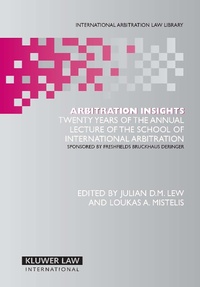
Arbitration Insights
Twenty Years of the Annual Lecture of the School of International Arbitration
Published on 6. December 2006
538 pages
978-90-411-7400-0 (ISBN)
Description

Since its establishment in 1986, the annual "Freshfields Arbitration Lecture" (as it has come to be known) has given both practitioners and academics a unique and extraordinary opportunity to explore new insights and frontiers in the theory and practice of international arbitration. Hosted by the School of International Arbitration, Queen Mary University of London, each lecture provides an eminent figure in international arbitration a platform on which to investigate problems of interest on aspects and trends in the field.
Bringing together all the published (and some unpublished) lectures in this important series, this valuable book confirms the interaction between theory and practice that the School has pursued since its inauguration, and provides in addition a remarkable testament of the School's policy of ensuring a comparative and international approach to international arbitration research and study.
Twenty-one leading academics and practitioners explore the issues of States and state enterprises in arbitration, including the following topics:
- international investment arbitration;
- national regulation of arbitration with particular focus on the English Arbitration Act, the UNCITRAL Model Law, and Latin America;
- arbitration proceedings (including the problem of delays and control of the arbitral process);
- availability of remedies (Farnsworth 1990);
- efficiency of arbitration process; and
- the impact of rules of law and national law on arbitration tribunals and the arbitration process.
The book also includes substantial coverage of such fundamental and more recent themes as default procedural rules, autonomy of the arbitration process, regulation of arbitration in national laws, validity of arbitral awards, and dissenting opinions. Several of the lectures have been augmented with updates and endnotes, and an in-depth introduction supplies a welcome overview.
With contributions by some of today's leading academics and practitioners in the field, this book will be of great interest to arbitration lawyers, international lawyers, and business people, as well as to academics, law libraries, and students of dispute resolution.
Bringing together all the published (and some unpublished) lectures in this important series, this valuable book confirms the interaction between theory and practice that the School has pursued since its inauguration, and provides in addition a remarkable testament of the School's policy of ensuring a comparative and international approach to international arbitration research and study.
Twenty-one leading academics and practitioners explore the issues of States and state enterprises in arbitration, including the following topics:
- international investment arbitration;
- national regulation of arbitration with particular focus on the English Arbitration Act, the UNCITRAL Model Law, and Latin America;
- arbitration proceedings (including the problem of delays and control of the arbitral process);
- availability of remedies (Farnsworth 1990);
- efficiency of arbitration process; and
- the impact of rules of law and national law on arbitration tribunals and the arbitration process.
The book also includes substantial coverage of such fundamental and more recent themes as default procedural rules, autonomy of the arbitration process, regulation of arbitration in national laws, validity of arbitral awards, and dissenting opinions. Several of the lectures have been augmented with updates and endnotes, and an in-depth introduction supplies a welcome overview.
With contributions by some of today's leading academics and practitioners in the field, this book will be of great interest to arbitration lawyers, international lawyers, and business people, as well as to academics, law libraries, and students of dispute resolution.
More details
Other editions
Additional editions
Julian D.M. Lew | Loukas A. Mistelis
Arbitration Insights
Twenty Years of the Annual Lecture of the School of International Arbitration
Book
12/2006
Kluwer Law International
€292.66
Shipment within 10-20 days
Content
- Cover
- Half Title Page
- Title Page
- Copyright Page
- FOREWORD
- Table of Contents
- PREFACE
- ACKNOWLEDGMENTS
- TABLE OF ABBREVIATIONS
- CHAPTER 1 ARBITRATION INSIGHTS: EVOLUTION AND THEMES
- I. THE ESTABLISHMENT AND HISTORY OF THE LECTURE SERIES
- II. THE THEMES OF THE LECTURE SERIES
- A. States and State Enterprises in Arbitration
- B. National Regulation of Arbitration
- C. Procedural Matters and Availability of Remedies
- D. Efficiency of Arbitration Process
- E. Impact of Law and Rules of Law on Arbitration Tribunals and the Arbitration Process
- CHAPTER 2 STATES AND THE UNDERTAKING TO ARBITRATE
- I. INTRODUCTION
- II. OBLIGATIONS CONTAINED IN THE UNDERTAKING TO ARBITRATE
- A. Between Private Parties
- B. Between States
- III. EXTENSION OF UNDERTAKING TO ARBITRATE TO COVER LOCAL COURT PROCEEDINGS
- A. State Immunity
- B. Section 9 of the State Immunity Act 1978
- IV. MIXED CLAIMS COMMISSIONS AND ARBITRAL CLAIMS TRIBUNALS
- A. The Position of the Individual Claimant
- B. Relationship of Arbitral Claims Tribunals to Local Courts
- C. Dallal v. Bank Mellat
- V. CONCLUSION
- VI. ADDENDUM [2005]
- CHAPTER 3 THE FUTURE OF ARBITRATION: FLEXIBILITY OR RIGIDITY?
- I. INTRODUCTION: THE GENERAL THEME
- II. DILEMMA: FLEXIBILITY VERSUS RIGIDITY
- III. DIFFERENT SITUATIONS CALL FOR DIFFERENT REMEDIES
- IV. A REALISTIC APPROACH TO THE APPRAISAL OF FLEXIBILITY AS OPPOSED TO RIGIDITY: INSTANCES IN WHICH RIGIDITY MAY BE AVOIDED
- V. FORM OF PROCEEDINGS AND FORESEEABILITY OF RESULT IN INTERNATIONAL ARBITRATION
- CHAPTER 4 THE PROBLEM OF DELAY IN ARBITRATION
- I. INTRODUCTION
- II. SUGGESTED SOLUTIONS TO THE PROBLEM OF DELAY
- III. OTHER JURISDICTIONS
- IV. A CRITICAL LOOK
- CHAPTER 5 PUNITIVE DAMAGES IN ARBITRATION
- I. INTRODUCTION
- II. PUNITIVE DAMAGES
- A. Will a Court Stay Arbitration of the Punitive Damage Claim?
- B. Will the Arbitrators Grant Punitive Damages?
- C. Will a Court where the Award is Rendered Refuse Enforcement?
- D Will a Court in another Jurisdiction (than where the Award was Rendered) Refuse Enforcement?
- III. LESSONS FOR DRAFTING ARBITRATION CLAUSES
- CHAPTER 6 THE ADAPTATION OF ENGLISH LAW TO INTERNATIONAL COMMERCIAL ARBITRATION
- I. INTRODUCTION
- II. THE NEEDS OF FOREIGN PARTIES ARBITRATING IN ENGLAND
- III. THE RULES OF ENGLISH LAW GOVERNING INTERNATIONAL COMMERCIAL ARBITRATION
- A. The Limits of Arbitral Power
- B. The Availability of Judicial Review
- IV. TOWARDS A TRANSNATIONAL COMMERCIAL LAW
- V. THE ADAPTATION OF ENGLISH COMMERCIAL LAW TO INTERNATIONAL COMMERCIAL ARBITRATION
- CHAPTER 7 THE EFFICACY OF AWARD IN INTERNATIONAL COMMERCIAL ARBITRATION
- I. INTRODUCTION
- II. PREVAILING LEGAL REGIME CONCERNING ANNULMENT
- III. RECENT DEVELOPMENTS
- A. Country of Origin
- B. Foreign Enforcement Country
- IV. SHOULD THE ACTION FOR SETTING ASIDE ARBITRAL AWARDS BE RETAINED IN INTERNATIONAL ARBITRATION?
- A. Assessment of Motives for Above Developments
- B. Disadvantages of the Developments Concerning Setting Aside
- V. CONCLUSION
- CHAPTER 8 ENGLAND'S RESPONSE TO THE UNCITRAL MODEL LAW OF ARBITRATION
- I. INTRODUCTION
- II. THE DECISION NOT TO ADOPT THE MODEL LAW
- III. THE WAY FORWARD
- IV. THE STRUCTURE OF THE BILL
- V. SOME MAJOR ISSUES
- A. Kompetenz/Kompetenz and the Separability of the Arbitration Agreement
- B. Evidence
- C. Procedure
- D. Immunity of Arbitrators
- E. The Relationship between the Courts and Arbitration
- F. Equity Clauses
- VI. CONCLUSION
- CHAPTER 9 STREAMLINING ARBITRAL PROCEEDINGS: SOME TECHNIQUES OF THE IRAN-UNITED STATES CLAIMS TRIBUNAL
- I. INTRODUCTION
- II. INDICATING IN ADVANCE THE EVIDENCE NEEDED TO ESTABLISH PRIMA FACIE PROOF OF COMPLEX FACTS
- III. ESTABLISHING AND ENFORCING SCHEDULES FOR PRESENTATIONS BY PARTIES DURING HEARINGS
- IV. USE OF CHECKLISTS FOR PREPARATORY CONFERENCES TO PLAN PROCEEDINGS
- V. CONCLUSION
- CHAPTER 10 'TELL IT TO THE JUDGE - BUT ONLY IF YOU MUST'
- I. INTRODUCTION
- II. THE CASE FOR SETTLEMENT
- A. Will the Judge Intervene?
- B. Costs and Savings
- C. The Green Paper
- D. The Labour Party's Proposals
- E. The Herbert Smith Report
- III. THE COSTS OF LAWYERS
- IV. EXPERIENCE IN THE US
- V. TAKING CASES OUT OF THE COURTS
- VI. CASES NOT SUITABLE FOR ADR
- VII. ARBITRATION
- A. Delay and Cost in Arbitration
- B. Procedural Change
- VIII. RESISTANCE TO ADR
- IX. THE ROLE OF THE COURTS IN ADR
- X. ADJUDICATION AND MEDIATION IN ONE PROCEDURE
- XI. OTHER STEPS
- XII. CONCLUSION
- XIII. EDITORS' ENDNOTE [FOR THE ORIGINAL PUBLICATION]
- XIV. EDITORS' ENDNOTE [2005]
- CHAPTER 11 MAY THE MAJORITY VOTE OF AN INTERNATION ARBITRAL TRIBUNAL BE IMPEACHED?
- I. INTRODUCTION
- II. THE ARBITRAL AWARD OF 31 JULY 1989
- III. CASE CONCERNING THE ARBITRAL AWARD OF 31 JULY 1989
- IV. THE JUDGMENT OF THE COURT
- V. CONCLUSIONS
- CHAPTER 12 'PASTURES NEW' (REVIEW OF ARBITRATION ACT 1996)
- CHAPTER 13 DOES THE WORLD NEED ADDITIONAL UNIFORM LEGISLATION ON ARBITRATION?
- I. INTRODUCTION
- II. THE BASIS OF ARBITRATION
- A. 'In Writing'
- B. Field of Application of Article II(3) New York Convention
- C. Subjective and Objective Arbitrability
- D. Restricting or Enlarging the Scope of the Arbitration Agreement
- III. POWERS AND DUTIES OF ARBITRATORS, AND OTHER PROCEDURAL ISSUES
- IV. COURT ASSISTANCE OR CONTROL (EXCLUDING ENFORCEMENT)
- V. REINFORCING RECOGNITION AND ENFORCEMENT OF AWARDS
- A. Widening/Clarifying the Definition of 'Award'
- B. Enforcement Conditions and Procedure
- C. Grounds for Refusal of Recognition or Enforcement
- CHAPTER 14 LLOYD GEORGE, LENIN AND CANNIBALS: THE HARRIMAN ARBITRATION
- I. INTRODUCTION
- II. THE HARRIMAN CONCESSION (1925)
- III. THE HARRIMAN ARBITRATION (1928)
- IV. 'WHY' IS ARBITRATION?
- V. PEACE THROUGH TRADE
- VI. SOVIET CONCESSIONS POLICY
- VII. URQUHART AND HAMMER
- A. The Urquhart Negotiations (1921)
- B. Hammer's First Concession (1921)
- C. Urquhart's Concession Agreement (1922)
- VIII. THE HARRIMAN CONCESSION AGREEMENT
- IX. THE HARRIMAN ARBITRATION CLAUSE
- X. THE HARRIMAN VERSUS USSR DISPUTE
- XI. CONCLUSION
- XII. APPENDIX
- CHAPTER 15 REFLECTIONS ON THE INTERNATIONAL ARBITRATOR'S DUTY TO APPLY THE LAW
- I. INTRODUCTION
- II. THE STATUS OF LAW IN THE INTERNATIONAL ARBITRAL PROCESS
- A. Domestic Arbitration
- B. International Arbitration
- III. THE INTERNATIONAL ARBITRATOR'S APPLICATION OF THE LAW
- A. Law and Equity
- B. Law and Contract
- IV. CONCLUSION
- CHAPTER 16 ARBITRATION BETWEEN STATES AND FOREIGN INVESTORS: RETROSPECT AND PROSPECT
- I. INTRODUCTION
- II. THE FUNDAMENTAL CHANGES IN THE NUMBER AND CHARACTER OF THE TRIBUNALS
- CHAPTER 17 ARBITRATION'S PROTEAN NATURE: THE VALUE OF RULES AND THE RISK OF DISCRETION
- I. SYNOPSIS
- II. INTRODUCTION: THE WHY AND HOW OF ARBITRATION
- A. Diversity of Motive and Method
- B. Common Themes
- III. ARBITRAL DISCRETION
- A. The Benefits of Procedural Autonomy
- B. Two Meanings of 'Rules'
- IV. THE DOWN SIDE OF DISCRETION
- A. The Need for Default Procedural Protocols
- B. Arbitral Orthodoxy
- V. ARBITRATION'S ARCHITECTURE
- A. Institutional Provisions
- B. Illustrative Questions: Privilege and Discovery
- C. Consensus and Legal Culture
- VI. ALTERNATIVE PROCEDURAL MENUS
- A. 'Rules Light' and 'Rules Rich'
- B. Supplementary 'Opt-In' Rules
- C. Gamesmanship, Over-Specificity and Escape Hatches
- VII. LORE, LITERATURE AND FAIRNESS
- A. Generally Accepted Norms
- B. Perceptions of Fairness
- VIII. COSTS AND BENEFITS OF INNOVATION
- A. Ex Ante and Ex Post Rule-Making
- B. Market Forces
- C. Risks of Reform
- IX. THE DEVIL IN THE DETAILS
- A. Triage and Drafting
- B. Surprise and Sequestration
- X. CONCLUSION
- XI. APPENDIX
- ADDENDUM: PROCEDURAL DEFAULT RULES (2005)
- I. INTRODUCTION
- II. PROFESSIONAL GUIDELINES: THE SOFT LAW OF ARBITRATION
- III. CASE MANAGEMENT AND PROCEDURAL DELOCALIZATION
- IV. DUE PROCESS, RULES AND FLEXIBILITY
- CHAPTER 18 DISSENTING OPINIONS IN INTERNATIONAL COMMERCIAL ARBITRATION: THE GOOD, THE BAD AND THE UGLY
- CHAPTER 19 ARBITRATION AND LATIN AMERICA: PROGRESS AND SETBACKS
- I. INTRODUCTION
- II. HISTORICAL EVOLUTION OF ARBITRATION IN LATIN AMERICA
- III. EXPANSION OF INTERNATIONAL COMMERCIAL ARBITRATION IN LATIN AMERICA
- IV. POLITICAL AND SOCIO-ECONOMIC DEVELOPMENTS
- V. PRESENT SITUATION OF LATIN AMERICAN ARBITRATION
- VI. EFFICACY OF ARBITRATION AGREEMENTS AND AWARDS IN LATIN AMERICA
- A. The 'Compromiso' or Specific Submission
- B. Arbitration as an Exception to the Jurisdiction of the 'Natural Judge'
- C. Arbitral Tribunals: a Component of the Judiciary, or a Non-Judicial, Independent, Dispute Resolution Mechanism?
- D. National Courts and Arbitrators: Partners or Rivals?
- E. Latin America and the Ratification of International Treaties on Commercial Arbitration
- VII. CONCLUSION
- CHAPTER 20 ACHIEVING THE DREAM: AUTONOMOUS ARBITRATION?
- I. INTRODUCTION: DREAMS AND NIGHTMARES
- II. PRACTICAL AND THEORETIC DEVELOPMENT OF ARBITRATION
- III. HISTORICAL DEVELOPMENT OF INTERNATIONAL ARBITRATION
- IV. THE LEGAL NATURE OF ARBITRATION
- V. DEVELOPMENTS IN RECENT TIMES
- VI. EMERGENCE OF THE INTERNATIONAL ARBITRATION MECHANISM
- A. National Legislative Changes in the Major Arbitration Centres
- B. Institutional Rules
- VII. IMPLICATIONS OF THE AUTONOMY OF INTERNATIONAL ARBITRATION
- A. International Arbitration Procedure
- B. Approach of National Courts
- VIII. AUTONOMY OF INTERNATIONAL ARBITRATION
- SUBJECT INDEX
- Back Cover
