

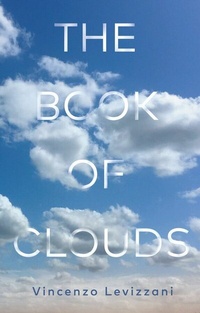
The Book of Clouds
Description

We spend a great deal of time living under the cover of clouds, but rarely do we look up and pay attention to them, and most of us know very little about what they are and the vital role they play in the Earth's climate and ecosystem. This is not true of Vincenzo Levizzani. As one of the world's leading experts on the physics of clouds, he has devoted his life to studying them, analysing their characteristics, and passing this knowledge on to others.
In The Book of Clouds, Levizzani provides a marvellous introduction to the history and science of clouds - from their influence on art and culture to the ways they have been studied and classified, from understanding how they form and how they produce precipitation to investigating the way they are affected by climate change. The result is a book that provides readers with everything they need to know to recognize different clouds, interpret their behaviour, and understand what is likely to happen if we are foolish enough to disrupt the delicate balance between the Earth and the skies that has blessed us with a habitable climate for millennia.
Exquisitely illustrated, The Book of Clouds offers a deep dive into clouds, droplets, crystals, graupels, and hailstones, among other things. It will be the indispensable guide for anyone who has gazed aloft and wondered what to make of the different clouds and cloud formations that fill our skies.
More details
Other editions
Additional editions
Persons
Vincenzo Levizzani was Director of Research at the National Research Council of Italy and Professor of Cloud Physics at the University of Bologna until his retirement in July 2024.
Content
Introduction: People and clouds
1. Clouds
2. No cloud is like any other
3. How a cloud forms
Clouds and weather fronts
Clouds, lakes, seas, and mountains
Amarcord and fond memories of fog
The majestic thunderstorm
Large and very large thunderstorms
Have you ever been inside a tropical cyclone?
'Hurricanes' in the Mediterranean
Some more 'ordinary' cyclones
Clouds almost nobody has ever heard of
4. Journey among the hydrometeors
Hydrometeors
Aerosols and condensation
Droplets
The temperature falls, but by how much?
Ice crystals, nature's masterpiece
The many faces of atmospheric ice
Hail, at last!
5. When it's raining, let it rain
Warm clouds: has someone left the heater on?
Cold clouds, brrr!
There isn't just rain up there
Ice, treacherous ice, fraught with danger
How hailstones grow
One cloud rains, the other doesn't
Lightning
There's something strange up there
6. Inside the clouds
7. Meteorology and clouds
8. Changing climate, changing clouds?
Epilogue: Measuring the sky
Acknowledgements
A Cloudspotter's Glossary
Acronyms
List of Illustrations
Introduction
People and clouds
The mornings draw on, clear and deserted
Along the river banks, until dawn drapes them in mist,
Darkening their greenness, as they wait for the sun.
[.] The scattered clouds
billow, luscious and ripe.
Cesare Pavese, 'Grappa in September', in Hard Labour, 1936*
It turns out that we spend a good deal of our lives under cover of clouds. Sometimes we notice them but often we don't. In reality, we are distracted by so many other things that our attention is rarely caught by the rain or snow falling on our heads or by the shape and shades of the occasional stormy skies - unless they somehow get in the way of what we are doing, as often happens. But even when we're not paying attention, clouds will always be there somewhere, and the sky is rarely completely clear. Anyone living at the top of a hill or a mountain knows this only too well thanks to their lofty vantage point, just as those who work in the countryside are used to treating clouds as an integral part of their lives. It could be that people today pay less attention to clouds and the sky because the horizon is just too full of large buildings, or perhaps because we spend too much time looking down at our all-intrusive smartphones. But clouds are still there. The show runs around the clock, and for much of the time it is distinctly more interesting than the rather dull proceedings that animate the screens of our hyperconnected world.
Clouds are ever-present in the sky in every season, but they should not be considered a mere background feature. They are much more than that. They are faithful companions throughout our lives and their manifestations can have a considerable influence on what happens to us. A leaden sky, for instance, foretells rain to come, while fluffy white clouds like cottonwool promise fine weather and tell us that we may wheel out the bicycle. In short, clouds are highly relevant to our everyday lives and can tell us much about what is soon to happen.
It's rather surprising to see how in our modern world we seem to have lost interest in looking at the sky. It would be enough to cast a glance upwards from time to time, and yet it is only when we look at the photos astronauts send us from space or the images satellites now make available to us on a daily basis that we find ourselves stunned by the sheer cloudiness of our planet.
Our aim in the following pages will be to get back in touch with this world of clouds, lost to a large extent in the hustle and bustle of our frenetic daily lives, and the first question we shall ask when at last we turn our eyes aloft is perhaps the most obvious one, the one that interests us the most because of its consequences for our lives, long ago as today: looking at clouds, their shape, their colour, their disposition across the sky, how transparent they are, how high, how low, how thick or thin, in short, from the details of their size and structure, can we get first-hand information about what the weather will be like in the short or even the medium term? It is no easy matter to answer this question, but it is not impossible. The old weather sayings do have a basis that derives from thousands of years of people turning their faces upwards and trying to foresee the weather from the appearance of the sky in general and clouds in particular. We have not always been successful. Some of our proverbs are rather naïve, not always based on well-founded beliefs, and others are grounded in a reality that is over-sensitive to the local geography. But on the whole, our ancestors were often on the right track and knew what they were doing when they cast their eyes upon the sky.
As far as we are concerned today, there are not that many occasions when we can look up and find a clear sky. Naturally, the kind of cloud we might see depends on where we live, the season of the year, and our particular vantage point. However that may be, with the advent of satellites that can monitor the Earth continually from space, we have found that our atmosphere provides a good 70 per cent cloud coverage at any given instant. The Earth, often referred to as the 'Blue Planet' because it is largely covered by the oceans, could equally well be called the 'Cloudy Planet'. Other planets in the Solar System have extensive cloud systems and could be described as 'cloudy', but the clouds on Jupiter, for example, are composed mainly of molecular hydrogen and helium, with traces of methane, ammonia, sulphuric acid, and a few other elements, in a cocktail that couldn't be less favourable to life as we know it here on Earth. Our own clouds, in contrast, are an integral part of the water cycle and are thus essential to life on our planet, which remains quite unique as far as we know at present.
Scientists are producing an ever more detailed picture of clouds and their structure. 'Cloud physics' is an important part of atmospheric physics and, in particular, meteorology. Studying clouds for a profession, though, doesn't mean being a poet or a casual observer of the sky. It involves attentive observation of every little variation in the appearance of the sky to obtain a description of the weather and understand the reasons for its transformations, be they large or small, fast or slow. There is thus nothing esoteric about watching clouds with the eye of someone who has spent their whole life studying them. Paradoxically, the cloud physicist is someone with their feet firmly placed on the ground, someone who tries to give an accurate account of what they see. Explaining the secrets of clouds through observation requires an understanding of physics, chemistry, and sometimes even biology, because clouds are composite entities involving unbelievably complex phenomena, hard to reproduce in the laboratory, and hence in essence elusive and intangible even for a scientist. Clearly, I won't be expecting you to assimilate all that in one go. However, from here on, I will provide you with all the tools you'll need to be able eventually to read the sky. Or at least, to try to do so. And I can assure you it will be worth the effort.
I have devoted my whole life to observing clouds. It seems strange to put it like that. When I came into existence, I don't believe my mother and father were even close to imagining that I would end up pursuing these elusive and ethereal harbingers of heaven's whims. It might seem hard to understand what goes through the mind of someone whose main personal and scientific mission in life is clouds. Given also that I made this choice through the need to find something 'concrete' to study, the whole thing begins to look decidedly odd, if not downright contradictory. But this is not really the case.
In my last year studying physics at university, I decided to devote myself to astrophysics, partly out of a yearning for the infinite and partly from a desire to understand the physics and mathematics of the cosmos. Then, as so often happens in life, something completely unexpected happened: I met someone who would soon become my teacher, Franco Prodi, whose words immediately struck a chord with me - and so began a life dedicated to clouds. During my last year at university, out of pure curiosity, I attended a meeting which Professor Prodi organized for students to introduce us to the physics of the atmosphere, and during the encounter he invited me to visit his laboratory at the National Research Council (CNR) in Bologna. I went along and soon discovered that my quest for the infinite and my desire to explore the physical mechanisms of nature could also be achieved much closer to Earth. There was no need to target the outer reaches of the universe. I could instead turn my attention to the infinitesimal hydrometeors in an elusive and aerial cloud.
I later left for California and had the honour of working with a leading expert in the field, Hans R. Pruppacher, a master of both science and life. Indeed, behind every scientist, there are always one or two mentors who spark their interest, recognize their potential, and help them to realize it in the best way possible. In this respect, cloud physics is no exception. So, this is how to become a scientist obsessed with cloudy skies, and from there a teacher communicating one's enthusiasm to yet other students who will carry on the never-ending task of research. For it is no coincidence that Plato attributed the words 'I know that I know nothing' to his master, the great Athenian philosopher Socrates, in the Apology. What he meant was, I don't know everything that I should or would like to. Scientific research is just like this. It is never finished.
Let us raise our eyes, then, and learn to treat clouds as a genuinely important feature of our everyday lives, not just part of the scenery. Let us learn to understand what they can tell us about an atmosphere in constant fluctuation. In this way, we shall come to treat them as a precious source of information about the changing weather that so affects our lives. If you have the patience to turn the pages of this book, you will find out why every cloud is different from every other cloud and how a cloud can appear in the middle of a blue sky. We shall wend our way among the droplets, crystals, graupels, and hailstones, taking a deep dive into clouds in search of their innermost secrets. And we shall ask what role clouds play in meteorology and weather forecasting, and whether clouds are changing as a consequence of the ongoing evolution of the climate. It will be a...
