

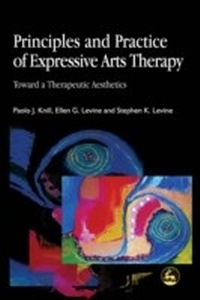
Principles and Practice of Expressive Arts Therapy
Toward a Therapeutic Aesthetics
Published on 15. October 2004
264 pages
978-1-84642-032-0 (ISBN)
Description

Challenging traditional therapeutic approaches to the arts in which art is often secondary to a psychological model, Principles and Practice of Expressive Arts Therapy provides a coherent theoretical framework for an expressive arts therapy practice that places the process of art-making and the art work itself at the center.
This book lays the philosophical foundation for a fresh interpretation of art-making and the therapeutic process by re-examining the concept of poiesis. The authors clarify the methodology and theory of practice with a focus on intermodal therapy, crystallization theory and polyaesthetics, and give guidance on the didactics of acquiring practical skills. Case studies of clinical practice and guidance on supervision and training in intermodal expressive arts therapy complement the theoretical chapters.
Combining philosophy, theory and practice, this book is an essential text for students and academics in the field and for practicing expressive and specialized arts therapists.
This book lays the philosophical foundation for a fresh interpretation of art-making and the therapeutic process by re-examining the concept of poiesis. The authors clarify the methodology and theory of practice with a focus on intermodal therapy, crystallization theory and polyaesthetics, and give guidance on the didactics of acquiring practical skills. Case studies of clinical practice and guidance on supervision and training in intermodal expressive arts therapy complement the theoretical chapters.
Combining philosophy, theory and practice, this book is an essential text for students and academics in the field and for practicing expressive and specialized arts therapists.
Reviews / Votes
Laying out a philosophical, methodological, and practice-based thesis, Knill et al. give us a much-needed text that addresses the blended nature of the Expressive Arts Therapists. These are three masters in the field steeped in the language, education, and practice of arts-based psychotherapy. -- The Arts in Psychotherapy Principles and Practice of Expressive Arts Therapy has something for everyone, with a general trajectory leading from the abstract and esoteric to the practical and everyday. -- Journal of the American Art Therapy AssociationAll prices
More details
Edition
Digital original
Language
English
Place of publication
London
United Kingdom
Target group
College/higher education
Professional and scholarly
Edition type
Digital original
File size
3,32 MB
ISBN-13
978-1-84642-032-0 (9781846420320)
Copyright in bibliographic data and cover images is held by Nielsen Book Services Limited or by the publishers or by their respective licensors: all rights reserved.
Schweitzer Classification
Other editions
Additional editions
Stephen K. Levine | Paolo J. Knill | Ellen G. Levine
Principles and Practice of Expressive Arts Therapy
Toward a Therapeutic Aesthetics
Book
10/2004
Jessica Kingsley Publishers
€41.60
Shipment within 15-20 days
Persons
Stephen K. Levine is Professor Emeritus of Social Science at York University in Toronto, Canada, Vice-Provost and Dean of the Doctoral Program in Expressive Arts Therapy: Education, Consulting and Social Change at the European Graduate School in Switzerland, and Co-Director of ISIS Canada.
Content
Introduction, Stephen K. Levine. Chapter 1: The Philosophy of Expressive Arts Therapy: Poiesis as a Response to the World, Stephen K. Levine. Chapter 2: Foundations for a Theory of Practice, Paolo J. Knill. Part I: Decentering and the Alternative Experience of World: Continuities in the Practice of Change Agents. Part II: Engaging the Arts and Play Makes a Difference. Part III: The Theory of Practice. Chapter 3: The Practice of Expressive Arts Therapy: Training, Therapy and Supervision, Ellen G. Levine. Part I: Training in the Practice of an Aesthetic Therapy. Part II: The Practice of an Aesthetic Therapy. Part III: Supervision of the Practice of an Aesthetic Therapy. Conclusion. About the Authors. References. Index.

