

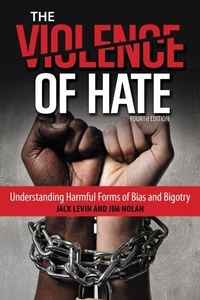
The Violence of Hate
Understanding Harmful Forms of Bias and Bigotry
4th Edition
Published on 8. July 2016
248 pages
979-8-8818-7782-8 (ISBN)
Description

The Violence of Hate, Fourth Edition presents a systematic introduction to issues related to the sociology and social psychology of hate and violence as they target people who are different in socially significant ways. It offers an integrated perspective on the causes and consequences of hate-motivated violence and the reasons we have not always been effective in stopping it. Not only do the authors address the experiences of racial, ethnic, and religious groups under attack, but also those who are victimized because of their sexual orientation, gender, gender-identity, age, or disability status. In addition, they include a chapter dedicated solely to the exploration of hate crimes, an evolving legal concept and public policy domain, as well as a chapter in which they suggest approaches that may be effectively applied collectively to the reduction of hate violence. As in earlier versions of The Violence of Hate, Levin and Nolan take the position that support for hate-motivated violence originates not in the ranting and raving of a few bigoted extremists at the margins of society but in the tacit approval of ordinary, even decent, people who are located squarely in the mainstream.
Updates to the Fourth Edition:
Chapter 1: New discussions of structural and cultural factors illustrated by the racial conflicts in Ferguson Missouri, New York City, and Baltimore. New presentation of the recent ADL survey indicating degree of bigotry in more than 100 countries. New discussion of how threatening situations inspire increases in hate violence against a range of vulnerable groups.Chapter 2: New chapter on hate violence around the world involving the experiences of Roma in Europe, sexual orientation and gender identity violence, and anti-Semitic and anti-Islamic violence in European countries. Includes discussions of violent responses to anti-Mohammed cartoons in Europe and North America, sectarian violence in Northern Ireland and the Middle East, and police versus the black community in the United States.Chapter 3: Updated discussion of issues related to reporting hate incidents and collecting hate crime data. Expanded presentation of hate crime laws at the federal and state levels. New discussions of the problems associated with policing hate and the role of social media in spreading hate.Chapter 4: New section on mass murder in the name of hate, including the Sikh Temple massacre outside of Milwaukee, the Charleston Black Church massacre, Baumhammer's killing spree targeting immigrants, Jews, and non-whites in the Pittsburgh area, Taylor's killing spree targeting whites, and black church burnings in the 1990s and 2015. New discussion of thrill hate crimes against the homeless, people with disabilities, and gays.
Features:
Uses a single conceptual framework to explore racism in American society, and the historical occurrence of anti-Semitism, with special emphasis on Nazi Germany.The experiences of other groups, such as Armenians massacred in 1915 and gay students victimized by violence, are also examined to provide a broad comparative perspective.Shows the economic and psychological benefits of hate, making it an expected, even rational, behavior. Examines the evolution of hate crime legislation in the United States and the impact of this legislation on the institutions of law and criminal justice. Shows how prejudice and hate can be addressed locally, but have an impact globally. The final chapter argues that respect for differences requires rebellious and even deviant behavior.
Updates to the Fourth Edition:
Chapter 1: New discussions of structural and cultural factors illustrated by the racial conflicts in Ferguson Missouri, New York City, and Baltimore. New presentation of the recent ADL survey indicating degree of bigotry in more than 100 countries. New discussion of how threatening situations inspire increases in hate violence against a range of vulnerable groups.Chapter 2: New chapter on hate violence around the world involving the experiences of Roma in Europe, sexual orientation and gender identity violence, and anti-Semitic and anti-Islamic violence in European countries. Includes discussions of violent responses to anti-Mohammed cartoons in Europe and North America, sectarian violence in Northern Ireland and the Middle East, and police versus the black community in the United States.Chapter 3: Updated discussion of issues related to reporting hate incidents and collecting hate crime data. Expanded presentation of hate crime laws at the federal and state levels. New discussions of the problems associated with policing hate and the role of social media in spreading hate.Chapter 4: New section on mass murder in the name of hate, including the Sikh Temple massacre outside of Milwaukee, the Charleston Black Church massacre, Baumhammer's killing spree targeting immigrants, Jews, and non-whites in the Pittsburgh area, Taylor's killing spree targeting whites, and black church burnings in the 1990s and 2015. New discussion of thrill hate crimes against the homeless, people with disabilities, and gays.
Features:
Uses a single conceptual framework to explore racism in American society, and the historical occurrence of anti-Semitism, with special emphasis on Nazi Germany.The experiences of other groups, such as Armenians massacred in 1915 and gay students victimized by violence, are also examined to provide a broad comparative perspective.Shows the economic and psychological benefits of hate, making it an expected, even rational, behavior. Examines the evolution of hate crime legislation in the United States and the impact of this legislation on the institutions of law and criminal justice. Shows how prejudice and hate can be addressed locally, but have an impact globally. The final chapter argues that respect for differences requires rebellious and even deviant behavior.
More details
Other editions
Additional editions
Book
07/2016
4th Edition
Rowman & Littlefield Publishers
€69.00
Shipment within 10-20 days
Persons
Jack Levin is Professor Emeritus of Sociology and Criminology and codirector of the Brudnick Center on Violence and Conflict at Northeastern University. He has published more than 30 books and numerous journal articles and newspaper columns, primarily in the areas of hate crimes, sociology of prejudice, school violence, and multiple homicide. Levin was honored by the Massachusetts Council for the Advancement and Support of Education as its "Professor of the Year." He recently received an award from the American Sociological Association for his contributions to the public understanding of sociology and also was the recipient of the Apple Award from the New England Sociological Association and the Lester Ward Award from the Association of Applied and Clinical Sociology. In 2013, he received a Lifetime Achievement Award for his research in criminology from the Society for the Study of Social Problems.
Jim Nolan is a professor in the Department of Sociology and Anthropology at West Virginia University where he teaches courses on the topic of crime and social control. His research currently focuses on urban policing, intergroup relations and hate crimes, and the measurement of crime. He has been the recipient of research funding from several U.S. Department of Justice agencies and the National Science Foundation. Dr. Nolan is currently serving on a National Academy of Sciences panel on modernizing the nation's crime statistics. His research publications have appeared in the American Behavioral Scientist, Journal of QuantitativeCriminology, Journal of Contemporary Criminal Justice, Policing & Society, Criminal Justice Studies, Homicide Studies, Journal of Criminal Justice, and The American Sociologist. Dr. Nolan was the 2010 recipient of the Carnegie Foundation for the Advancement of Teaching and Council for Advancement and Support of Education (CASE) West Virginia Professor of the Year.
Jim Nolan is a professor in the Department of Sociology and Anthropology at West Virginia University where he teaches courses on the topic of crime and social control. His research currently focuses on urban policing, intergroup relations and hate crimes, and the measurement of crime. He has been the recipient of research funding from several U.S. Department of Justice agencies and the National Science Foundation. Dr. Nolan is currently serving on a National Academy of Sciences panel on modernizing the nation's crime statistics. His research publications have appeared in the American Behavioral Scientist, Journal of QuantitativeCriminology, Journal of Contemporary Criminal Justice, Policing & Society, Criminal Justice Studies, Homicide Studies, Journal of Criminal Justice, and The American Sociologist. Dr. Nolan was the 2010 recipient of the Carnegie Foundation for the Advancement of Teaching and Council for Advancement and Support of Education (CASE) West Virginia Professor of the Year.
Content
1. Perspectives on Hate and Violence
Hate, Prejudice, and Discrimination
Transforming the Terms
Prejudice versus Discrimination
The Role of the Individual
Justifying Hate Violence
The Influence of Significant Others
From Individual to Institutional Discrimination
Constructing Group Identity
Who Controls an Individual's Group Identity?
Changing Group Identity
The Privilege of White Identity
When Stereotypes Turn Nasty
Is Hate on the Decline?
Underestimating Bigotry
Unconscious Bias
The Difference Between Small and Insignificant
Hate Crimes are Vastly Under-Reported
It Takes Only a Few Bad Apples
Conclusion
2. Explaining the Violence of Hate
Environment, Heredity, and the Power of the Situation
The Environmental View-Blaming the Victim
The Hereditary View-Blaming the Victim
A Situationist View of Hate Violence
Threatening Situations Can Inspire Hate
Hate Crimes Against Muslims
Hate Crimes Against Immigrants
The New Anti-Semitism
A Continuing Racial Gap
The Obama Factor
Bashing Gays and Lesbians
Hate Crimes Against Women
Conclusion
3. Hate Crimes
Motive Matters
The Hate Crime Statistics Act
The FBI's Uniform Crime Reporting Program
NIBRS Hate Crime Data
Why Now?
Pros and Cons of Hate Crime Laws
Hate Crime Laws Today
Federal Civil Rights Statutes
The Matthew Shepard and James Byrd Jr. Hate Crimes Prevention Act
State Hate Crime Statutes
Hate Crime Laws and the U.S. Constitution
Policing Hatred
When the Police Are Viewed as Perpetrators of Hate Violence
When the Police Are Viewed as Victims of Hate Violence
Explaining Bias in Policing
Bourdieu's Theory of Practice: A Sociological Perspective on Police Violence
The Traffic Enforcement Analogy: A Sociological Explanation
Policing Hate Crimes
Seeing Hate Crimes
Intension and Extension of the Term "Hate Crime"
Classification of Hate Crime Incidents
Why Is This Distinction Important?
Hate Crimes in Europe
The Roma in Europe
Sexual Orientation and Gender Identity Violence
Conclusion
4. A Typology of Hate
Hatemongers
The Role of Organized Hate
Hate from a Distance
Biblical Bigotry
The Militia Movement and White Supremacy
Expanding the Influence of Organized Hate
Mass Murder in the Name of Hate
Dabblers
Getting a Thrill
Being Defensive
Getting Even
Sympathizers
Behind Closed Doors
An Eliminationist Anti-Semitism
Cultural Hate
Culture Transcends Generations
Spectators
The Failure to Act
Middleman Minorities
Middleman Minorities in the United States
The American Version of Spectatorship
Conclusion
5. The Benefits of Bigotry
Protest by Proxy
Psychological Advantages
Enhancing and Protecting Self-Esteem
Reducing Uncertainty
Economic and Status Advantages
Getting the Dirty Work Done
Eliminating Opponents
Maintaining Political Power
Conclusion
6. The Production of Rebels, Deviants, and Other Decent People
The Power of the Situation
When Normal People Do Abnormally Nasty Things
Fighting Spectatorship
Intergroup Contact
The Impact of Competition
Reducing Hostility Between Groups
Structuring Opportunities for Cooperation
Follow the Leader
Obeying Orders
The Role of Leadership
The Impact of Deviance
When Rebels Rebel
The Importance of Empathy Across Groups
Human Agency: The Ability to Create "Good" Situations
The Agentic Perspective
Collective Efficacy in Neighborhoods
Neighborhood Agency and Collective Efficacy
Conclusion
Appendix A. Anti-Hate Websites
Appendix B. Division E-Matthew Shepard and James Byrd, Jr. Hate Crimes Prevention Act
Hate, Prejudice, and Discrimination
Transforming the Terms
Prejudice versus Discrimination
The Role of the Individual
Justifying Hate Violence
The Influence of Significant Others
From Individual to Institutional Discrimination
Constructing Group Identity
Who Controls an Individual's Group Identity?
Changing Group Identity
The Privilege of White Identity
When Stereotypes Turn Nasty
Is Hate on the Decline?
Underestimating Bigotry
Unconscious Bias
The Difference Between Small and Insignificant
Hate Crimes are Vastly Under-Reported
It Takes Only a Few Bad Apples
Conclusion
2. Explaining the Violence of Hate
Environment, Heredity, and the Power of the Situation
The Environmental View-Blaming the Victim
The Hereditary View-Blaming the Victim
A Situationist View of Hate Violence
Threatening Situations Can Inspire Hate
Hate Crimes Against Muslims
Hate Crimes Against Immigrants
The New Anti-Semitism
A Continuing Racial Gap
The Obama Factor
Bashing Gays and Lesbians
Hate Crimes Against Women
Conclusion
3. Hate Crimes
Motive Matters
The Hate Crime Statistics Act
The FBI's Uniform Crime Reporting Program
NIBRS Hate Crime Data
Why Now?
Pros and Cons of Hate Crime Laws
Hate Crime Laws Today
Federal Civil Rights Statutes
The Matthew Shepard and James Byrd Jr. Hate Crimes Prevention Act
State Hate Crime Statutes
Hate Crime Laws and the U.S. Constitution
Policing Hatred
When the Police Are Viewed as Perpetrators of Hate Violence
When the Police Are Viewed as Victims of Hate Violence
Explaining Bias in Policing
Bourdieu's Theory of Practice: A Sociological Perspective on Police Violence
The Traffic Enforcement Analogy: A Sociological Explanation
Policing Hate Crimes
Seeing Hate Crimes
Intension and Extension of the Term "Hate Crime"
Classification of Hate Crime Incidents
Why Is This Distinction Important?
Hate Crimes in Europe
The Roma in Europe
Sexual Orientation and Gender Identity Violence
Conclusion
4. A Typology of Hate
Hatemongers
The Role of Organized Hate
Hate from a Distance
Biblical Bigotry
The Militia Movement and White Supremacy
Expanding the Influence of Organized Hate
Mass Murder in the Name of Hate
Dabblers
Getting a Thrill
Being Defensive
Getting Even
Sympathizers
Behind Closed Doors
An Eliminationist Anti-Semitism
Cultural Hate
Culture Transcends Generations
Spectators
The Failure to Act
Middleman Minorities
Middleman Minorities in the United States
The American Version of Spectatorship
Conclusion
5. The Benefits of Bigotry
Protest by Proxy
Psychological Advantages
Enhancing and Protecting Self-Esteem
Reducing Uncertainty
Economic and Status Advantages
Getting the Dirty Work Done
Eliminating Opponents
Maintaining Political Power
Conclusion
6. The Production of Rebels, Deviants, and Other Decent People
The Power of the Situation
When Normal People Do Abnormally Nasty Things
Fighting Spectatorship
Intergroup Contact
The Impact of Competition
Reducing Hostility Between Groups
Structuring Opportunities for Cooperation
Follow the Leader
Obeying Orders
The Role of Leadership
The Impact of Deviance
When Rebels Rebel
The Importance of Empathy Across Groups
Human Agency: The Ability to Create "Good" Situations
The Agentic Perspective
Collective Efficacy in Neighborhoods
Neighborhood Agency and Collective Efficacy
Conclusion
Appendix A. Anti-Hate Websites
Appendix B. Division E-Matthew Shepard and James Byrd, Jr. Hate Crimes Prevention Act
