

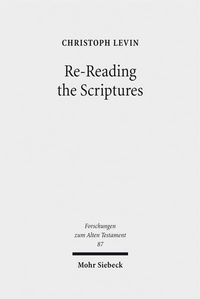
Re-Reading the Scriptures
Essays on the Literary History of the Old Testament
1st Edition
Published on 23. July 2013
319 pages
978-3-16-152759-3 (ISBN)
Description

Die Sammlung umfasst 15 Aufsätze von Christoph Levin in englischer Sprache aus den Jahren 2001 bis 2011, davon vier erstmals publiziert. Ein erster Schwerpunkt betrifft die Pentateuch-Forschung, vor allem die älteste durchlaufende erzählende Quelle, den Jahwisten, deren Ursprung in den Anfängen der jüdischen Diaspora gesucht werden kann. Der erste Aufsatz beschreibt diese Quelle, wie sich auf der Grundlage der literarkritischen Analyse darstellt. Beigegeben ist die vollständige englische Übersetzung des Jahwistischen Geschichtswerks, unterschieden nach den vorredaktionellen Quellen und dem Text des Redaktors J. Weitere Aufsätze sind einzelnen Texten des Jahwistischen Werkes gewidmet, so der Erzählung von Schöpfung und Sündenfall Gen 2-3, der Erzählung von Josef in Ägypten Gen 39, der Berufung des Mose Ex 3 und dem Schilfmeerwunder Ex 14. Ein weiterer Schwerpunkt gilt den Büchern der Könige: dem chronologischen Gerüst und den letzten beiden Kapiteln 2Kön 24-25. Der letzte Schwerpunkt betrifft die prophetischen Bücher, nämlich die Entstehung der Wort-Gottes-Theologie im Buch Jeremia und der Entwicklung der Vorstellung vom Tag Jahwes in Buch Zefanja. Weitere Aufsätze behandeln die israelitische Religion in der Königszeit, den Ursprung der biblischen Bundestheologie und die Stellung des Alten Testaments zur Armut. Alle Studien beruhen auf der eingehenden Analyse des literarischen Textwachstums. So wie es vorliegt, ist das Alte Testament in der Epoche des Zweiten Tempels aus einem Prozess andauernder Fortschreibung hervorgegangen.
More details
Other editions
Additional editions
Book
07/2013
1st Edition
Mohr Siebeck
€129.00
Article exhausted; check different version
Person
Author
Geboren 1950; em. Professor für Altes Testament an der LMU München; 2010-13 Präsident der International Organization for the Study of the Old Testament (IOSOT); korrespondierendes Mitglied der Niedersächsischen Akademie der Wissenschaften zu Göttingen und der Finnischen Akademie der Wissenschaften; Ehrendoktor der Theologischen Fakultät der Universität Helsinki.
ISNI:
ISNI:
Content
- Cover
- Preface
- Table of Contents
- List of Abbreviations
- The Yahwist: The Earliest Editor in the Pentateuch
- I
- II
- III
- IV
- V
- VI
- VII
- The Text of the Yahwist's History
- Genesis 2-3: A Case of Inner-Biblical Interpretation
- The Earliest Form of the Narrative
- The Fundamental Anthropological Viewpoints
- The Nature of Sin
- The Origin of Mortality and the Possibility of Eternal Life
- Righteousness in the Joseph Story: Joseph Resists Seduction (Genesis 39)
- The Literary-Historical Problem
- The Original Shape of the Scene
- The Narrative within the Yahwist's History (J)
- The Righteousness Edition
- Further Traces of the Righteousness Edition
- Appendix
- The Yahwist and the Redactional Link between Genesis and Exodus
- Appendix The Yahwist as Editor in Exodus 3: The Evidence of Language
- Summary
- Source Criticism: The Miracle at the Sea
- Definition of the Method
- The Miracle at the Sea
- The Supplementary Hypothesis (1): Late Revisions and Expansions
- The Documentary Hypothesis: The Separation of the Yahwist's History and the Priestly Code
- The Supplementary Hypothesis (2): Supplements within the Priestly Code
- The Redaction Hypothesis: The Narrative within the Yahwist's History
- The Fragment Hypothesis: The Transmitted Sources
- On the Cohesion and Separation of Books within the Enneateuch
- Single Books or Large Redactional Units?
- The Size of the Scrolls
- Samuel and Kings
- Judges and Samuel
- Joshua and Judges
- Deuteronomy and Joshua
- Genesis und Exodus
- Exodus and Leviticus
- Leviticus and Numbers
- Numbers and Deuteronomy
- Conclusions
- Israel and Canaan: The Origins of a Fictitious Antagonism
- Conditions in the Period of the Monarchy
- "Israel" as the Subject of the Pre-State Narrative
- Israelites under Canaanites: the Era of the Patriarchs
- Yahwist and Deuteronomist
- The Developed Concept
- Old Testament Religion: Conflict and Peace
- The "Balance of Power" in Nature and Politics
- Mythology Mirrors the Experience of Life
- Yahweh, the Victorious King
- The Temple as the Residence of Yahweh
- The King in Dialogue with Yahweh
- The King Trusts in Yahweh
- Judaism: Israel becomes Yahweh's Vassal
- The Synchronistic Excerpt from the Annals of the Kings of Israel and Judah
- II
- III
- IV
- V
- VI
- VII
- Abstract
- The Empty Land in Kings
- Jehoiachin and the First Deportation
- Zedekiah's Fate
- The Destruction of Jerusalem and the Second Deportation
- The Reign of Gedaliah
- The Rehabilitation of Jehoiachin
- Conclusions
- The "Word of Yahweh": A Theological Concept in the Book of Jeremiah
- Introduction
- Jeremiah 1:4-10
- Jeremiah 1:11-14
- Jeremiah 2:1
- Jeremiah 13:1-11
- Jeremiah 16:1-9
- Jeremiah 18:1-6
- Jeremiah 32:1-15
- Jeremiah 35
- Conclusion
- The Origins of Biblical Covenant Theology
- The Starting Point
- Factors of Transition
- The Crisis
- The Religio-Historical Turn
- The Application on History
- The Application on the Performance of the Cult
- Zephaniah: How this Book became Prophecy
- Seven Main Layers in Zeph 1:1 - 2:3
- The Book's Superscription (Zeph 1:1)
- The Present Book's Motto (Zeph 1:2-3)
- The Sin of Manasseh (Zeph 1:4-6)
- The Proclamation of the Theophany (Zeph 1:7)
- Why the Catastrophe Has/Shall Come (Zeph 1:8-13)
- The Day of YHWH (Zeph 1:14-16a)
- Prophetic Interpretation (Zeph 1:15abaß)
- The Pious Pour Shall be Saved in the Coming Catastrophe (Zeph 1:16b-2:3)
- Conclusion: the Growing Process of Zeph 1:1-2:3
- The Poor in the Old Testament: Some Observations
- Introduction
- The Ancient Near Eastern and Preexilic Israelite Attitude to Poverty
- The Social Criticism in the Prophetical Books of the Old Testament
- The Problem of Debt in the Torah and its Possible Cause in Post-Exilic History
- The Poor as a Distinctive Group Within Late Postexilic Judaism
- The Poor (Anawim) and the Messiah
- Outlook
- Abstract
- Sources and Acknowledgments
- Index of Hebrew Words and Phrases
- Subject Index
- Reference Index
- Author Index
