

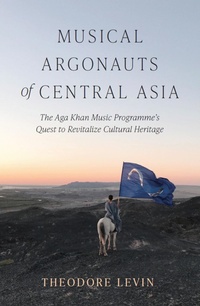
Musical Argonauts of Central Asia
Description

Musical Argonauts of Central Asia tells the story of the Aga Khan Music Programme (AKMP) and its sustained efforts to revitalize Central Asian musical heritage in the wake of seven decades of Soviet rule.
Theodore Levin has worked with the program since its inception and offers an insider's account of how the AKMP's development tactics and strategies were formulated and their outcomes assessed. In doing so, Levin addresses fundamental questions about the power of music and what NGOs can do to help shape music's social impact: In what sense are music, musicians, and musical life amenable to interventions by a development organization? What do such interventions contribute to the quality of life of their beneficiaries? And what does an ethical development intervention in music look like? In chronicling the work of the AKMP, Levin establishes the bona fides of a type of institutional cultural activism that isn't captured by rubrics such as applied ethnomusicology, public folklore, and safeguarding intangible cultural heritage.
Featuring case studies of country-specific interventions in Kyrgyzstan and Tajikistan, Musical Argonauts of Central Asia provides a practical roadmap for aspiring activist ethnomusicologists and folklorists that models best practices, analyzes failures, and advocates for the role that ethnographers can and should play in international development organizations.
More details
Other editions
Additional editions
Person
Theodore Levin is the Arthur R. Virgin Professor of Music at Dartmouth College. He first visited Central Asia in 1974 and has been traveling there ever since. As an advocate for music and musicians from other cultures, he has written books, produced recordings, curated concerts and festivals, and contributed to international arts initiatives, including, since 2000, the Aga Khan Music Programme. His previous books include Where Rivers and Mountains Sing: Sound, Music, and Nomadism in Tuva and Beyond; The Hundred Thousand Fools of God: Musical Travels in Central Asia (and Queens, New York); and, as lead editor, The Music of Central Asia.
Content
Accessing Audiovisual Materials
Acknowledgments
Note on Transliteration
List of Acronyms
Preface
Prologue: The Conundrum of Cultural Heritage
1. The Prince and the Ethnomusicologist
2. Revitalizing Central Asian Music
3. The Little NGO that Could: Centre Ustatshakirt and the Future of the Past in Kyrgyzstan
4. Putting Central Asian Music on the World Stage
5. Measuring Music's Impact
6. The Aga Khan Master Musicians (AKMM): Pluralists, Orientalists, Cultural Appropriators, or All of the Above?
7. Inventing a Music Prize: The Aga Khan Music Awards
8. Taking Stock: The Ethnography of Impact
Epilogue
Notes
References
Index
