

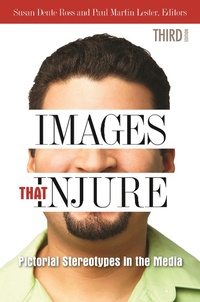
Images That Injure
Pictorial Stereotypes in the Media
3rd Edition
Published on 19. April 2011
472 pages
978-0-313-37893-5 (ISBN)
Description

This expanded collection of new and fully revised explorations of media content identifies the ways we all have been negatively stereotyped and demonstrates how careful analysis of media portrayals can create more beneficial alternatives.
Not all damaging stereotypes are obvious. In fact, the pictorial stereotypes in the media that we don't notice could be the most harmful because we aren't even aware of the negative, false ideas they perpetrate.
This book presents a series of original research essays on media images of groups including African Americans, Latinos, women, the elderly, the physically disabled, gays and lesbians, and Jewish Americans, just to mention a few. Specific examples of these images are derived from a variety of sources, such as advertising, fine art, film, television shows, cartoons, the Internet, and other media, providing a wealth of material for students and professionals in almost any field. Images That Injure: Pictorial Stereotypes in the Media, Third Edition not only accurately describes and analyzes the media's harmful depictions of cultural groups, but also offers creative ideas on alternative representations of these individuals. These discussions illuminate how each of us is responsible for contributing to a sea of meaning within our mass culture.
Not all damaging stereotypes are obvious. In fact, the pictorial stereotypes in the media that we don't notice could be the most harmful because we aren't even aware of the negative, false ideas they perpetrate.
This book presents a series of original research essays on media images of groups including African Americans, Latinos, women, the elderly, the physically disabled, gays and lesbians, and Jewish Americans, just to mention a few. Specific examples of these images are derived from a variety of sources, such as advertising, fine art, film, television shows, cartoons, the Internet, and other media, providing a wealth of material for students and professionals in almost any field. Images That Injure: Pictorial Stereotypes in the Media, Third Edition not only accurately describes and analyzes the media's harmful depictions of cultural groups, but also offers creative ideas on alternative representations of these individuals. These discussions illuminate how each of us is responsible for contributing to a sea of meaning within our mass culture.
More details
Edition
3rd edition
Language
English
Place of publication
New York
United States
Publishing group
Bloomsbury Publishing Plc
Target group
Interest Age: From 7 to 17 years
Illustrations
72 bw illus
ISBN-13
978-0-313-37893-5 (9780313378935)
Copyright in bibliographic data and cover images is held by Nielsen Book Services Limited or by the publishers or by their respective licensors: all rights reserved.
Schweitzer Classification
Other editions
Additional editions
Book
04/2011
3rd Edition
Praeger Publishers Inc
€84.60
Shipment within 15-20 days
Person
Susan Dente Ross is professor in the Department of English at Washington State University, Pullman, WA.
Paul Martin Lester is professor of communications at California State University, Fullerton, CA.
Paul Martin Lester is professor of communications at California State University, Fullerton, CA.
Content
- Intro
- Contents
- Preface
- Introduction
- Part I: Marking and Demarking: Images, Narratives, and Identities
- 1. Ethical Responsibilities and the Power of Pictures
- 2. Stereotypes, the Media, and Photojournalism
- 3. Images in Readers' Construction of News Narratives
- 4. The Dangers of Dehumanization: Diminishing Humanity in Image and Deed
- 5. Images That Empower and Heal: Lessons from Migrant Mother's Migrant Meanings
- Part II: Images of Race and Ethnicity
- 6. The Lenape: Cultural Survival or Assimilation?
- 7. Marketing the Sacred: Commodifying Native-American Cultural Images
- 8. African-American Images in the News: Understanding the Past to Improve Future Portrayals
- 9. Racial Passing: Images of Mulattos, Mestizos, and Eurasians
- 10. Exile and Erasure: The African-American Cinderella and the Asian-American Prince
- Part III: Delimiting, Denying, and Selling Our Gender and Sexuality
- 11. Shepard's Fence: An Iconic Image Examined
- 12. Selling Sex
- 13. Hard Targets: Men as a Disposable Sex
- 14. Ain't the Barbie Doll Type: Images in the Music Video "Redneck Woman"
- 15. Archetypes: Transcending Stereotypes of Feminine and Masculine in the Theatre of Mediatypes
- Part IV: Images of Age, Illness, and the Body
- 16. No Kidding: Using Mediated Images of Children to Sell Programs, Products, and Pleasure
- 17. Pepsi's Generation Gap
- 18. Tramp Stamps and Tribal Bands: Stereotypes of the Body Modified
- 19. Media Myths and Breast Cancer
- 20. Invisible No Longer: Images of Disability in the Media
- Part V: Images Shaping and Constraining Religions and Ethnicities
- 21. Television News, Jewish Youth, and Self-Image
- 22. Mass Media's Mexican Americans
- 23. Drawing Dehumanization: Exterminating the Enemy in Editorial Cartoons
- 24. Gulf Arabs: From Caricatures to Image Managers
- 25. Beyond the Crisis Narrative: Muslim Voices in the Web Era
- Part VI: Images of Inside, Outside, and Other
- 26. Minding the Borders: Images of Haitian Immigrants in the United States
- 27. Exotic Babies for Sale
- 28. Virtual World Stereotypes
- 29. Editorial Cartoons and Stereotypes of Politicians
- Conclusion: Ethics in a New Key
- Afterword
- Glossary
- A
- C
- D
- F
- G
- H
- I
- L
- M
- O
- P
- S
- T
- Index
- A
- B
- C
- D
- E
- F
- G
- H
- I
- J
- K
- L
- M
- N
- O
- P
- Q
- R
- S
- T
- U
- V
- W
- Y
- About the Contributors
