

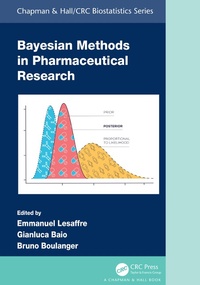
Bayesian Methods in Pharmaceutical Research
1st Edition
Published on 15. April 2020
546 pages
978-1-351-71867-7 (ISBN)
Description

Since the early 2000s, there has been increasing interest within the pharmaceutical industry in the application of Bayesian methods at various stages of the research, development, manufacturing, and health economic evaluation of new health care interventions. In 2010, the first Applied Bayesian Biostatistics conference was held, with the primary objective to stimulate the practical implementation of Bayesian statistics, and to promote the added-value for accelerating the discovery and the delivery of new cures to patients.
This book is a synthesis of the conferences and debates, providing an overview of Bayesian methods applied to nearly all stages of research and development, from early discovery to portfolio management. It highlights the value associated with sharing a vision with the regulatory authorities, academia, and pharmaceutical industry, with a view to setting up a common strategy for the appropriate use of Bayesian statistics for the benefit of patients.
The book covers:
Theory, methods, applications, and computing
Bayesian biostatistics for clinical innovative designs
Adding value with Real World Evidence
Opportunities for rare, orphan diseases, and pediatric development
Applied Bayesian biostatistics in manufacturing
Decision making and Portfolio management
Regulatory perspective and public health policies
Statisticians and data scientists involved in the research, development, and approval of new cures will be inspired by the possible applications of Bayesian methods covered in the book. The methods, applications, and computational guidance will enable the reader to apply Bayesian methods in their own pharmaceutical research.
This book is a synthesis of the conferences and debates, providing an overview of Bayesian methods applied to nearly all stages of research and development, from early discovery to portfolio management. It highlights the value associated with sharing a vision with the regulatory authorities, academia, and pharmaceutical industry, with a view to setting up a common strategy for the appropriate use of Bayesian statistics for the benefit of patients.
The book covers:
Theory, methods, applications, and computing
Bayesian biostatistics for clinical innovative designs
Adding value with Real World Evidence
Opportunities for rare, orphan diseases, and pediatric development
Applied Bayesian biostatistics in manufacturing
Decision making and Portfolio management
Regulatory perspective and public health policies
Statisticians and data scientists involved in the research, development, and approval of new cures will be inspired by the possible applications of Bayesian methods covered in the book. The methods, applications, and computational guidance will enable the reader to apply Bayesian methods in their own pharmaceutical research.
Reviews / Votes
"The book is full of interesting real examples across the chapters, which not only makes the reading fun but also demonstrates the practical usefulness of Bayesian methods in pharmaceutical research. In synthesis, this is a very well written book, which can be used as self-learning material or as a main reference for experts and practitioners."- Pablo Emilio Verde, International Society for Clinical Biostatistics, 72, 2021
More details
Series
Edition
1. Auflage
Language
English
Place of publication
London
United Kingdom
Publishing group
Taylor & Francis Ltd
Target group
Professional and scholarly
Illustrations
59 Tables, black and white; 111 Illustrations, black and white
ISBN-13
978-1-351-71867-7 (9781351718677)
Copyright in bibliographic data and cover images is held by Nielsen Book Services Limited or by the publishers or by their respective licensors: all rights reserved.
Schweitzer Classification
Other editions
Additional editions
Emmanuel Lesaffre | Gianluca Baio | Bruno Boulanger
Bayesian Methods in Pharmaceutical Research
Book
12/2021
1st Edition
Chapman & Hall/CRC
€71.90
Shipment within 10-20 days
Emmanuel Lesaffre | Gianluca Baio | Bruno Boulanger
Bayesian Methods in Pharmaceutical Research
Book
04/2020
1st Edition
CRC Press
€206.60
Shipment within 10-20 days
Persons
Emmanuel Lesaffre, Gianluca Baio, Bruno Boulanger
Content
I Introductory part
Chapter 1: Bayesian Background
Chapter 2: FDA Regulatory Acceptance of Bayesian Statistics
Chapter 3: Bayesian Tail Probabilities for Decision Making
II Clinical development
Chapter 4: Clinical Development in the Light of Bayesian Statistics
Chapter 5: Prior Elicitation
Chapter 6: Use of Historical Data
Chapter 7: Dose Ranging Studies and Dose Determination
Chapter 8: Bayesian Adaptive Designs in Drug Development
Chapter 9: Bayesian Methods for Longitudinal Data with Missingness
Chapter 10: Survival Analysis and Censored Data
Chapter 11: Benefit of Bayesian Clustering of Longitudinal Data: Study of Cognitive Decline for Precision Medicine
Chapter 12: Bayesian Frameworks for Rare Disease Clinical Development Programs
Chapter 13: Bayesian Hierarchical Models for Data Extrapolation and Analysis in Pediatric Disease Clinical Trials
III Post-marketing
Chapter 14: Bayesian Methods for Meta-Analysis
Chapter 15: Economic Evaluation and Cost-Effectiveness of Health Care Interventions
Chapter 16: Bayesian Modeling for Economic Evaluation Using "Real World Evidence"
Chapter 17: Bayesian Benefit-Risk Evaluation in Pharmaceutical Research
IV Product development and manufacturing
Chapter 18: Product Development and Manufacturing
Chapter 19: Process Development and Validation
Chapter 20: Analytical Method and Assay
Chapter 21: Bayesian Methods for the Design and Analysis of Stability Studies
Chapter 22: Content Uniformity Testing
Chapter 23: Bayesian methods for in vitro dissolution drug testing and similarity comparisons
Chapter 24: Bayesian Statistics for Manufacturing
V Additional topics
Chapter 25: Bayesian Statistical Methodology in the Medical Device Industry
Chapter 26: Program and Portfolio Decision-Making
Chapter 1: Bayesian Background
Chapter 2: FDA Regulatory Acceptance of Bayesian Statistics
Chapter 3: Bayesian Tail Probabilities for Decision Making
II Clinical development
Chapter 4: Clinical Development in the Light of Bayesian Statistics
Chapter 5: Prior Elicitation
Chapter 6: Use of Historical Data
Chapter 7: Dose Ranging Studies and Dose Determination
Chapter 8: Bayesian Adaptive Designs in Drug Development
Chapter 9: Bayesian Methods for Longitudinal Data with Missingness
Chapter 10: Survival Analysis and Censored Data
Chapter 11: Benefit of Bayesian Clustering of Longitudinal Data: Study of Cognitive Decline for Precision Medicine
Chapter 12: Bayesian Frameworks for Rare Disease Clinical Development Programs
Chapter 13: Bayesian Hierarchical Models for Data Extrapolation and Analysis in Pediatric Disease Clinical Trials
III Post-marketing
Chapter 14: Bayesian Methods for Meta-Analysis
Chapter 15: Economic Evaluation and Cost-Effectiveness of Health Care Interventions
Chapter 16: Bayesian Modeling for Economic Evaluation Using "Real World Evidence"
Chapter 17: Bayesian Benefit-Risk Evaluation in Pharmaceutical Research
IV Product development and manufacturing
Chapter 18: Product Development and Manufacturing
Chapter 19: Process Development and Validation
Chapter 20: Analytical Method and Assay
Chapter 21: Bayesian Methods for the Design and Analysis of Stability Studies
Chapter 22: Content Uniformity Testing
Chapter 23: Bayesian methods for in vitro dissolution drug testing and similarity comparisons
Chapter 24: Bayesian Statistics for Manufacturing
V Additional topics
Chapter 25: Bayesian Statistical Methodology in the Medical Device Industry
Chapter 26: Program and Portfolio Decision-Making
