

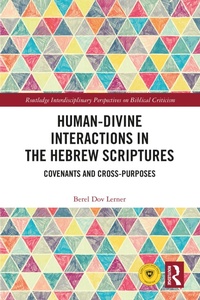
Human-Divine Interactions in the Hebrew Scriptures
Covenants and Cross-Purposes
1st Edition
Published on 22. September 2023
162 pages
978-1-000-95885-0 (ISBN)
Description

Rabbi Sacks Book Prize Finalist 2024.
This book addresses central theological issues and biblical narratives in terms of a bold thesis regarding relations between God and humans: that the actions of God and the actions of humans are informed by independently valid moral viewpoints which do not entirely overlap. The author suggests that God's plans and actions refl ect the interests and obligations appropriate to His goal of creating a worthy world, but not necessarily our world. In contrast, humans must attend to special obligations grounded in their dependence on their existing created world and in their particular places in the human family. However, in acts of grace, God voluntarily takes on special obligations toward the created world by entering covenants with its inhabitants. When the covenant involves reciprocal obligations, as in the case of God's covenant with Israel, it also recruits human beings to play conscious roles in God's larger plans. These covenants frame the moral parameters of human-divine interaction and cooperation in which each party strains to negotiate confl icts between its original duties and the new obligations generated by covenants. The interpretive discussions in this book involve close readings of the Hebrew text and are also informed by rabbinic tradition and Western philosophy. They address major issues that are of relevance to scholars of the bible, theology, and philosophy of religion, including the relationship between divine commands and morality, God's responsibility for human suff ering, God's role in history and the intersection between politics and religion.
This book addresses central theological issues and biblical narratives in terms of a bold thesis regarding relations between God and humans: that the actions of God and the actions of humans are informed by independently valid moral viewpoints which do not entirely overlap. The author suggests that God's plans and actions refl ect the interests and obligations appropriate to His goal of creating a worthy world, but not necessarily our world. In contrast, humans must attend to special obligations grounded in their dependence on their existing created world and in their particular places in the human family. However, in acts of grace, God voluntarily takes on special obligations toward the created world by entering covenants with its inhabitants. When the covenant involves reciprocal obligations, as in the case of God's covenant with Israel, it also recruits human beings to play conscious roles in God's larger plans. These covenants frame the moral parameters of human-divine interaction and cooperation in which each party strains to negotiate confl icts between its original duties and the new obligations generated by covenants. The interpretive discussions in this book involve close readings of the Hebrew text and are also informed by rabbinic tradition and Western philosophy. They address major issues that are of relevance to scholars of the bible, theology, and philosophy of religion, including the relationship between divine commands and morality, God's responsibility for human suff ering, God's role in history and the intersection between politics and religion.
More details
Series
Edition
1. Auflage
Language
English
Place of publication
London
United Kingdom
Publishing group
Taylor & Francis Ltd
Target group
College/higher education
File size
9,31 MB
ISBN-13
978-1-000-95885-0 (9781000958850)
Copyright in bibliographic data and cover images is held by Nielsen Book Services Limited or by the publishers or by their respective licensors: all rights reserved.
Schweitzer Classification
Other editions
Additional editions
Book
12/2024
1st Edition
Routledge
€62.70
Shipment within 10-20 days
Book
09/2023
1st Edition
Routledge
€205.80
Shipment within 10-20 days
Person
Berel Dov Lerner received his PhD in philosophy from Tel Aviv University. He is an associate professor at Western Galilee College in Israel.
Content
Introduction: About This Book and How to Read It
1. The Creator God and Humans in Cooperation and at Cross-purposes: the Flood, Sodom, and Imitatio Dei
2. Human Participation in Divine Plans: Eden, Divine Punishment, and the Betrothal of Rebekah
3. Responsible Rebels: Saul, Jonah, and Abraham Contend with God's Requests
4. God's Conversation with Satan is More Telling than His Answer from the Whirlwind in the Book of Job
5. Nations as Moral Communities: Why Babel was Dispersed and Israel Created
6. The Covenant of the Pieces and its Epistemological Implications for Biblical Historiography
7. Obscure Dreams and the Hiddenness of the Tetragrammaton Mark Divine Manipulation and the Loss of Human Knowledge as the Patriarchs Give Way to Joseph and his Brothers
8. Joseph the False Patriarch Executes Economic Policies which set the Stage for the Israelites' Enslavement in Egypt
9. "Harsh Work": Israelite Enslavement and the Loss of Temporality and Agency as Pharaoh's Failed Method of Population Control
10. The Paschal Sacrifice and the Sabbath Restore Israelite Temporality and Agency
11. The Battle at Refidim and How the Miraculous Foundations of Moses' Prophetic Authority Invited Idolatry and Required his Replacement by Joshua
12. Esther, Ruth, and Divine/Human Cooperation in a World Bereft of Miracles
1. The Creator God and Humans in Cooperation and at Cross-purposes: the Flood, Sodom, and Imitatio Dei
2. Human Participation in Divine Plans: Eden, Divine Punishment, and the Betrothal of Rebekah
3. Responsible Rebels: Saul, Jonah, and Abraham Contend with God's Requests
4. God's Conversation with Satan is More Telling than His Answer from the Whirlwind in the Book of Job
5. Nations as Moral Communities: Why Babel was Dispersed and Israel Created
6. The Covenant of the Pieces and its Epistemological Implications for Biblical Historiography
7. Obscure Dreams and the Hiddenness of the Tetragrammaton Mark Divine Manipulation and the Loss of Human Knowledge as the Patriarchs Give Way to Joseph and his Brothers
8. Joseph the False Patriarch Executes Economic Policies which set the Stage for the Israelites' Enslavement in Egypt
9. "Harsh Work": Israelite Enslavement and the Loss of Temporality and Agency as Pharaoh's Failed Method of Population Control
10. The Paschal Sacrifice and the Sabbath Restore Israelite Temporality and Agency
11. The Battle at Refidim and How the Miraculous Foundations of Moses' Prophetic Authority Invited Idolatry and Required his Replacement by Joshua
12. Esther, Ruth, and Divine/Human Cooperation in a World Bereft of Miracles
