

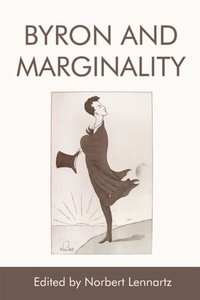
Byron and Marginality
Description

Explores Byron as the figurehead of Romanticism and the writer of provocatively ''marginal'' texts
This book approaches Byron from a completely new angle: no longer seen in terms of his status as a celebrity and a star on the book-selling market, Byron is instead seen as an outsider both in Regency society and, even more so, for his iconoclastic views of life and literature. Pilgrims in pursuit of non-existing shrines, women as man-eating giants and viragos, cannibalism, suicide, black humour and other provocatively border-crossing topics leave scholars hopelessly at a loss as to where they should categorise Byron and what they should do with his penchant for marginal themes, genres and characters. Byron caters to numerous Romantic clichés (weltschmerz, melancholy, subjectivity), while simultaneously reverting to genres, themes and motifs that cast him as a pre- or even anti-Romantic. This collection will trigger new debates in Byron scholarship and show that terms such as canonicity and marginality tend to be blurry and stand in constant need of re-negotiation.
Key Features:
- Re-reads Byron''s heterogeneous texts
- Foregrounds Byron''s marginal texts, the margins from which they were written and the thematic marginalities they deal with
- Re-evalutates Romanticism in the light of marginality
- Pinpoints the interface between Classicism, Romanticism and Modernity
More details
Other editions
Additional editions
Content
- Intro
- Foreword
- Acknowledgements
- Editions and Abbreviations
- Chapter 1 Lord Byron, Wandering and Wavering between the Centres and Margins of Romanticism: An Attempt at an Introduction
- I. Byron's Marginalisation in Romantic World Literature
- Chapter 2 Byron and Weltliteratur
- Chapter 3 Reshaping the Romantic Canon from the Margins: The Medial Construction of 'Byron' in Childe Harold's Pilgrimage
- Chapter 4 Byron and Romantic Period Neoclassicism
- II. Byron's Marginal Identities and Places
- Chapter 5 'When a man talks of system, his case is hopeless': Byron at the Margins of Romantic Counterculture
- Chapter 6 At the Margins of Europe: Byron's East Revisited and The Giaour
- Chapter 7 Literary Forefathers: Byron's Marginalia in Isaac D'Israeli's Literary Character of Men of Genius
- III. Cherishing the Marginal - Marginal Genres in Byron
- Chapter 8 'Like a Flash of Inspiration': Byron's Marginalised Lyricism in Hebrew Melodies
- Chapter 9 Out of Romanticism: Byron and Romance
- Chapter 10 The Margins of Genius: Byron, Nationalism and the Periodical Reviews
- IV. On the Provocative Margins of Taste
- Chapter 11 'Stand not on that brink!': Byron, Gender and Romantic Suicide
- Chapter 12 Byron and the Good Death
- Chapter 13 At the Margins of Romanticism: The Women of Don Juan's English Cantos
- V. Marginal Affairs - Visual and Paratextual Aspects in Byron
- Chapter 14 A Marginal Interest? Byron and the Fine Arts
- Chapter 15 'I ask his pardon for a postscript': Byron's Epistolary Afterthoughts
- List of Contributors
- Index
