

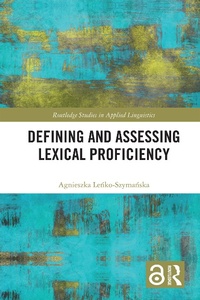
Defining and Assessing Lexical Proficiency
1st Edition
Published on 5. November 2019
276 pages
978-1-000-71179-0 (ISBN)
Description

This comprehensive account of performance-based assessment of L2 lexical proficiency analyzes and compares two of the primary methods of evaluation used in the field and unpacks the ways in which they tap into different dimensions of one model of lexical competence and proficiency.
This book builds on the latest research on performance-based assessment, which has most recently pointed to the application of more quantitative measures to L2 data, to systematically explore the qualitative method of using human raters in assessment exercises and the quantitative method of using automatic computation of statistical measures of lexis and phraseology. Supported by an up-to-date review of the existing literature, both approaches' unique features are highlighted but also compared to one another to provide a holistic overview of performance-based assessment as it stands today at both the theoretical and empirical level. These findings are exemplified in a concluding chapter, which summarizes results from an empirical study looking at a range of lexical and phraseological features and human raters' scores of over 150 essays written by both L2 learners of English and native speakers. Taken together, the volume challenges existing tendencies within the field which attempt to use one method to validate one another by demonstrating their capacity to indicate very different elements of lexical proficiency, thereby offering a means by which to better conceptualize performance-based assessment of L2 vocabulary in the future.
This book will be of interest to students and researchers working in second language acquisition and applied linguistics research, particularly those interested in issues around assessment, vocabulary acquisition, and language proficiency.
The Open Access version of this book, available at http://www.taylorfrancis.com, has been made available under a CC BY NC ND 4.0 license.
This book builds on the latest research on performance-based assessment, which has most recently pointed to the application of more quantitative measures to L2 data, to systematically explore the qualitative method of using human raters in assessment exercises and the quantitative method of using automatic computation of statistical measures of lexis and phraseology. Supported by an up-to-date review of the existing literature, both approaches' unique features are highlighted but also compared to one another to provide a holistic overview of performance-based assessment as it stands today at both the theoretical and empirical level. These findings are exemplified in a concluding chapter, which summarizes results from an empirical study looking at a range of lexical and phraseological features and human raters' scores of over 150 essays written by both L2 learners of English and native speakers. Taken together, the volume challenges existing tendencies within the field which attempt to use one method to validate one another by demonstrating their capacity to indicate very different elements of lexical proficiency, thereby offering a means by which to better conceptualize performance-based assessment of L2 vocabulary in the future.
This book will be of interest to students and researchers working in second language acquisition and applied linguistics research, particularly those interested in issues around assessment, vocabulary acquisition, and language proficiency.
The Open Access version of this book, available at http://www.taylorfrancis.com, has been made available under a CC BY NC ND 4.0 license.
More details
Series
Edition
1. Auflage
Language
English
Place of publication
London
United Kingdom
Publishing group
Taylor & Francis Ltd
Target group
College/higher education
Illustrations
33 Tables, black and white; 8 Line drawings, black and white; 8 Illustrations, black and white
File size
3,20 MB
ISBN-13
978-1-000-71179-0 (9781000711790)
Copyright in bibliographic data and cover images is held by Nielsen Book Services Limited or by the publishers or by their respective licensors: all rights reserved.
Schweitzer Classification
Other editions
Additional editions
Agnieszka Lenko-Szymanska
Defining and Assessing Lexical Proficiency
Book
06/2021
1st Edition
Routledge
€68.00
Shipment within 10-20 days
Agnieszka Lenko-Szymanska
Defining and Assessing Lexical Proficiency
Book
11/2019
1st Edition
Routledge
€206.60
Shipment within 15-20 days
Person
Agnieszka Lenko-Szymanska is Assistant Professor at the Institute of Applied Linguistics at the University of Warsaw, Poland.
Content
Table of contents
Introduction
Chapter 1: Lexical competence and lexical proficiency
1.1. Introduction
1.2. Preliminary definitions
1.2.1. Communicative competence, language ability and language proficiency
1.2.2. Cognitive linguistic models of language
1.2.3. Aspects of language proficiency
1.3.4. Approaches to the description of lexical competence
1.3. Word-centred approaches to the description of lexical competence
1.3.1. Components of word knowledge
1.3.2. Degrees of word knowledge
1.4. Lexicon-centred approaches to the description of lexical competence
1.5. Lexical competence vs. lexical proficiency
1.6. Lexical competence, lexical proficiency and phraseology
1.7. Conclusion
Chapter 2: Lexical assessment methods
2.1. Introduction
2.2. Definition and qualities of a language test
2.3. Tasks assessing lexical proficiency
2.4. Task formats
2.4.1. Discrete-point tasks
2.4.2. Integrative tasks
2.4.3. Communicative tasks
2.5. Vocabulary tests
2.5.1. Vocabulary testing for educational purposes
2.5.2. Vocabulary testing for research purposes
2.6. Conclusion
Chapter 3: Performance-based assessment of lexical proficiency
3.1. Introduction
3.2. Performance assessment
3.3. The process of writing assessment
3.3.1. Instrument
3.3.2. Raters
3.3.3. Scales
3.4. Vocabulary in writing assessment scales in education
3.4.1. Holistic scales
3.4.2. Analytic scales
3.5. Analytic scales for the assessment of vocabulary in education
3.6. Vocabulary assessment scales for research purposes
3.7. Extraneous variables in the assessment process
3.7.1. Influence of the tasks
3.7.2. Influence of the scales
3.7.3. Influence of the raters
3.8. Conclusion
Chapter 4: Statistical measures of lexical proficiency
4.1. Introduction
4.2. Lexical measures of fluency and measures of lexical productivity
4.3. Measures of lexical accuracy
4.4. Measures of lexical complexity
4.4.1. Lexical diversity (variation)
4.4.2. Lexical sophistication
4.4.3. Older measures: Lexical density and lexical originality
4.4.4. More recent measures: Word psychological properties and semantic relations
4.4.5 Phraseological measures
4.5. Conclusion
Chapter 5: Statistical measures and raters' scores of L2 production - review of literature
5.1. Introduction
5.2. Lexical measures for discriminating between different proficiency levels
5.3. Lexical measures vs. raters' scores
5.3.1. Correlational studies
5.3.2. Regression studies
5.3.3. Analytic scores of lexical proficiency
5.4. Conclusion
Chapter 6: The study - measuring and assessing lexical proficiency of advanced learners
6.1. Introduction
6.2. Research questions
6.3. Subjects and instruments
6.3.1. Essays
6.3.2. Vocabulary tests
6.4. Data
6.4.1. Lexical indices
6.4.2. Raters' grades
6.4.3. Vocabulary test scores
6.4.4. Interviews
6.5. Data analysis
6.5.1. Analysis 1 - relationships between the indices
6.5.2. Analysis 2 - comparison of the indices between the groups
6.5.3. Analysis 3 - prediction of group membership based on selected indices
6.5.4. Analyses 4 and 5 - relationships between the raters' grades and their comparison between the groups
6.5.5. Analysis 6 - relationships between the raters' grades and the indices
6.5.6. Analysis 7 - prediction of the raters' grades based on selected indices
6.5.7. Analysis 8 and 9 - comparison of vocabulary scores and their relationships with the indices and the raters' grades
6.5.8. Analysis 10 - interviews
6.6. Discussion and conclusion
Conclusions
7.1. Human scores vs. statistical lexical and phraseological indices - reappraisal
7.2. An extended model of lexical competence and lexical proficiency for assessment purposes
Acknowledgements
References
Introduction
Chapter 1: Lexical competence and lexical proficiency
1.1. Introduction
1.2. Preliminary definitions
1.2.1. Communicative competence, language ability and language proficiency
1.2.2. Cognitive linguistic models of language
1.2.3. Aspects of language proficiency
1.3.4. Approaches to the description of lexical competence
1.3. Word-centred approaches to the description of lexical competence
1.3.1. Components of word knowledge
1.3.2. Degrees of word knowledge
1.4. Lexicon-centred approaches to the description of lexical competence
1.5. Lexical competence vs. lexical proficiency
1.6. Lexical competence, lexical proficiency and phraseology
1.7. Conclusion
Chapter 2: Lexical assessment methods
2.1. Introduction
2.2. Definition and qualities of a language test
2.3. Tasks assessing lexical proficiency
2.4. Task formats
2.4.1. Discrete-point tasks
2.4.2. Integrative tasks
2.4.3. Communicative tasks
2.5. Vocabulary tests
2.5.1. Vocabulary testing for educational purposes
2.5.2. Vocabulary testing for research purposes
2.6. Conclusion
Chapter 3: Performance-based assessment of lexical proficiency
3.1. Introduction
3.2. Performance assessment
3.3. The process of writing assessment
3.3.1. Instrument
3.3.2. Raters
3.3.3. Scales
3.4. Vocabulary in writing assessment scales in education
3.4.1. Holistic scales
3.4.2. Analytic scales
3.5. Analytic scales for the assessment of vocabulary in education
3.6. Vocabulary assessment scales for research purposes
3.7. Extraneous variables in the assessment process
3.7.1. Influence of the tasks
3.7.2. Influence of the scales
3.7.3. Influence of the raters
3.8. Conclusion
Chapter 4: Statistical measures of lexical proficiency
4.1. Introduction
4.2. Lexical measures of fluency and measures of lexical productivity
4.3. Measures of lexical accuracy
4.4. Measures of lexical complexity
4.4.1. Lexical diversity (variation)
4.4.2. Lexical sophistication
4.4.3. Older measures: Lexical density and lexical originality
4.4.4. More recent measures: Word psychological properties and semantic relations
4.4.5 Phraseological measures
4.5. Conclusion
Chapter 5: Statistical measures and raters' scores of L2 production - review of literature
5.1. Introduction
5.2. Lexical measures for discriminating between different proficiency levels
5.3. Lexical measures vs. raters' scores
5.3.1. Correlational studies
5.3.2. Regression studies
5.3.3. Analytic scores of lexical proficiency
5.4. Conclusion
Chapter 6: The study - measuring and assessing lexical proficiency of advanced learners
6.1. Introduction
6.2. Research questions
6.3. Subjects and instruments
6.3.1. Essays
6.3.2. Vocabulary tests
6.4. Data
6.4.1. Lexical indices
6.4.2. Raters' grades
6.4.3. Vocabulary test scores
6.4.4. Interviews
6.5. Data analysis
6.5.1. Analysis 1 - relationships between the indices
6.5.2. Analysis 2 - comparison of the indices between the groups
6.5.3. Analysis 3 - prediction of group membership based on selected indices
6.5.4. Analyses 4 and 5 - relationships between the raters' grades and their comparison between the groups
6.5.5. Analysis 6 - relationships between the raters' grades and the indices
6.5.6. Analysis 7 - prediction of the raters' grades based on selected indices
6.5.7. Analysis 8 and 9 - comparison of vocabulary scores and their relationships with the indices and the raters' grades
6.5.8. Analysis 10 - interviews
6.6. Discussion and conclusion
Conclusions
7.1. Human scores vs. statistical lexical and phraseological indices - reappraisal
7.2. An extended model of lexical competence and lexical proficiency for assessment purposes
Acknowledgements
References
