

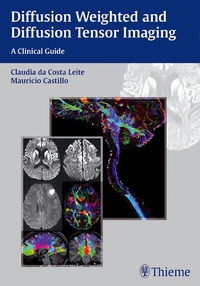
Diffusion Weighted and Diffusion Tensor Imaging
Description

Diffusion-weighted imaging (DWI) is an integral part of routine neuroimaging, used nearly universally in brain MRIs, and more recently for the spine, spinal cord, and head and neck. DWI provides clinically relevant information on conditions including stroke, infection, and neoplasms. Diffusion tensor imaging (DTI) is a powerful, newer technique with the potential for multiple protocols, including the diagnosis of mild traumatic brain injury and psychiatric disorders.
Written by leading authorities in neuroradiology and radiology, Diffusion Weighted and Diffusion Tensor Imaging: A Clinical Guide provides key points and summaries on the concepts and applications required for proper implementation and interpretation of DWI and DTI.
Key Features:
- More than 600 high-quality illustrations
- Protocols and applications from early childhood to older adulthood
- Methods to differentiate normal versus pathological states
- Brain edema pathophysiology and use of DWI to distinguish between cytotoxic and vasogenic edema
- Utilization of DWI and DTI to diagnose trauma, white matter disease, tumors, cerebrovascular disease, and head, neck, and spine disorders
This concise handbook is an invaluable resource for neuro-radiologists and radiologists, as well as fellows and residents in these disciplines. With the expanding use of these procedures, neuroscientists, neurologists, neurosurgeons, and psychiatrists will also find it indispensable.
More details
Other editions
Additional editions

Content
1 Physics of Diffusion Weighted and Diffusion Tensor Imaging
2 Brain Edema: Pathophysiology
3 Supratentorial White Matter Tracts and Their Organization
4 Diffusion Weighted Imaging and Diffusion Tensor Imaging of the Brain during Early Brain Development: The First Two Years of Life
5 Diffusion Weighted and Diffusion Tensor Imaging in Aging
6 Diffusion Weighted Imaging in Vascular Pathology
7 Diffusion Weighted Imaging in the Evaluation of Brain Tumors
8 Diffusion Weighted and Diffusion Tensor Imaging in Infectious Diseases
9 Diffusion Weighted Imaging and Diffusion Tensor Imaging in Demyelination and Toxic Diseases
10 Diffusion Weighted Imaging and Diffusion Tensor Imaging of White Matter Diseases In Children
11 Diffusion Imaging for the Assessment of Traumatic Brain Injury
12 Diffusion Weighted Imaging in Hemorrhage
13 Diffusion Weighted Imaging and Diffusion Tensor Imaging in Spine and Spinal Cord Diseases
14 Diffusion Weighted Imaging and Diffusion Tensor Imaging in Head and Neck Diseases
15 Future Applications of Diffusion Weighted Imaging: Diffusional Kurtosis and Other Nongaussian Diffusion Techniques
