

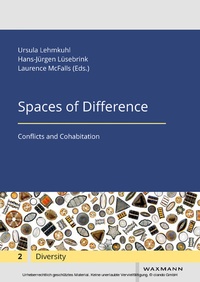
Spaces of Difference
Conflicts and Cohabitation
1st Edition
Published on 1. March 2016
260 pages
978-3-8309-8385-9 (ISBN)
Description

Spaces of Difference discusses the construction of transcultural spaces and the representation and negotiation of diversity through the analytical lenses of narratives, practices and politics of diversity. The multi-disciplinary contributions to this volume address four broader research fields: (1) the entangled and contested (hi)stories of diversity; (2) migration and the creation of transcultural spaces; (3) practices and politics of belonging; and (4) the dynamics of confrontation and cohabitation in spaces of difference. The research presented in this volume combines approaches from history, political science, sociology, migration studies and literature.
More details
Other editions
Additional editions
Ursula Lehmkuhl | Hans-Jürgen Lüsebrink | Laurence McFalls
Spaces of Difference
Conflicts and Cohabitation
Book
03/2016
1st Edition
Waxmann
€32.90
Shipment within 7-9 days
Content
1 - Book Cover [Seite 1]
1.1 - Table of Contents [Seite 5]
2 - Spaces of Difference: Conflict and Cohabitation (Ursula Lehmkuhl) [Seite 7]
2.1 - Introduction [Seite 7]
2.2 - Space/Place [Seite 9]
2.3 - Mediation/Translation [Seite 10]
2.4 - Modes of Social Action: Politics, Practices and Narratives of Diversity [Seite 10]
2.5 - Entangled and Hidden Histories [Seite 13]
2.6 - Border Crossings and Transcultural Spaces [Seite 15]
2.7 - Becoming and Belonging [Seite 17]
2.8 - Dynamics of Confrontation and Cohabitation [Seite 18]
2.9 - References [Seite 20]
3 - Diversités controversées : Concepts,imaginaires et représentations au Canadaau début du 20e siècle (Hans-Jürgen Lüsebrink) [Seite 27]
3.1 - Le contexte socio-historique: les débats autour du Règlement 17 en Ontario (1912-1927) [Seite 27]
3.2 - Logiques et sémantiques d'un contre-discours [Seite 32]
3.3 - Fictionnalisations d'une pensée de la diversité: le roman Polly Masson (1919) de William Henry Moore [Seite 37]
3.4 - « Conflit de races » et conception plurielle de la nation [Seite 42]
3.5 - Bibliographie [Seite 44]
4 - Diversity: A Late 20th Century Genealogy (Laurence McFalls) [Seite 47]
4.1 - Introduction [Seite 47]
4.2 - Culture as Diversity [Seite 48]
4.3 - Diversity, Vulnerability, and Post-liberal Governmentality [Seite 52]
4.4 - References [Seite 57]
5 - A Geography of Blood: Uncovering the Hidden Histories of Metis People in Canada (Carolyn Podruchny and Jesse Thistle) [Seite 61]
5.1 - Introduction [Seite 61]
5.2 - Historiography and Colonization in Canada [Seite 62]
5.3 - Finding Space In Between [Seite 64]
5.4 - Occupying Space and Creating Place: A Bloody Process [Seite 67]
5.5 - Reclaiming Morrissette Family History [Seite 68]
5.6 - Conclusion [Seite 75]
5.7 - References [Seite 75]
5.8 - Source Material [Seite 78]
6 - The Everyday Experience(s) of Space: First generation Algerian Immigrant Women in Paris (Rebecca Ferrari) [Seite 83]
6.1 - Introduction [Seite 83]
6.2 - Spatial Practices - The Creation of Exterior and Interior Places [Seite 86]
6.3 - Showcasing Wealth and Cleanliness [Seite 89]
6.4 - Spatial Norms and Rules [Seite 92]
6.5 - Creating and Sharing Common (Female) Spaces [Seite 93]
6.6 - « Non-lieux » as Comfortable Public Places [Seite 94]
6.7 - Associations as In-between Spaces [Seite 95]
6.8 - Conclusion [Seite 98]
6.9 - References [Seite 99]
7 - Biography en route: Investigating Mobility. Experiences through Biographical Research (Xymena Wieczorek) [Seite 101]
7.1 - Introduction [Seite 102]
7.2 - Studying Mobile Biographies [Seite 103]
7.3 - Operationalizing Mobility through Biography [Seite 106]
7.4 - The Mobility of Francis: "Yeah, yeah, we don't stay in one place" [Seite 107]
7.5 - Interpreting Mobility through Biography [Seite 116]
7.6 - Conclusion [Seite 119]
7.7 - References [Seite 120]
8 - Beyond the Political Opportunity Structure Approach: Studying Agency through the "Local Realm of Immigration" (M. Teresa Cappiali) [Seite 125]
8.1 - Introduction [Seite 126]
8.2 - Strengths and Limitations of the Political Opportunity Structure Approach in Explaining Participation [Seite 126]
8.3 - Expanding the Political Arena beyond the State: The Role of Multiple Actors and the Concept of Space [Seite 129]
8.4 - The Literature on Integration and the Role of Approaches to Integration for Participation [Seite 131]
8.5 - The Local Turn in Immigration Studies [Seite 134]
8.6 - Studying Civic and Political Participation as a Continuum [Seite 137]
8.7 - The "Local Realm of Immigration": An Agency Approach [Seite 145]
8.8 - References [Seite 147]
9 - "La loi du Camembert" as an Issue of Federalism: Reconciling Liberalism and Protectionism in Quebec (Sophie Schram) [Seite 155]
9.1 - Introduction [Seite 156]
9.2 - A Theory of National Boundaries and Cultural Repertoires [Seite 158]
9.3 - National Development: A Tale of Two Incommensurate Discourses [Seite 160]
9.4 - Federalism: A Repertoire Reconciling Liberalism and Protectionism [Seite 168]
9.5 - Conclusion: Resolving the Conundrum [Seite 174]
9.6 - Annex [Seite 175]
9.7 - References [Seite 176]
9.8 - Source Material [Seite 178]
10 - Nationhood as a Context for Staging Personas: A Sociological Narrative of Montreal and Brussels (Dave Poitras) [Seite 181]
10.1 - Introduction [Seite 181]
10.2 - Nationhood as a Context for Staging Personas [Seite 184]
10.3 - The Appointed Frame-limits of the Work Environments [Seite 191]
10.4 - Jeroen's and Mathieu's Motives [Seite 192]
10.5 - The Dynamic of the Staging Phenomenon with Regard to Nationhood [Seite 195]
10.6 - Conclusion [Seite 197]
10.7 - References [Seite 198]
10.8 - Source Material [Seite 199]
11 - Border Policies: From Denizens to Legal Ghosts (Chowra Makaremi) [Seite 203]
11.1 - Introduction [Seite 203]
11.2 - Waiting Zones for People in Proceedings [Seite 205]
11.3 - New Borders: Reticular, Thick and Liquid [Seite 206]
11.4 - Networks of Confinement [Seite 207]
11.5 - The Border Effect of Detention [Seite 209]
11.6 - Legal Apparatuses of Exclusion [Seite 211]
11.7 - Precarious Lives [Seite 212]
11.8 - Violence and the Law [Seite 213]
11.9 - References [Seite 214]
12 - La mobilisation des différences minoritaires: des dynamiques conflictuelles au-delà de l'ethnicitéen France et en Allemagne (Nikola Tietze) [Seite 217]
12.1 - Introduction [Seite 218]
12.2 - La construction d'une appartenance et la mobilisation des différences minoritaires [Seite 221]
12.3 - De la résilience à la capacité critique [Seite 224]
12.4 - En guise de conclusion: des dynamiques conflictuelles au-delà de l'ethnicité [Seite 226]
12.5 - Bibliographie [Seite 230]
13 - Situated Cosmopolitanisms in Contemporary Indigenous Art Productions in Canada (Heike Härting) [Seite 231]
13.1 - Introduction [Seite 231]
13.2 - Indigenizing Cosmopolitan Thinking [Seite 233]
13.3 - Global Indigenous Art and Cosmopolitan Aesthetics: Jackson 2bears, Kent Monkman, and Rebecca Belmore [Seite 239]
13.4 - References [Seite 250]
14 - Notes on Contributors [Seite 253]
1.1 - Table of Contents [Seite 5]
2 - Spaces of Difference: Conflict and Cohabitation (Ursula Lehmkuhl) [Seite 7]
2.1 - Introduction [Seite 7]
2.2 - Space/Place [Seite 9]
2.3 - Mediation/Translation [Seite 10]
2.4 - Modes of Social Action: Politics, Practices and Narratives of Diversity [Seite 10]
2.5 - Entangled and Hidden Histories [Seite 13]
2.6 - Border Crossings and Transcultural Spaces [Seite 15]
2.7 - Becoming and Belonging [Seite 17]
2.8 - Dynamics of Confrontation and Cohabitation [Seite 18]
2.9 - References [Seite 20]
3 - Diversités controversées : Concepts,imaginaires et représentations au Canadaau début du 20e siècle (Hans-Jürgen Lüsebrink) [Seite 27]
3.1 - Le contexte socio-historique: les débats autour du Règlement 17 en Ontario (1912-1927) [Seite 27]
3.2 - Logiques et sémantiques d'un contre-discours [Seite 32]
3.3 - Fictionnalisations d'une pensée de la diversité: le roman Polly Masson (1919) de William Henry Moore [Seite 37]
3.4 - « Conflit de races » et conception plurielle de la nation [Seite 42]
3.5 - Bibliographie [Seite 44]
4 - Diversity: A Late 20th Century Genealogy (Laurence McFalls) [Seite 47]
4.1 - Introduction [Seite 47]
4.2 - Culture as Diversity [Seite 48]
4.3 - Diversity, Vulnerability, and Post-liberal Governmentality [Seite 52]
4.4 - References [Seite 57]
5 - A Geography of Blood: Uncovering the Hidden Histories of Metis People in Canada (Carolyn Podruchny and Jesse Thistle) [Seite 61]
5.1 - Introduction [Seite 61]
5.2 - Historiography and Colonization in Canada [Seite 62]
5.3 - Finding Space In Between [Seite 64]
5.4 - Occupying Space and Creating Place: A Bloody Process [Seite 67]
5.5 - Reclaiming Morrissette Family History [Seite 68]
5.6 - Conclusion [Seite 75]
5.7 - References [Seite 75]
5.8 - Source Material [Seite 78]
6 - The Everyday Experience(s) of Space: First generation Algerian Immigrant Women in Paris (Rebecca Ferrari) [Seite 83]
6.1 - Introduction [Seite 83]
6.2 - Spatial Practices - The Creation of Exterior and Interior Places [Seite 86]
6.3 - Showcasing Wealth and Cleanliness [Seite 89]
6.4 - Spatial Norms and Rules [Seite 92]
6.5 - Creating and Sharing Common (Female) Spaces [Seite 93]
6.6 - « Non-lieux » as Comfortable Public Places [Seite 94]
6.7 - Associations as In-between Spaces [Seite 95]
6.8 - Conclusion [Seite 98]
6.9 - References [Seite 99]
7 - Biography en route: Investigating Mobility. Experiences through Biographical Research (Xymena Wieczorek) [Seite 101]
7.1 - Introduction [Seite 102]
7.2 - Studying Mobile Biographies [Seite 103]
7.3 - Operationalizing Mobility through Biography [Seite 106]
7.4 - The Mobility of Francis: "Yeah, yeah, we don't stay in one place" [Seite 107]
7.5 - Interpreting Mobility through Biography [Seite 116]
7.6 - Conclusion [Seite 119]
7.7 - References [Seite 120]
8 - Beyond the Political Opportunity Structure Approach: Studying Agency through the "Local Realm of Immigration" (M. Teresa Cappiali) [Seite 125]
8.1 - Introduction [Seite 126]
8.2 - Strengths and Limitations of the Political Opportunity Structure Approach in Explaining Participation [Seite 126]
8.3 - Expanding the Political Arena beyond the State: The Role of Multiple Actors and the Concept of Space [Seite 129]
8.4 - The Literature on Integration and the Role of Approaches to Integration for Participation [Seite 131]
8.5 - The Local Turn in Immigration Studies [Seite 134]
8.6 - Studying Civic and Political Participation as a Continuum [Seite 137]
8.7 - The "Local Realm of Immigration": An Agency Approach [Seite 145]
8.8 - References [Seite 147]
9 - "La loi du Camembert" as an Issue of Federalism: Reconciling Liberalism and Protectionism in Quebec (Sophie Schram) [Seite 155]
9.1 - Introduction [Seite 156]
9.2 - A Theory of National Boundaries and Cultural Repertoires [Seite 158]
9.3 - National Development: A Tale of Two Incommensurate Discourses [Seite 160]
9.4 - Federalism: A Repertoire Reconciling Liberalism and Protectionism [Seite 168]
9.5 - Conclusion: Resolving the Conundrum [Seite 174]
9.6 - Annex [Seite 175]
9.7 - References [Seite 176]
9.8 - Source Material [Seite 178]
10 - Nationhood as a Context for Staging Personas: A Sociological Narrative of Montreal and Brussels (Dave Poitras) [Seite 181]
10.1 - Introduction [Seite 181]
10.2 - Nationhood as a Context for Staging Personas [Seite 184]
10.3 - The Appointed Frame-limits of the Work Environments [Seite 191]
10.4 - Jeroen's and Mathieu's Motives [Seite 192]
10.5 - The Dynamic of the Staging Phenomenon with Regard to Nationhood [Seite 195]
10.6 - Conclusion [Seite 197]
10.7 - References [Seite 198]
10.8 - Source Material [Seite 199]
11 - Border Policies: From Denizens to Legal Ghosts (Chowra Makaremi) [Seite 203]
11.1 - Introduction [Seite 203]
11.2 - Waiting Zones for People in Proceedings [Seite 205]
11.3 - New Borders: Reticular, Thick and Liquid [Seite 206]
11.4 - Networks of Confinement [Seite 207]
11.5 - The Border Effect of Detention [Seite 209]
11.6 - Legal Apparatuses of Exclusion [Seite 211]
11.7 - Precarious Lives [Seite 212]
11.8 - Violence and the Law [Seite 213]
11.9 - References [Seite 214]
12 - La mobilisation des différences minoritaires: des dynamiques conflictuelles au-delà de l'ethnicitéen France et en Allemagne (Nikola Tietze) [Seite 217]
12.1 - Introduction [Seite 218]
12.2 - La construction d'une appartenance et la mobilisation des différences minoritaires [Seite 221]
12.3 - De la résilience à la capacité critique [Seite 224]
12.4 - En guise de conclusion: des dynamiques conflictuelles au-delà de l'ethnicité [Seite 226]
12.5 - Bibliographie [Seite 230]
13 - Situated Cosmopolitanisms in Contemporary Indigenous Art Productions in Canada (Heike Härting) [Seite 231]
13.1 - Introduction [Seite 231]
13.2 - Indigenizing Cosmopolitan Thinking [Seite 233]
13.3 - Global Indigenous Art and Cosmopolitan Aesthetics: Jackson 2bears, Kent Monkman, and Rebecca Belmore [Seite 239]
13.4 - References [Seite 250]
14 - Notes on Contributors [Seite 253]
