

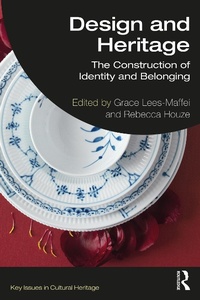
Design and Heritage
The Construction of Identity and Belonging
1st Edition
Published on 29. December 2021
310 pages
978-1-000-52872-5 (ISBN)
Description

Design and Heritage provides the first extended study of heritage from the point of view of design history. Exploring the material objects and spaces that contribute to our experience of heritage, the volume also examines the processes and practices that shape them.
Bringing together 18 case studies, written by authors from the United States, the United Kingdom, Canada, Brazil, Norway, India, South Africa, Australia and New Zealand, the book questions how design functions to produce heritage. Including provocative case studies of objects that reinterpret visual symbols of cultural identity and buildings and monuments that evoke feelings of national pride and historical memory, as well as landscapes embedded with trauma, contributors consider how we can work to develop adequate shared conceptual models of heritage and apply them to design and its histories. Exploring the distinction between tangible and intangible heritages, the chapters consider what these categories mean for design history and heritage. Finally, the book questions whether it might be possible to promote a truly equitable understanding of heritage that illuminates the social, cultural and economic roles of design.
Design and Heritage demonstrates that design historical methods of inquiry contribute significantly to critical heritage studies. Academics, researchers and students engaged in the study of heritage, design history, material culture, folklore, art history, architectural history and social and cultural history will find much to interest them within the pages of the book.
Bringing together 18 case studies, written by authors from the United States, the United Kingdom, Canada, Brazil, Norway, India, South Africa, Australia and New Zealand, the book questions how design functions to produce heritage. Including provocative case studies of objects that reinterpret visual symbols of cultural identity and buildings and monuments that evoke feelings of national pride and historical memory, as well as landscapes embedded with trauma, contributors consider how we can work to develop adequate shared conceptual models of heritage and apply them to design and its histories. Exploring the distinction between tangible and intangible heritages, the chapters consider what these categories mean for design history and heritage. Finally, the book questions whether it might be possible to promote a truly equitable understanding of heritage that illuminates the social, cultural and economic roles of design.
Design and Heritage demonstrates that design historical methods of inquiry contribute significantly to critical heritage studies. Academics, researchers and students engaged in the study of heritage, design history, material culture, folklore, art history, architectural history and social and cultural history will find much to interest them within the pages of the book.
Reviews / Votes
"This timely volume brings together parallel strands in design history and heritage studies, arguing cogently for the ways in which each might inform the other. In doing so, it emphasises how heritage - and its futures - are designed, and points towards new directions for research and practice in both fields."~ Rodney Harrison, Professor of Heritage Studies, University College London, UK
"The intersections between heritage and design theories and practices have been surprisingly little explored in either heritage studies or design history. This book, edited by Grace Lees-Maffei and Rebecca Houze, goes a long way towards filling that gap. Following an insightful framework-setting chapter by the editors, an expert set of contributors cover a wide range of design/heritage types from monuments and memorials, cultural landscapes and gardens to dress, textiles, timber products and ceramics. The writers come from a variety of disciplinary contexts and engage impressively with case study material deriving from all continents."
~ William Logan, Professor Emeritus, Deakin University, Australia
"This timely, intellectually engaging and inspirational book focuses on exploring the visual aspects of heritage - from the postcards we send on holiday, to the souvenirs we buy in the museum shop, to the creation of our wedding dress. En route we revisit Old Masters, new technologies, and the built environment. Seen through the prism of design, the richness of material culture presented in this book draws the reader into the engendering and decolonising narratives it embodies. Focusing on a variety of themes - including monuments and materials; landscape, place and visitors experience; craft and industry; textiles and dress; graphics; and digitisation - the book makes a compelling case for the role design plays in the multi-vocality of heritage."
~ Liliana Janik, Deputy Director, Cambridge Heritage Research Centre, University of Cambridge, UK
"All of the contributions in this volume are extremely informative and instructive, both in content and at the conceptual level, because of their thorough interrogation of the respective historical context. They thus provide an in-depth insight into the history and genesis of design as part of heritage issues. For design and heritage researchers, this volume is essential reading. For others, it provides an exciting introduction to the subject."
~ Journal of Design History
"All of the contributions in this volume are extremely informative and instructive, both in content and at the conceptual level, because of their thorough interrogation of the respective historical context. They thus provide an in-depth insight into the history and genesis of design as part of heritage issues. For design and heritage researchers, this volume is essential reading. For others, it provides an exciting introduction to the subject."
~ Gabriele Mentges, Professor of Anthropology of Textiles and Material Culture, Institute of Art and Material Culture, Technische Universitaet Dortmund, Germany. Journal of Design History, https://doi.org/10.1093/jdh/epac034.
"Design and Heritage, an edited volume with eighteen essays, addresses the multifaceted definitions of these two research areas, expanding on their interconnectedness as academic fields and material cultures and arguing that design and heritage each shape and influence the other in profound ways. The book includes viewpoints from a range of geographic, cultural, and social contexts. This book serves as a solid foundation for fostering more geographically and culturally diverse studies of critical heritage and design history. Each essay challenges the reader to question the political and social implications of design in new and meaningful ways, reflecting on who designs our heritage (objects and experiences) and for whom, as well as whose narratives are used to create national identities. Design and heritage are inherently political; history shows that both can be used to cultivate respect for cultural and social diversity, foster exclusion and misrepresentation, or promote political agendas that lead to ethnic cleansing. This book connects these ideas, highlighting the serious implications of practices of design and heritage that aspire towards creating equitable futures or perpetuate contemporary versions of societal horrors like neocolonization and classism."
~ Anmol Shrivastava, Design and Culture, https://doi.org/10.1080/17547075.2024.2387880
More details
Series
Edition
1. Auflage
Language
English
Place of publication
London
United Kingdom
Publishing group
Taylor & Francis Ltd
Target group
College/higher education
Illustrations
2 Line drawings, black and white; 34 Halftones, black and white; 36 Illustrations, black and white
ISBN-13
978-1-000-52872-5 (9781000528725)
Copyright in bibliographic data and cover images is held by Nielsen Book Services Limited or by the publishers or by their respective licensors: all rights reserved.
Schweitzer Classification
Other editions
Additional editions

Book
12/2021
1st Edition
Routledge
€206.90
Shipment within 15-20 days
Book
12/2021
1st Edition
Routledge
€61.50
Shipment within 15-20 days
Persons
Grace Lees-Maffei is Professor of Design History and Programme Director for DHeritage, the Professional Doctorate in Heritage, at the University of Hertfordshire, UK, and Chair of the Editorial Board of the Journal of Design History. She researches the mediation of design, design discourse, domesticity, national identity and globalization in design and the interplay of design and heritage.
Rebecca Houze is Professor of Art and Design History at Northern Illinois University, USA and General Editor of the Bloomsbury Design Library. Her research examines cultures of collection and display in the late nineteenth and early twentieth centuries. She writes about the built environment in Europe and North America with a focus on women designers, international exhibitions, and national parks.
Rebecca Houze is Professor of Art and Design History at Northern Illinois University, USA and General Editor of the Bloomsbury Design Library. Her research examines cultures of collection and display in the late nineteenth and early twentieth centuries. She writes about the built environment in Europe and North America with a focus on women designers, international exhibitions, and national parks.
Content
Introduction: Design (History) and Heritage (Studies): An Introduction
Grace Lees-Maffei
Part I. Monuments and Memorials
Wellington Monument and the Uses of Heritage: Changing Purpose, New Meanings, Multiple Identities
Barbara Wood
Marginalised Heritage and Invisible History: The Silvertown War Memorial
Louise Purbrick
The India-Pakistan Border as Site for the Production of National Identity: Heritage by Design
Suchitra Balasubrahmanyan
Part II. Landscape, Place and Visitor Experience Design
Indigenous Living ['Heritage'] Designing Tenets: Kulin ways of Singing, Designing, Nurturing and Nourishing Terrains of Identity
Mandy Nicholson and David S. Jones
Hopi House and the Design of Heritage at Grand Canyon National Park
Rebecca Houze
The Design Heritage of the Wintergardens at the Auckland Domain: Spectacular Enchantment
Jacqueline Naismith
Toward a Typology of Designed Heritage in Southeast Ohio: Mound, Marker, Mine
Samuel Dodd
Part III. Craft and Industrial Design
Duerer, Goethe, and the Poetics of Richard Riemerschmid's Modern Wooden Furniture
Freyja Hartzell
Royal Copenhagen vs. Porsgrund: Negotiating Ceramic Design Heritage in the Age of Copyright
Peder Valle
Lifestyle Branding, Nostalgia, and Hong Kong's Contested Heritage
Daniel J. Huppatz
Part IV. Textiles and Dress
Reclaiming Heritage Narratives: Reweaving the Story of a Royal Wedding Dress
Zoe Hendon
A Canadian Maple Leaf Quilt: Design History and Natural Heritage
Vanessa Nicholas
Design, Politics, and Croatian Folk Heritage: Gingerbread and Lace
Heidi Cook
Part V. Graphic Design, Information Design and Typography
South African Heritage Postcards: The Same Old Story?
Jeanne van Eeden
Modernist Graphics, New Typography, and the Design of Identity in the First Czechoslovak Republic
Benjamin Benus
Typography and Lettering as Design Heritage in Brazil
Priscila Farias
Part VI. Digitisation and Online User Experience Design
Recontextualizing Burmese Colonial Photographs as Contemporary Fashion Accessories at Yangoods: 'To Revitalize Myanmar's Heritage'
Carmin Berchiolly
Designing Absence at the Anne Frank House Museum, Amsterdam, and the Secret Annex Online: Exhibition Design, Virtual Reality and Historic Preservation
Sarah Lichtman
Grace Lees-Maffei
Part I. Monuments and Memorials
Wellington Monument and the Uses of Heritage: Changing Purpose, New Meanings, Multiple Identities
Barbara Wood
Marginalised Heritage and Invisible History: The Silvertown War Memorial
Louise Purbrick
The India-Pakistan Border as Site for the Production of National Identity: Heritage by Design
Suchitra Balasubrahmanyan
Part II. Landscape, Place and Visitor Experience Design
Indigenous Living ['Heritage'] Designing Tenets: Kulin ways of Singing, Designing, Nurturing and Nourishing Terrains of Identity
Mandy Nicholson and David S. Jones
Hopi House and the Design of Heritage at Grand Canyon National Park
Rebecca Houze
The Design Heritage of the Wintergardens at the Auckland Domain: Spectacular Enchantment
Jacqueline Naismith
Toward a Typology of Designed Heritage in Southeast Ohio: Mound, Marker, Mine
Samuel Dodd
Part III. Craft and Industrial Design
Duerer, Goethe, and the Poetics of Richard Riemerschmid's Modern Wooden Furniture
Freyja Hartzell
Royal Copenhagen vs. Porsgrund: Negotiating Ceramic Design Heritage in the Age of Copyright
Peder Valle
Lifestyle Branding, Nostalgia, and Hong Kong's Contested Heritage
Daniel J. Huppatz
Part IV. Textiles and Dress
Reclaiming Heritage Narratives: Reweaving the Story of a Royal Wedding Dress
Zoe Hendon
A Canadian Maple Leaf Quilt: Design History and Natural Heritage
Vanessa Nicholas
Design, Politics, and Croatian Folk Heritage: Gingerbread and Lace
Heidi Cook
Part V. Graphic Design, Information Design and Typography
South African Heritage Postcards: The Same Old Story?
Jeanne van Eeden
Modernist Graphics, New Typography, and the Design of Identity in the First Czechoslovak Republic
Benjamin Benus
Typography and Lettering as Design Heritage in Brazil
Priscila Farias
Part VI. Digitisation and Online User Experience Design
Recontextualizing Burmese Colonial Photographs as Contemporary Fashion Accessories at Yangoods: 'To Revitalize Myanmar's Heritage'
Carmin Berchiolly
Designing Absence at the Anne Frank House Museum, Amsterdam, and the Secret Annex Online: Exhibition Design, Virtual Reality and Historic Preservation
Sarah Lichtman
