

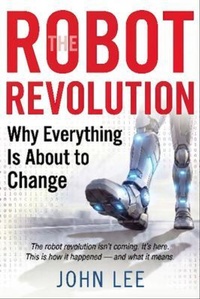
The Robot Revolution
Description

From a mythic bronze guardian to AI-driven humanoids transforming factories in 2026, Lee unveils 2,700 years of robotics as a seamless epic of human ingenuity and unease. Spanning ancient automata, medieval programmable machines, industrial looms, and future ethical dilemmas, this is the definitive chronicle of our quest to create thinking servants-and the profound choices we face as they awaken.
More details
Person
Content
Chapter 1 - Prometheus and the Bronze Man: The Ancient Dream of Artificial Life
Chapter 2 - The Islamic Golden Age: Mechanical Mastery and the Art of the Programmed Machine
Chapter 3 - The Clockwork Age: Leonardo, Vaucanson, and the Shock of Lifelike Machines
Chapter 4 - The Industrial Revolution and the Birth of Programmable Machinery
Chapter 5 - The Word and the Warning: Robots Enter the Cultural Imagination
Chapter 6 - Unimate and the Birth of the Factory Robot
Chapter 7 - Japan's Robot Love Affair and the Global Industrial Boom
Chapter 8 - The Cobot Revolution: When Robots Came Out of Their Cages
Chapter 9 - From Wheels to Legs: Behavior, Biology, and Boston Dynamics
Chapter 10 - The Humanoid Arrives: A Portrait of the State of the Art
Chapter 11 - The Race: China vs. America for Robot Supremacy
Chapter 12 - The Warehouse Revolution: A Million Robots in the Dark
Chapter 13 - Robots That Heal: The Medical and Surgical Robot Revolution
Chapter 14 - Robots That Grow: Agricultural Automation and the Food System
Chapter 15 - Robots That Fight: Military, Defense, and Autonomous Weapons
Chapter 16 - Beyond Earth: Space, Ocean, and Extreme Environment Robots
Chapter 17 - The Robot in Your Home: Consumer Robotics and the Domestic Future
Chapter 18 - Teaching Robots to See: Perception, Vision, and Sensing
Chapter 19 - The Foundation Model Revolution: How Language Taught Robots to Think
Chapter 20 - Learning to Move: Reinforcement Learning and Physical Intelligence
Chapter 21 - The Robot Body: Hardware, Actuators, Power, and Sensors
Chapter 22 - Jobs in the Age of the Robot: What the Research Actually Shows
Chapter 23 - The Productivity Paradox: Who Gets the Gains?
Chapter 24 - The Global Robot Economy: Markets, Money, and Supremacy
Chapter 25 - The Supply Chain of Intelligence: Who Builds What, and What It Means
Chapter 26 - Living With Robots: Psychology, Attachment, and the Uncanny Valley
Chapter 27 - Policy in the Age of the Robot: What Governments Must Do
Chapter 28 - The Ethics of the Machine: From Asimov to Autonomous Weapons
Chapter 29 - Who Owns the Robot? Power, Capital, and the Automated Future
Chapter 30 - The Near Future (2026-2029): What We Know Is Coming
Chapter 31 - The Medium Term (2030-2035): The Consumer Humanoid Age
Chapter 32 - Wild Cards: Scenarios for the Further Future
Chapter 33 - The Question That Remains
