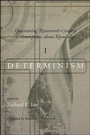
Questioning Nineteenth-Century Assumptions about Knowledge, I
Description
Alles über E-Books | Antworten auf Fragen rund um E-Books, Kopierschutz und Dateiformate finden Sie in unserem Info- & Hilfebereich.
More details
Other editions
Additional editions

Person
Richard E. Lee is Professor of Sociology and Director of the Fernand Braudel Center at Binghamton University, State University of New York. He is the author of Life and Times of Cultural Studies: The Politics and Transformation of the Structures of Knowledge and the coeditor (with Immanuel Wallerstein) of Overcoming the Two Cultures: Science versus the Humanities in the Modern World-System.
Content
Participants
Illustrations
Foreword
Immanuel Wallerstein
Introduction
Richard E. Lee
S E S S I O N I
Freedom and Determinism in the Twenty-First Century: Prolegomena to the Rewriting of History
Steve Fuller
Discussion
S E S S I O N I I
Mobile Order: Between Chance and Necessity
Fernando Gil
Discussion
S E S S I O N I I I
Determinism and Mathematical Modeling
Ivar Ekeland
Discussion
S E S S I O N I V
Organizers' Opening Remarks
Immanuel Wallerstein
Jean-Pierre Dupuy: Does Determinism Entail Necessitarianism?
Discussion
Index

System requirements
File format: ePUB
Copy protection: Watermark-DRM (Digital Rights Management)
System requirements:
- Computer (Windows; MacOS X; Linux): Use a reading software that can process the file format ePUB: e.g., Adobe Digital Editions or FBReader – both free (see eBook Help).
- Tablet/Smartphone (Android; iOS): Before downloading, install the free app Adobe Digital Editions (see eBook Help).
- E-reader: Bookeen, Kobo, Pocketbook, Sony, Tolino and many more (not Kindle).
The file format ePUB works well for novels and non-fiction books – i.e., „flowing” text without complex layout. On an e-reader or smartphone, line and page breaks automatically adjust to fit the small displays.
This eBook uses Watermark-DRM, a „soft” copy protection. This means that there are no technical restrictions to prevent illegal distribution. However, there is a personalised watermark embedded in the eBook that can be used to identify the purchaser of the eBook in the event of misuse and to provide evidence for legal purposes.
For more information, see our eBook Help page.